Mette Frederiksen Secures Third Term as Denmark Forms New Centre-Left Coalition Government
COPENHAGEN — June 4, 2026 — Denmark’s Prime Minister Mette Frederiksen will begin a third term in office after forming a new centre-left minority coalition government, ending 69 days of political deadlock following the country’s inconclusive March election.
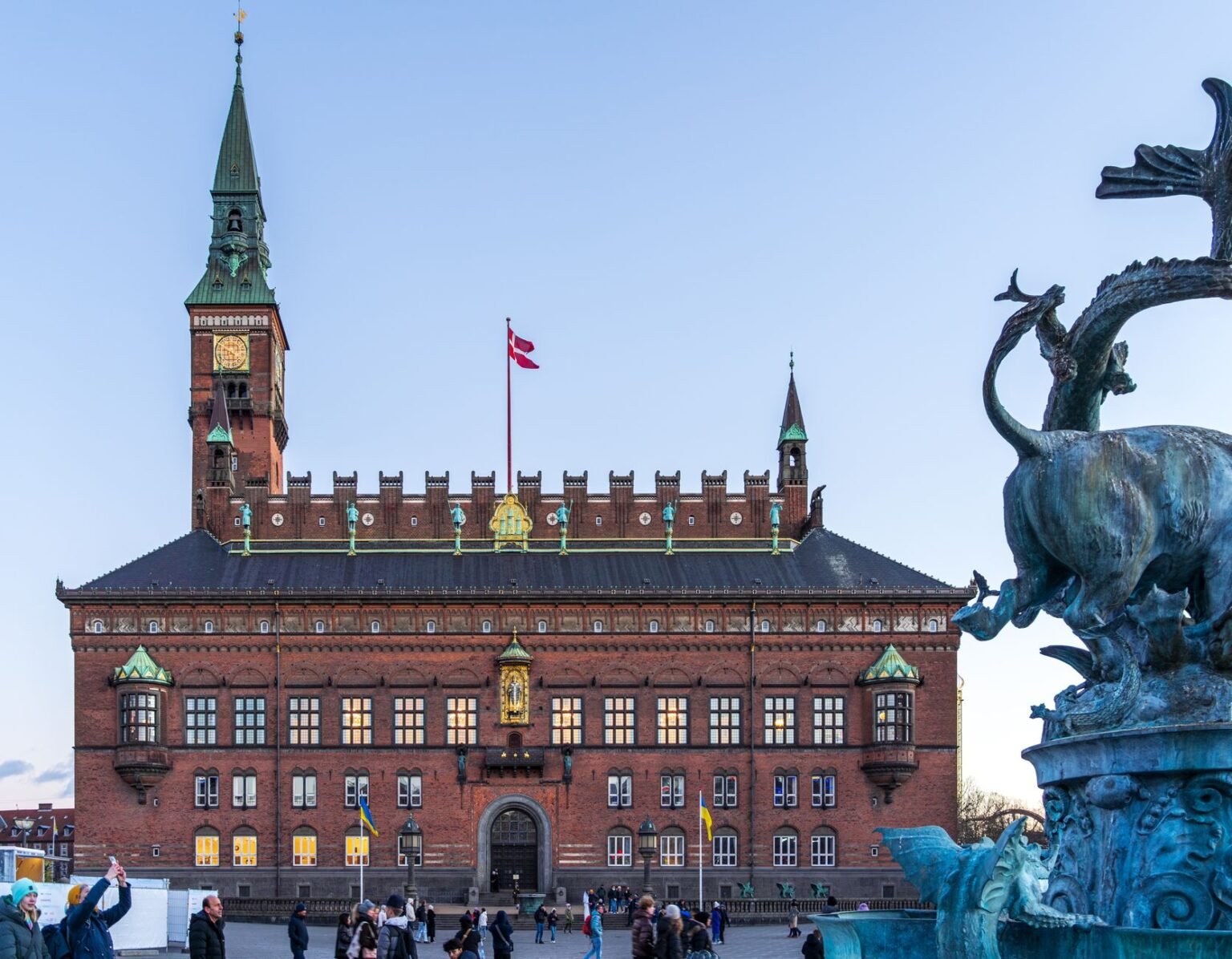
Frederiksen presented her new cabinet to King Frederik X at Amalienborg Palace on Wednesday, June 3, with the new government taking office immediately . The coalition ends the longest government formation period in recent Danish history after the March 24 election left parliament splintered across 12 parties .
Venezuela to Release 300 More Prisoners Under Amnesty Law as Reforms Continue | C. Joseph Vijay Sworn in as Chief Minister of Indian state of Tamil Nadu.
A Historic Third Term for Europe’s ‘Iron Lady’
Frederiksen, 48, joins the ranks of Europe’s longest-serving and most experienced leaders, having first taken office in mid-2019 . She has earned a reputation as one of the European Union’s strongest supporters of Ukraine since Russia’s full-scale invasion and has taken a firm stance against U.S. President Donald Trump’s ambitions for Greenland, the kingdom’s semi-autonomous territory .
The prime minister’s popularity among European Union peers and her firm position on Greenland were major factors behind her electoral success, according to Carolin Hjort Rapp, a political scientist from the University of Copenhagen .
The New Four-Party Coalition
The new government brings together four parties: Frederiksen’s Social Democrats, the Socialist People’s Party (Green Left), the centre-left Radikale Venstre (Danish Social Liberal Party), and the centrist Moderates . The coalition holds 82 of the 179 seats in the Danish parliament, meaning it will need to seek backing from other parties to secure legislative majorities .
The new government marks a shift to the left for Frederiksen, who in her previous term headed an unusual cross-political coalition with the Moderates and the Liberals (Venstre) .
A Cabinet With a Female Majority
The new government has 21 members, including the prime minister, and women hold 11 of those positions — marking the first time a Danish government has had a female majority .
Key cabinet appointments include:
- Mette Frederiksen (Social Democrats) — Prime Minister
- Pia Olsen Dyhr (Green Left) — Minister of Economic Affairs and the Interior
- Lars Løkke Rasmussen (Moderates) — Foreign Minister
- Martin Lidegaard (Radikale Venstre) — Minister of Business and Competitiveness
- Jakob Engel-Schmidt (Moderates) — Minister of Tax and Growth
- Samira Nawa (Radikale Venstre) — Minister of Climate, Energy and Utilities
Moderates leader Lars Løkke Rasmussen, a former prime minister who served as kingmaker after the election, said the new government was aiming for “redistribution based on solidarity” and would “guarantee a steady hand on the tiller in the turbulent times we live in” .
The Architecture of Power: Global Political Systems, Democracy, Authoritarianism & Governance Models.
Radikale Venstre leader Martin Lidegaard emphasized the government’s environmental credentials, stating: “We have formed Denmark’s greenest government” and that “it is precisely the political responsibility for the next generations that we have been calling for for years” .
Policy Agenda: From Defence to Dental Care
The government’s coalition agreement outlines an ambitious programme spanning security, economic reform, welfare expansion and environmental protection .
Defence and Foreign Policy
With the United States signalling a reduced military role in Europe and tensions surrounding Greenland, the new government is expected to press ahead with efforts to strengthen Denmark’s defences and deepen European cooperation . Frederiksen has been among Europe’s strongest supporters of Ukraine since Russia’s full-scale invasion, and that stance is expected to continue.
Domestic Policy Priorities
The government has announced several key domestic initiatives :
- An age limit for social media use
- Free public transport for those under 22
- A gradual move towards free dental care within the next decade, with plans to ease cost-of-living pressures
- An introduction of a yearly wealth tax of 0.5% on net assets above DKK 25 million (approximately $3.6 million), affecting about 22,000 people and raising an estimated DKK 6–7 billion to help fund welfare initiatives
- Removal of VAT on fruit and vegetables
- Major changes in pig production as part of the government’s climate and agriculture policy
The Election That Led Here
The March 24 election delivered a fragmented result, with the Social Democrats winning 38 seats — their lowest number since 1903 . While the party remained the largest in parliament, both left-leaning and right-leaning blocs fell short of the 90 seats needed for a majority .
The Moderates, led by Lars Løkke Rasmussen, won 14 seats and found themselves positioned at the centre of Danish politics — neither bloc could form a government without them . After more than two months of negotiations, it was Frederiksen who secured the necessary backing from parties in parliament .
“I have been to see His Majesty the King and announced that a government can be formed after long negotiations,” Frederiksen told reporters on June 2 .
A Watershed Election
Political analysts have described the 2026 election as a “realignment election” that fundamentally changes the political dynamics in Denmark . The era of the huge, dominant people’s parties — of the kind the Social Democrats have been for generations — appears to be over.
“That a Danish prime minister is neither a Social Democrat nor a Venstre man — but perhaps from SF, perhaps from Liberal Alliance, perhaps from the Moderates — is no longer unthinkable,” wrote Elisabet Svane, a political analyst at Politiken .
For now, however, Frederiksen — a Social Democrat — remains in power, ready to navigate Denmark through geopolitical turbulence while addressing the domestic concerns that dominated the election campaign.
SOURCES
- Xinhua: Denmark forms new government with women in majority
- BBC: Denmark’s Mette Frederiksen to form government after months of negotiations
- ALDE Party: New Danish government coalition ends record deadlock
- The Canadian Press: Frederiksen starts third term as Danish prime minister thanks to firm position on Greenland
Indian Court Awards Death Sentence to Nine Police Officers in Sathankulam Custodial Deaths Case.
Blue Origin’s New Glenn Rocket Explodes During Florida Engine Test, Suffering ‘Catastrophic’ Setback | SpaceX Successfully Launches Its Largest, Most Powerful Starship Yet on Historic Test Flight.
Nothing in this content constitutes professional advice of any kind, including legal, medical, financial, or technical advice.
Some content may be created or assisted using editorial tools and technologies; however, all material is subject to editorial review and oversight to ensure accuracy, clarity, and relevance in accordance with our publishing standards.
Images, graphics, and visual elements are used for illustrative purposes unless otherwise stated and may not always represent exact events, locations, or individuals.
For detailed information regarding our editorial standards and AI usage practices, please review our AI-Generated Content Disclosure Policy, Editorial Policy, Privacy Policy, Terms of Service, and Corrections & Updates Policy.