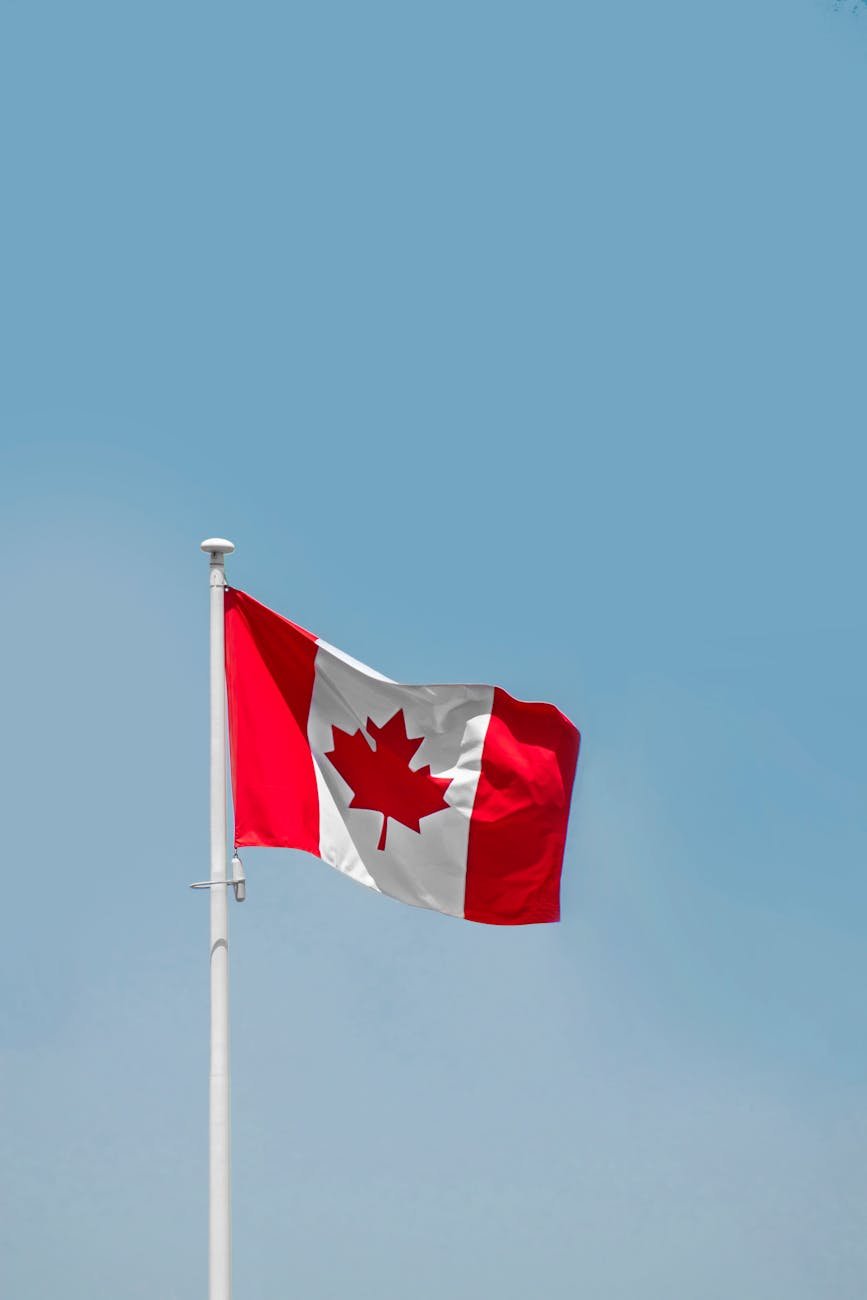
Canada’s Liberals Secure Historic Majority Government in Pivotal Byelections
Mark Carney becomes first prime minister in Canadian history to convert minority into majority mandate between national elections
OTTAWA — April 14, 2026 — Prime Minister Mark Carney’s Liberal Party secured a majority government on Monday, April 13, after sweeping three crucial byelections that gave the party 174 of the 343 seats in the House of Commons. The victory marks the first time a federal government has converted a minority into a majority mandate between national elections in Canadian political history .
The Liberal victories in the Toronto-area ridings of University—Rosedale and Scarborough Southwest, along with a hard-fought win in the Quebec riding of Terrebonne, pushed Carney’s government above the 172-seat threshold needed for a majority. The Liberals now control the House of Commons without requiring support from opposition parties to pass legislation for the first time since 2019 .
Italy Suspends Defence Agreement With Israel as Meloni Signals Shift Over Middle East War.
“Voters have placed their trust in our new government’s plan. We accept that support with humility, determination and a clear understanding of what this moment demands,” Carney said in a social media post following the results .
Historic Path to Majority
Carney, a former head of both the Bank of England and the Bank of Canada, took office last year following a national election fueled by public anger over U.S. President Donald Trump’s annexation threats and trade policies . The Liberals won that election but fell short of a majority, securing 169 seats.
Italian 19-year-old dominates Shanghai Grand Prix from pole to finish, leading Mercedes one-two ahead of Lewis Hamilton’s first Ferrari podium | Bahrain and Saudi Arabia Formula 1 Grands Prix Cancelled Due to Middle East Conflict.
Over the subsequent months, Carney’s government gradually built momentum through a combination of five opposition defections — including four Conservative MPs and one New Democrat — and a series of policy initiatives emphasizing Canada’s economic sovereignty .
The path to majority was finalized Monday with wins in all three contested ridings. Danielle Martin, a public health advocate, won University—Rosedale, the seat previously held by former deputy prime minister Chrystia Freeland. Doly Begum, a former Ontario New Democrat who crossed the floor to run federally, won Scarborough Southwest, previously held by former cabinet minister Bill Blair. Tatiana Auguste won a rematch in Terrebonne, Quebec, a year after winning the riding by a single vote — a result later invalidated by the Supreme Court of Canada due to a clerical error .
Carney’s Leadership and Trump Factor
Political analysts attribute Carney’s political ascent to his handling of Canada-U.S. relations amid Trump’s second presidency. Carney has emphasized Canada’s need to diversify trade partners, reduce reliance on the United States, and increase military spending .
“Carney has done a fairly good job showing Canadians he can handle Trump,” said Andrew McDougall, assistant professor in Canadian politics at the University of Toronto .
Carney’s speech at the World Economic Forum in Davos, where he condemned economic coercion by great powers against smaller nations, drew widespread praise at home and was cited by one Conservative defector as influential in his decision to join the Liberals .
Nelson Wiseman, professor emeritus at the University of Toronto, noted that Carney’s international engagement has boosted his domestic standing. “Canadians liked seeing how well he was received at Davos and have been impressed by his travels abroad — he visited 13 countries by last September — in search of new alliances, investments and trade pacts,” Wiseman said .
Opposition Response and Criticism
Conservative Leader Pierre Poilievre, who lost the 2025 election and even his own seat before returning to Parliament, accused Carney of engineering a “cynical power grab” through “backroom deals with politicians who betrayed the people who voted for them” .
Poilievre pointed to the defections and the circumstances surrounding the Terrebonne race — where the Liberal candidate won by a single vote last year before the result was overturned — as evidence of an illegitimate path to power. “The Carney Liberals did not win a majority government through a general election or today’s byelections,” he posted on X .
Despite Conservative criticism, recent Nanos polling cited by Reuters shows more than half of Canadians prefer Carney as prime minister, compared with 23 percent for Poilievre — a stark reversal from pre-election polling that had projected a Conservative victory .
What the Majority Means for Governance
With 174 seats — not counting the Speaker, a Liberal MP — Carney’s government can now pass legislation and control House committees without opposition support . The Liberals could remain in power until the next scheduled national election in 2029 .
Government House Leader Steven MacKinnon said last week that even with a majority, the government intends to “continue that impulse of working across party lines” .
Carney has moved the Liberals to the center-right since replacing Justin Trudeau as prime minister in 2025 . His agenda has focused on economic transformation, military modernization, and international trade diversification.
Looking Ahead
The three newly elected MPs will be sworn into the House of Commons in the coming weeks, with additional defectors expected to join the Liberal caucus. Three more opposition MPs have signaled plans to cross the floor, further solidifying Carney’s majority .
The victory gives Carney a clear mandate to pursue his policy agenda without the legislative gridlock that characterized the previous minority parliament. However, economic challenges remain, with grocery prices up more than 20 percent since 2022 and unemployment at 6.7 percent .
“This is a decisive moment for Canada — one that calls for serious leadership, a strong economic plan, and leaders from all backgrounds standing up to build a better future,” the Liberal Party said in a statement following the results
SOURCES / INPUTS
DW: Canada: Carney secures majority after special election
The Architecture of Power: Global Political Systems, Democracy, Authoritarianism & Governance Models.
Tisza Party Wins Hungarian Election in Landslide, Ending Orbán’s 16-Year Rule | Hungarians Head to Polls in Pivotal Election That Could End Orbán’s 16-Year Rule.