WHO Chief Travels to Congo as Ebola Outbreak Worsens, Risk Raised to ‘Very High’
BUNIA, Democratic Republic of Congo — May 30, 2026 — World Health Organization Director-General Tedros Adhanom Ghebreyesus arrived in eastern Congo‘s Ituri province on Saturday, May 30, to personally assess the escalating Ebola outbreak caused by a rare strain of the virus for which there is no approved vaccine or treatment .
The visit to Bunia, the provincial capital at the epicenter of the outbreak, comes as health authorities race to contain a disease that is spreading faster than the response, exacerbated by ongoing armed conflict in the region that has displaced hundreds of thousands of people .
World Bank Rushes Emergency Response to Deadly Ebola Outbreak in DRC | Why Walking Is the Best Free Exercise for Almost Everyone.
Outbreak Figures and Risk Assessment
According to Congolese authorities and WHO data, the situation has deteriorated significantly since the outbreak was declared on May 15. As of Friday, May 29, authorities have recorded 906 suspected cases and 223 suspected deaths in Congo .
Neighboring Uganda has confirmed nine cases and one death, all linked to individuals who traveled from Congo . The Ugandan health ministry has also reported cases in the capital, Kampala, prompting authorities there to postpone the annual Martyrs‘ Day celebrations, which can attract up to two million people .
WHO revised its risk assessment for the outbreak on May 22, raising the national risk level in Congo from “high” to “very high” . The regional risk remains “high,” while the global risk level is classified as “low” .
The outbreak is caused by the Bundibugyo virus strain of Ebola, a rare variant that has no approved vaccine or therapeutic treatment . This is only the third documented outbreak of this strain since it was first identified in 2007 . The fatality rate for Bundibugyo virus ranges between 30 and 50 percent .
‘Catastrophic Collision‘ of Disease and Conflict
Speaking upon his arrival in Kinshasa on Thursday, May 28, before traveling to Bunia, Tedros warned that the eastern region faces what he described as a “catastrophic collision” of disease and conflict .
“In the last few months, hundreds of thousands of people have been displaced because of the conflict. This makes containing the outbreak extremely difficult,” Tedros told reporters .
Ituri province, where nearly five million people live, has been plagued by violence involving a litany of armed groups for decades. Over 100,000 people have been newly displaced in recent months as fighting has intensified since late 2025 .
Global Public Health Systems: Policy, Pandemics & Welfare.
“We cannot build community trust or isolate the sick while bombs are falling,” Tedros wrote on X on Wednesday, May 27. “Stopping this Ebola transmission depends entirely on humanitarian access” .
The WHO chief urged all warring parties to agree to an immediate ceasefire to allow medical teams safe and sustained access to affected areas, appealing to prioritize “human survival above everything else” .
Response Efforts and Funding Gaps
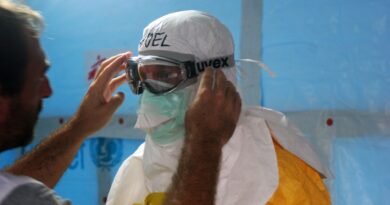
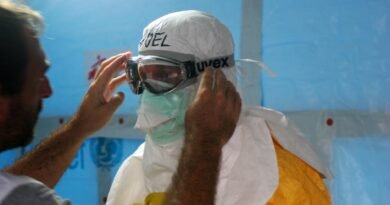
Despite the challenging environment, response efforts are being scaled up. At Bunia‘s Rwampara and General hospitals, additional staff, protective gear and medical supplies have been deployed, though patients continue arriving around the clock, an Associated Press reporter observed on Friday .
However, WHO has received only about one-third of its total funding requirements for the response, Tedros said upon arriving in Kinshasa, calling for more international support .
French aid group Medecins Sans Frontieres (MSF) warned on Saturday that the outbreak is spreading at an “unprecedented pace” and that the level of support being provided remains far short of what is required .
“Never before has an Ebola outbreak recorded so many cases so soon after its declaration,” Alan Gonzalez, MSF deputy director of operations, said in a statement .
Community Engagement and Vaccine Development
During his visit to Bunia, Tedros emphasized the critical role of community engagement in bringing the outbreak under control.
“The communities understand the problems better and they know the solution as well,” Tedros told reporters after arriving in Bunia . “Community ownership is important. That‘s why we are here to discuss with the community to see how the response is running and, if there are challenges, to help” .
In the absence of an approved vaccine for the Bundibugyo strain, WHO is working with partners to accelerate clinical trials. The agency has convened its interim Medical Countermeasures Network and the R&D Blueprint technical advisory group to review the pipeline of vaccines, therapeutics and diagnostics .
The advisory group has recommended prioritizing two monoclonal antibodies for clinical trials and evaluating the antiviral obeldesivir as post-exposure prophylaxis for high-risk contacts . However, Tedros acknowledged that any vaccine will not be available immediately, noting that it will take several months to have the necessary tools and technology ready .
A Long History of Ebola in Congo
This marks the 17th recorded Ebola outbreak in Congo since the virus was first identified in the country in 1976 . While the nation has a strong track record in Ebola response and control, the combination of the rare virus strain, the ongoing conflict, and the rapid spread of cases has made this outbreak particularly challenging .
Ten African countries, including Rwanda, Kenya, Tanzania, Angola, Burundi, the Central African Republic, the Republic of Congo, Ethiopia, South Sudan, and Zambia, are considered at high risk of being affected due to their proximity to Congo and Uganda .
“The best way to address this is to provide all the necessary support to fight the disease at its epicenter and to continue offering every assistance needed,” Tedros told reporters before departing for Bunia .
He expressed confidence that Congo, which has faced the Ebola virus many times before, could once again bring the outbreak under control. “This is a difficult situation, and we recognize that. But the Democratic Republic of Congo has faced the Ebola virus many times before. We are confident that it can once again bring this outbreak under control” .
SOURCES / INPUTS
- Al Jazeera: DRC facing ‘catastrophic collision’ of Ebola and war, WHO chief warns
- World Health Organization: DG opening remarks at media briefing on Ebola and hantavirus – 22 May 2026
- WHO News Item: First IHR Emergency Committee meeting on Ebola Bundibugyo – Temporary recommendations
EU’s Entry/Exit System Fully Operational Across Schengen Area, Transforming Border Management.
Kiwi Birds Return to New Zealand’s Capital After Century-Long Absence, Mark Historic Conservation Milestone | Sakurajima Volcano Erupts in Southern Japan, Sending Ash 3.4 km High.