Africa CDC and WHO Launch $518 Million Continental Ebola Response Plan
GENEVA — June 5, 2026 — The Africa Centres for Disease Control and Prevention (Africa CDC) and the World Health Organization (WHO) have jointly launched a six-month, $518 million continental preparedness and response plan to combat the ongoing Ebola outbreak caused by the rare Bundibugyo virus, officials announced on Friday, June 5 .
The time-bound plan, covering June to November 2026, aims to raise $518 million to support African countries together with partners to prepare for, rapidly detect, and respond to the outbreak . The strategy brings together governments, partners, and communities under a unified “One Response” approach, with key pillars including emergency coordination, disease surveillance, laboratory testing, infection prevention and control, clinical care, community engagement, research, logistics, and support for essential health services .
WHO Chief Travels to Congo as Ebola Outbreak Worsens, Risk Raised to ‘Very High’ | World Bank Rushes Emergency Response to Deadly Ebola Outbreak in DRC.
Outbreak Moving Fast, Authorities Playing Catch-Up
“The outbreak is moving fast and we are still playing catch-up,” WHO Director-General Tedros Adhanom Ghebreyesus said at the announcement briefing in Geneva . “Containing Ebola requires political commitment, sustained finances and trust in engaging the communities” .
The epidemic went undetected for weeks, the Africa CDC said, leaving health authorities behind the curve and struggling to bring it under control . The outbreak was first declared on May 15, marking the Democratic Republic of Congo’s 17th Ebola outbreak, and the WHO swiftly declared it a Public Health Emergency of International Concern .
Current Outbreak Figures
As of the briefing, there have been 381 confirmed cases in Congo and 62 confirmed deaths, according to Africa CDC . However, later data shows the situation has worsened, with DRC’s health ministry reporting 452 confirmed cases and 82 deaths, including 71 new confirmed cases reported on June 4 alone . Uganda has recorded 19 cases and two deaths .
The outbreak is caused by the Bundibugyo strain of Ebola, a rare variant for which there is no approved vaccine or therapeutic treatment . This is the most serious Bundibugyo outbreak ever recorded, Africa CDC Director-General Dr. Jean Kaseya said at the briefing .
“The only way to beat this outbreak is through close partnership, working together under the leadership of the affected countries in one coordinated effort, guided by a simple principle: one plan, one budget, one team,” Tedros said .
Challenges and Funding Gap
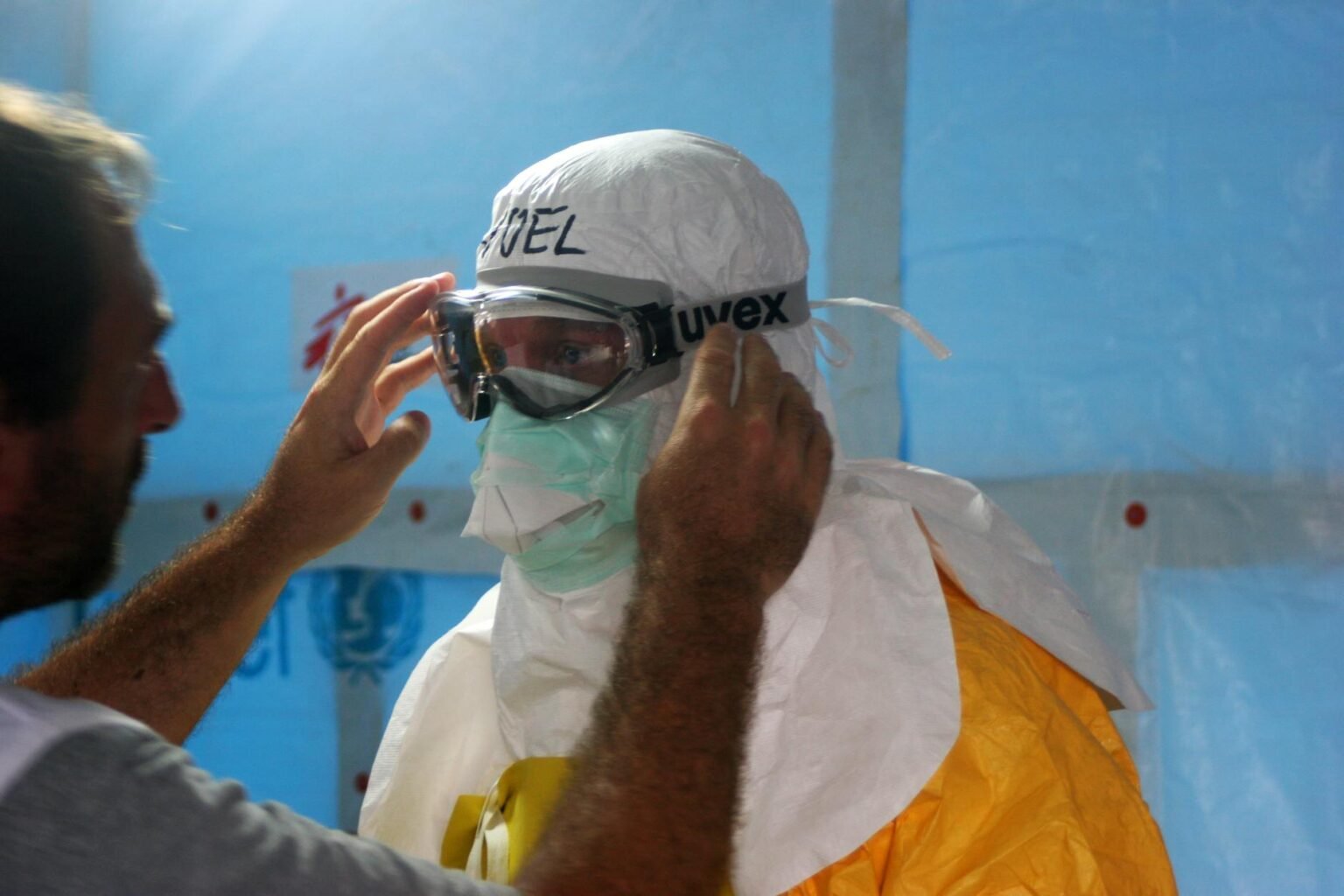
Health authorities have cited multiple challenges complicating the response, including weak contact tracing, shortages of essential medicines, inadequate infection-prevention supplies, poor alert reporting, and resistance to post-mortem swabbing . Thirty-four health workers have been infected with the Ebola virus so far, with seven deaths and six recoveries recorded .
Africa CDC reported that donors have so far pledged approximately 315.8 million towards the response,down from initial 498 million after some donors “corrected” their figures . It was not immediately clear whether pledged funds would go toward the new six-month plan.
The absence of licensed vaccines or therapeutics for the Bundibugyo species — unlike the Zaire strain for which vaccines exist — has significantly hampered response efforts . The WHO has convened expert groups to review the pipeline of vaccines, therapeutics, and diagnostics, with monoclonal antibodies and the antiviral obeldesivir identified as priorities for clinical trials.
Focus on Community Engagement
Tedros emphasized that community ownership and engagement are critical to bringing the outbreak under control. “Containing Ebola depends on political commitment, sustained financing, and the trust and engagement of communities,” he said. “This plan places communities at the centre, because without their participation, contact tracing falters, safe care is delayed, and transmission continues” .
The plan also focuses on protecting vulnerable populations, strengthening cross-border collaboration, and supporting countries to respond quickly to new cases. It complements national response plans already launched by the governments of the DRC and Uganda .
Israeli Airstrikes Kill Nine in Tyre Amid Fragile Lebanon Ceasefire.
‘Priced Out of the Market’: UN Warns Developing Countries Trapped by Unfair Credit Ratings as Debt Costs Soar | ‘They Cannot Afford Another Fall’: Myanmar’s Fragile Recovery from Deadly Earthquake Undermined by Global Crises.
Nothing in this content constitutes professional advice of any kind, including legal, medical, financial, or technical advice.
Some content may be created or assisted using editorial tools and technologies; however, all material is subject to editorial review and oversight to ensure accuracy, clarity, and relevance in accordance with our publishing standards.
Images, graphics, and visual elements are used for illustrative purposes unless otherwise stated and may not always represent exact events, locations, or individuals.
For detailed information regarding our editorial standards and AI usage practices, please review our AI-Generated Content Disclosure Policy, Editorial Policy, Privacy Policy, Terms of Service, and Corrections & Updates Policy.