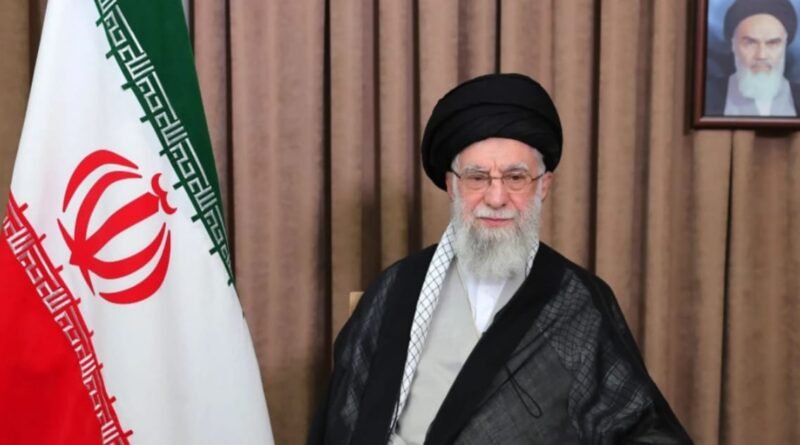
Iran Confirms Supreme Leader Khamenei Killed in US-Israeli Strikes, Nation Enters 40-Day Mourning Period
TEHRAN, Iran — The Iranian government confirmed on March 1, 2026, that Ayatollah Ali Khamenei, the 86-year-old Supreme Leader who guided the Islamic Republic for nearly four decades, was killed in the massive US and Israeli airstrikes that began two days earlier, plunging the nation into grief and an unprecedented leadership transition .
State media announced the death on Sunday morning, following a second wave of overnight strikes that targeted Tehran and other cities. The confirmation came after more than 24 hours of conflicting reports, during which Iranian officials initially denied Khamenei’s death but ultimately acknowledged that the supreme leader’s compound in central Tehran had been destroyed. The government declared a 40-day official mourning period and seven days of national holidays as the nation began to process the loss of its most consequential figure since the 1979 Islamic Revolution .
Oil Surges Past $115 as Middle East War Expands, Stocks Tumble Worldwide.
President Donald Trump first announced Khamenei’s death on social media late Saturday, calling him “one of the most evil people in history” and claiming the cleric “was unable to avoid our Intelligence and Highly Sophisticated Tracking Systems” . The president urged Iranians to “take over your government” once the strikes concluded, an appeal that Iranian officials condemned as interference in the nation’s internal affairs .
The Strike and Its Fallout
The operation that killed Khamenei unfolded during the initial wave of US and Israeli strikes on February 28, with satellite imagery from Airbus showing black smoke billowing from the supreme leader’s compound in central Tehran and damage appearing to hit several buildings within the complex . It remained unclear whether American or Israeli forces were responsible for the strike that killed him.
Global Markets Rebound as US-Iran Ceasefire Hopes Drive Oil Below $100, Gold Surges OnePlus India CEO Robin Liu Quits as Market Share Plummets, Fueling Exit Speculation.
Israeli Prime Minister Benjamin Netanyahu, in a televised address late Saturday, said there were “increasing signs” that Khamenei had been killed and described the operation as a “powerful surprise attack” that destroyed the supreme leader’s official residence . “Today morning, in a powerful surprise attack, the despot Khamenei’s official compound in the heart of Tehran was destroyed,” Netanyahu said . “There are increasing signs that this despot is no longer alive” .
The strikes also targeted other senior Iranian leadership figures. According to multiple media reports, the attacks hit locations associated with President Masoud Pezeshkian, Chief of Staff of the Iranian Armed Forces Abdulrahhim Mousavi, Supreme National Security Council Secretary Ali Larijani, and National Defense Committee Secretary Ali Shamkhani . The fate of these officials remained unclear as of Sunday morning, with no official confirmation of casualties .
Iran’s Foreign Ministry spokesman Esmaeil Baghaei had insisted to ABC News on Saturday that both Khamenei and Pezeshkian were “safe and sound,” but by Sunday morning, state media had confirmed the supreme leader’s death .
A Life Dedicated to the Islamic Republic
Ayatollah Ali Khamenei served as Iran’s Supreme Leader for 37 years, succeeding the founder of the Islamic Republic, Ayatollah Ruhollah Khomeini, in 1989 . Born in 1939 in Mashhad, a holy city in northeastern Iran, Khamenei was a close associate of Khomeini during the revolution that overthrew the US-backed Shah in 1979 . He survived an assassination attempt in June 1981 when a bomb hidden in a tape recorder exploded at a press conference, leaving him with permanent damage to his right arm .
Khamenei served as president of Iran from 1981 to 1989 before ascending to the role of Supreme Leader, the highest authority in Iran’s political system. Under his leadership, Iran navigated decades of international sanctions, regional conflicts, and domestic challenges while maintaining the theological foundations of the revolution . His tenure saw Iran extend its influence across the Middle East, supporting allies in Lebanon, Syria, Iraq, and Yemen, while also developing a domestic industrial and scientific base .
At home, Khamenei was viewed with deep reverence by supporters who saw him as the guardian of the revolution’s principles, while critics pointed to his suppression of dissent and restrictions on political freedoms . His leadership style emphasized continuity and resistance to external pressure, themes he returned to repeatedly in public addresses .
Iranian officials and state media have consistently referred to him with honorific titles reflecting his religious and political authority. Following news of his death, state television aired footage of his speeches and appearances, accompanied by Quranic recitations, as the nation began its mourning period .
Succession and Constitutional Process
Khamenei’s death triggers a succession process outlined in Iran’s constitution. Under Article 111, in the event of the supreme leader’s absence, an emergency committee composed of three members—the president, the chief justice, and a senior cleric from the Guardian Council—is to temporarily assume his role . However, with some of these individuals potentially killed or injured in the strikes, the succession mechanism faces significant challenges .
According to multiple reports, Khamenei had prepared for this contingency. Informed officials told The New York Times that last year, following the June 2025 conflict with Israel, Khamenei identified three senior clerics as potential successors and established a system of deputies for every military command and government position . He also authorized a small group of confidants to make decisions if communication with him was severed .
The ultimate selection of a new supreme leader rests with the 88-member Assembly of Experts, a body of clerics elected to ten-year terms whose candidates are vetted by the Guardian Council . The assembly is responsible for appointing, supervising, and if necessary, dismissing the supreme leader. Following Khamenei’s death, the assembly must convene to select his successor, a process that could take days or weeks depending on the political and security situation .
Several figures have been mentioned as potential candidates to succeed Khamenei. According to Iranian and international media, these include:
- Ayatollah Alireza Arafi, a senior religious figure who leads Iran’s seminary system and sits on both the Guardian Council and the Assembly of Experts
- Ayatollah Mohsen Araki, a longtime Assembly member with extensive experience in religious and political affairs
- Ayatollah Gholam Hossein Mohseni Ejei, the judiciary chief with deep national security experience
Ali Larijani, 67, secretary of the Supreme National Security Council, has been mentioned as a potential transitional figure given his experience and proximity to Khamenei in recent years . His brother, Sadegh Larijani, has also been discussed as a potential candidate for the supreme leadership itself .
Khamenei’s son, Mojtaba Khamenei, had long been speculated as a potential successor but faces significant constitutional hurdles. According to Hindustan Times, Mojtaba lacks the formal religious credentials required by the constitution, and Khamenei himself reportedly excluded his son from the list of potential successors he prepared last year . In a 2023 speech, Khamenei declared that “dictatorship and hereditary government are not Islamic,” echoing the precedent set in 1989 when the Assembly passed over Ayatollah Khomeini’s son in favor of Khamenei himself .
Iranian Reaction and National Mourning
The death of the man who led Iran since 1989 sparked immediate reactions across the country. The government announced a state of emergency and urged citizens to “maintain calm” while traveling to safer areas where possible . Schools and universities remained closed, and internet connectivity was severely restricted .
In Tehran and other cities, reports described a mix of grief, uncertainty, and concern about the future. State media broadcast footage of mourners gathering in mosques and public squares, with some reciting prayers and others carrying portraits of the late leader. The government’s announcement of a 40-day mourning period, a significant duration in Islamic tradition, signaled the weight of the loss .
Iran’s exiled opposition figures also reacted. Crown Prince Reza Pahlavi, son of the last Shah, issued a statement on X describing Khamenei as “the bloodthirsty despot of our time” and calling on Iranians to witness “final victory” for the revolution . Such statements were dismissed by Iranian officials as attempts to exploit a moment of national grief for political purposes .
International Reaction
The confirmation of Khamenei’s death drew measured international reaction, with many countries expressing concern about regional stability while avoiding direct commentary on the slain leader.
The European Union called for “maximum restraint” and protection of civilians, with a spokesperson stating that “further escalation must be avoided at all costs.” France warned of “grave consequences for international peace and security” and urged all parties to return to diplomacy .
Russia condemned the strikes as a violation of international law and called for an immediate cessation of hostilities. The Russian foreign ministry expressed condolences to the Iranian people and emphasized the importance of respecting Iran’s sovereignty and territorial integrity .
China expressed deep concern and called on all parties to exercise restraint, with a foreign ministry spokesperson stating that Beijing hopes for a swift return to stability and dialogue .
Regional reactions were cautious. Saudi Arabia called for restraint and urged all parties to avoid actions that could further destabilize the region. The United Arab Emirates reported intercepting missiles during the conflict but avoided direct commentary on Iran’s internal affairs . Qatar, which has mediated between Tehran and Washington in recent months, expressed hope for de-escalation .
Pakistan’s foreign ministry issued a statement expressing concern about the escalation and calling for “peaceful resolution of differences through dialogue and diplomacy,” while avoiding direct commentary on Iran’s leadership .
What Comes Next
Khamenei’s death marks a seismic moment for the Islamic Republic, a regime he helped shape and lead for nearly four decades. His leadership saw Iran through war, sanctions, isolation, and regional expansion, maintaining the theological and political structures established by the revolution’s founder.
The immediate question is whether the constitutional succession mechanisms can function amid ongoing military strikes and potential disruptions to communications and transportation. The Assembly of Experts must convene, but some members may be unable to travel to Tehran, and the security situation could complicate the deliberative process required for selecting a new leader.
For the millions of Iranians now mourning their leader and facing an uncertain future, the path ahead remains unclear. The government has called for unity and calm, emphasizing the continuity of state institutions and the resilience of the Islamic system. As one senior official told state media: “The revolution continues. The path of the martyrs continues. Iran will overcome this moment as it has overcome all challenges throughout its history.”
Whether the system can maintain that continuity under conditions of war and leadership transition will determine the fate of the Islamic Republic in the days and weeks ahead.
with inputs from
CNN: Khamenei killed US-Israeli strikes
Guardian: State media confirms Khamenei dead
Reuters: Iranian state media confirm
Modern World Order Explained: Power, Alliances & Global Systems.
Kuwait Says Airport Fuel Tanks Ablaze After Iran Drone Attack, Summons Ambassador, Australian Prime Minister Anthony Albanese Calls for Clarity from Trump on Objectives of Iran War.