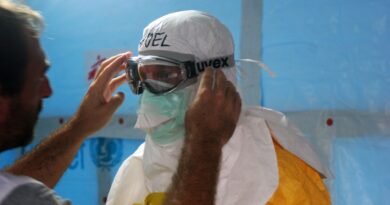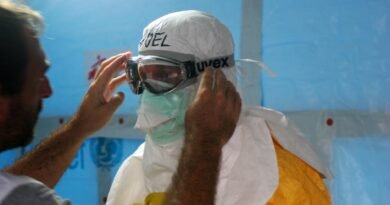
WHO Declares Ebola Outbreak in DRC and Uganda a Public Health Emergency of International Concern
GENEVA — May 17, 2026 — The World Health Organization (WHO) has declared the Ebola virus disease outbreak in the Democratic Republic of the Congo (DRC) and Uganda a Public Health Emergency of International Concern (PHEIC), marking the highest level of global health alert for an outbreak that has already spread across international borders and into major urban centers .
WHO Director-General Tedros Adhanom Ghebreyesus issued the determination after consulting with the affected nations, citing the extraordinary nature of an outbreak caused by the rare Bundibugyo ebolavirus strain for which no licensed vaccines or specific treatments currently exist .
WHO Confirms Hantavirus Cases on Antarctic Cruise Ship, Three Deaths Reported | Is Packaged Milk Healthy or Harmful? The Truth Most People Miss.
WHO Issues ‘Global Health Emergency’ Declaration
The WHO declaration, formally known as a Public Health Emergency of International Concern (PHEIC), is the agency’s highest level of alarm under the International Health Regulations (2005). The designation is intended to mobilize international funding, coordination and emergency response efforts .
“After having consulted the States Parties where the event is known to be currently occurring, the Director-General of WHO is hereby determining that the Ebola disease caused by Bundibugyo virus in the Democratic Republic of the Congo and Uganda constitutes a public health emergency of international concern, but does not meet the criteria of pandemic emergency,” the WHO statement said .
This is the first PHEIC declaration since mpox was designated a global health emergency in 2024, and the WHO has indicated it will convene an Emergency Committee as soon as possible to refine temporary recommendations .
Rare Bundibugyo Strain Poses Unique Challenge
The outbreak is caused by the Bundibugyo ebolavirus species, one of the rarest Ebola strains known to infect humans. It has caused only two previous documented outbreaks—in Uganda in 2007 and in eastern DRC in 2012—which together resulted in far fewer cases than the current epidemic has already generated .
Unlike the more common Zaire ebolavirus strain, for which vaccines and antibody treatments were developed after the devastating West African epidemic a decade ago that killed more than 11,000 people, there are currently no approved Bundibugyo-specific therapeutics or vaccines .
“Unlike for Ebola-zaire strains, there are currently no approved Bundibugyo virus-specific therapeutics or vaccines,” Tedros stated, describing the situation as especially dangerous .
Case Counts and Geographic Spread
According to WHO data released on May 16, 2026, the outbreak has produced alarming statistics across multiple locations :
Global Public Health Systems: Policy, Pandemics & Welfare.
In DRC’s Ituri Province, health authorities have reported 246 suspected cases and 80 suspected deaths across at least three health zones—Bunia, Rwampara and Mongbwalu. Eight of 13 samples collected in the Rwampara health zone have tested positive for Bundibugyo virus .
The outbreak has already crossed international borders. Two laboratory-confirmed cases, including one death, have been reported in Uganda’s capital, Kampala, among individuals traveling from DRC. The two cases, reported within 24 hours of each other on May 15 and 16, appear to have no epidemiological link, raising concerns about undetected transmission chains .
A confirmed case has also been reported in Kinshasa, DRC’s sprawling capital of approximately 20 million people, involving a traveler returning from the Ituri region .
Healthcare Worker Deaths Raise Alarm
At least four deaths among healthcare workers have been reported among people with symptoms consistent with viral hemorrhagic fever, raising serious concerns regarding healthcare-associated transmission, gaps in infection prevention and control measures, and the potential for amplification within health facilities .
“Four deaths among healthcare workers have also been reported among people with symptoms consistent with viral haemorrhagic fever, raising concerns regarding healthcare-associated transmission,” the WHO statement noted .
Outbreak Likely Larger Than Reported
Tedros cautioned that the current figures likely represent a significant undercount of the true scale of the outbreak. The WHO cited several factors pointing to a potentially much larger epidemic :
“The high positivity rate of the initial samples collected (with eight positives among 13 samples collected in various areas), the confirmation of cases in both Kampala and Kinshasa, the increasing trends in syndromic reporting of suspected cases and clusters of deaths across the province of Ituri all point towards a potentially much larger outbreak than what is currently being detected and reported, with significant local and regional risk of spread,” the WHO statement said .
Unusual clusters of community deaths with symptoms compatible with Bundibugyo virus disease have been reported across several health zones in Ituri, and suspected cases have been reported across both Ituri and neighboring North Kivu province .
Regional Risk Assessment
Neighboring countries sharing land borders with DRC are considered at high risk for further spread due to population mobility, trade and travel linkages, and ongoing epidemiological uncertainty .
The WHO assessed that the likelihood of infection for people living in the European Union and European Economic Area is “very low,” though the situation remains dynamic and significant uncertainties persist .
The urban or semi-urban nature of some transmission hotspots has heightened the risk of wider spread, drawing comparisons to DRC’s major Ebola epidemic in North Kivu and Ituri in 2018-19, which claimed thousands of lives .
Complex Challenges Hamper Response
Several factors compound the difficulty of mounting an effective response. Ongoing insecurity and humanitarian challenges in eastern DRC, including the presence of armed rebels who have shut down Goma’s airport for more than a year, have created severe logistical constraints for responders .
The affected area, which includes the gold-mining town of Mongbwalu, experiences high population mobility as workers frequently move between remote camps and regional trading hubs. Additionally, a large network of informal healthcare facilities further complicates surveillance and infection control efforts .
The detection delay of approximately four weeks from the first symptomatic case has allowed extensive uncontrolled community transmission to occur before the outbreak was identified .
International Response and WHO Recommendations
The WHO declaration triggers a coordinated international response. The agency has called for urgent clinical trials of experimental vaccines and therapeutics. Several potential treatments are being considered, including monoclonal antibodies and Gilead Sciences’ antiviral remdesivir, though none are approved specifically for Bundibugyo infections. Vaccine candidates from groups including Oxford University and Moderna are also under review .
In its temporary recommendations, WHO advised DRC and Uganda to activate national emergency mechanisms, scale up surveillance and contact tracing, and establish specialized treatment centers near outbreak epicentres .
The agency called for exit screening at all international airports, seaports and major land crossings, and directed that confirmed cases must not travel until two negative tests taken at least 48 hours apart are obtained .
However, WHO strongly cautioned against border closures or travel and trade restrictions. “No country should close its borders or place any restrictions on travel and trade. Such measures are usually implemented out of fear and have no basis in science. They push the movement of people and goods to informal border crossings that are not monitored, thus increasing the chances of the spread of disease,” the WHO statement said .
Not Yet a ‘Pandemic Emergency’
While the outbreak has been declared a PHEIC, the WHO determined that it does not yet meet the criteria for a “pandemic emergency”—a new category created under revised international health regulations following the COVID-19 pandemic .
The distinction reflects the WHO’s assessment that while the outbreak poses a serious regional and international threat, it has not reached the level of global spread that would warrant a pandemic declaration.
SOURCES / INPUTS
European Centre for Disease Prevention and Control (ECDC): WHO declares Ebola outbreak in DRC a Public Health Emergency of International Concern
Kiwi Birds Return to New Zealand’s Capital After Century-Long Absence, Mark Historic Conservation Milestone | Sakurajima Volcano Erupts in Southern Japan, Sending Ash 3.4 km High.