At Least Eight Killed in Pakistan as Protests Erupt Over Death of Iran’s Supreme Leader
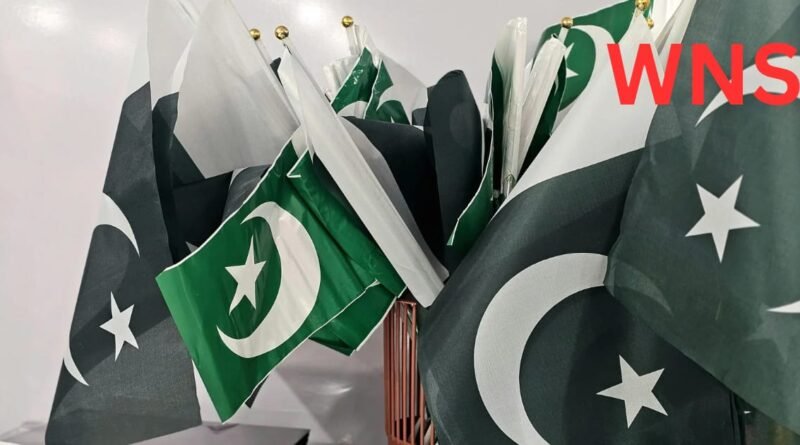
KARACHI, Pakistan — At least eight people were killed and dozens injured in the southern port city of Karachi on March 1, 2026, as hundreds of protesters stormed the United States Consulate following the killing of Iran’s Supreme Leader Ayatollah Ali Khamenei in joint US-Israeli strikes, according to officials and rescue workers .
The violence, which saw demonstrators smash windows, set property ablaze, and clash with security forces, marked the deadliest outbreak of unrest in Pakistan as grief and anger over the slain leader’s death swept through public across the country . Protests also spread to the northern Gilgit-Baltistan region, where demonstrators burned a United Nations office, and to the eastern city of Lahore, though those gatherings remained largely peaceful .
Indonesia Begins Implementing Landmark Social Media Ban for Children Under 16.
Khamenei, who led Iran for nearly four decades, was killed on February 28 during a massive US and Israeli military operation that targeted the supreme leader’s compound in central Tehran and other strategic sites across Iran . His death has sent shockwaves through Shia communities worldwide, with Pakistan—home to a significant Shia minority—witnessing some of the most intense demonstrations .
Karachi: Storming of US Consulate Turns Deadly
The violence in Karachi began Sunday morning when hundreds of protesters gathered near the US Consulate located on Mai Kolachi Road in the city’s southern district . Witnesses reported that the crowd, armed with sticks and bats, attempted to storm the diplomatic mission, smashing doors and windows of the reception area and setting parts of the property on fire .
Afghanistan: History, Geography and Culture Shaping a Nation at the Crossroads of Asia At least 56 cultural properties damaged across multiple provinces, including several UNESCO World Heritage sites, as war enters third week.
Video footage shared on social media and verified by international news outlets showed chaotic scenes as demonstrators breached the consulate’s outer security perimeter and attacked the guard area . Other images captured wounded individuals being transported by bystanders as clashes intensified .
Police responded with tear gas shelling, baton charges, and aerial firing in an attempt to disperse the crowd . The confrontation turned deadly, with multiple casualties reported as security forces sought to prevent the mob from overrunning the diplomatic facility .
Faisal Edhi, head of the Edhi Foundation, a major charity and rescue organization, confirmed that eight people were killed and 30 wounded during the firing and unrest near the consulate . Police surgeon Dr. Summaiya Syed told Al Jazeera and other media outlets that at least nine bodies were brought to Karachi’s Civil Hospital, though later reports from different agencies varied between six and nine fatalities . The injured were transported to the Civil Hospital Trauma Centre for treatment .
Sindh Home Minister Ziaul Hassan Lanjar requested an immediate report from Karachi’s Additional Inspector General of Police and directed authorities to strengthen security around sensitive installations . “No one will be allowed to take the law into their own hands,” Lanjar said in a statement, adding that law enforcement agencies were fully alert and monitoring the situation closely .
All roads leading to the US Consulate were closed, and traffic police announced that both sides of the road from Sultanabad Traffic Section towards Mai Kolachi had been shut due to the protest . Officials urged residents to avoid the area as security forces worked to restore order .
Protests Spread to Gilgit-Baltistan and Lahore
The unrest extended well beyond Karachi. In the northern city of Skardu, located in the Gilgit-Baltistan region, hundreds of protesters gathered outside a United Nations office and set the building ablaze, according to local government officials .
Shabbir Mir, spokesperson for the Gilgit-Baltistan chief minister, confirmed to Reuters and Arab News that “a large number of protesters have gathered outside the UN office in GB and burned down the building.” He added that no casualties had been reported in that incident . Local authorities imposed a curfew in parts of the region to prevent further escalation .
In Lahore, Pakistan’s cultural capital, hundreds of demonstrators including women and children gathered outside the US Consulate but were prevented from approaching by police . According to witnesses, some protesters attempted to damage the security gate hundreds of yards from the consulate, but police stopped them without using force . Aqeel Raza, a witness, told Reuters that authorities successfully dispersed the crowd without violence .
A demonstration was also expected near the diplomatic enclave housing the US embassy in the capital Islamabad on Sunday afternoon, though reports of major unrest in the capital remained limited .
Public Grieves Religious Leader
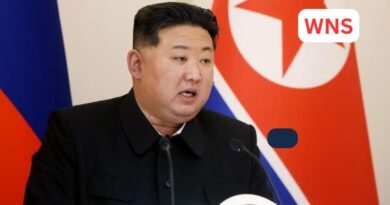
For many in Pakistan Khamenei’s death represented not only a geopolitical earthquake but a profound religious loss. As the supreme leader of Iran, Khamenei was widely regarded as a leading religious authority worldwide, and his killing sparked deep emotional reactions .
The protests in Karachi setting off from Abbas town on Abul Hasan Isphanu road before proceeding towards the consulate . Participants carried portraits of the slain leader and chanted slogans denouncing the United States and Israel .
The religious dimension of the protests heightened their intensity and distinguished them from more routine political demonstrations. For many demonstrators, the attack on Khamenei was perceived as an attack on Islam itself, prompting expressions of solidarity that transcended national boundaries .
Government Response and Security Measures
The Pakistani government moved quickly to contain the unrest and prevent further violence. Sindh Interior Minister Ziaul Hasan Lanjar demanded an immediate report from police leadership and emphasized that action would be taken against those disrupting law and order in accordance with the law .
Security was heightened at diplomatic missions and sensitive installations across the country, with authorities coordinating closely to prevent additional breaches . In Karachi, a heavy police contingent remained deployed on MT Khan Road, the main thoroughfare near the consulate .
The Foreign Ministry in Islamabad has not yet issued an official statement regarding the attacks on diplomatic missions, though such incidents typically draw strong diplomatic responses. The United States has not commented publicly on the storming of its consulate, though such breaches of diplomatic premises are considered serious violations of international law .
Broader Regional Context
The protests in Pakistan unfolded against a backdrop of escalating regional tensions following the US-Israeli strikes on Iran. On February 28, the United States and Israel launched coordinated military operations targeting Tehran and other Iranian cities, killing Khamenei and other senior leadership figures . Iran retaliated by launching missiles and drones toward Israel and targeting US military installations in Bahrain, Kuwait, and Qatar .
The conflict has rippled across the Middle East and beyond. In Iraq, pro-Iranian protesters gathered outside the Green Zone in Baghdad, where the US embassy is located . Protests were also reported in Morocco and Indian-administered Kashmir, where demonstrators marched through the capital Srinagar and central Kashmir’s Budgam district .
The United Arab Emirates reported that its air defense systems intercepted dozens of Iranian missiles and drones, with debris causing material damage in Abu Dhabi and Dubai and killing at least one civilian, including a Pakistani national . The UAE government condemned the strikes as a “blatant violation of national sovereignty and international law” and issued rare emergency alerts urging residents to seek shelter .
International reactions have been deeply divided. Several Asian nations, including Australia, Thailand, and Cambodia, called for restraint and a return to dialogue . Australia updated its travel advice for multiple Middle Eastern countries to “do not travel” and urged citizens to leave the region if safe to do so . India asked foreign nationals in the country to contact registration offices for visa extension assistance amid heightened tensions .
Economic Fallout
The escalating conflict has already begun affecting Pakistan’s economy. The government announced an increase in petrol prices by Rs8 per liter to Rs266.17, and high-speed diesel by Rs5.16 per liter to Rs280.86, effective for the next fortnight . The price hike, based on recommendations from the Oil and Gas Regulatory Authority, reflects rising global oil prices and exchange rate movements .
Analysts have warned that the conflict could further rattle global markets, particularly if Iran makes the Strait of Hormuz unsafe for commercial traffic. Approximately one-third of worldwide oil exports transported by sea passed through the strait in 2025, and any disruption could have severe consequences for energy-dependent economies like Pakistan .
Looking Ahead
As Pakistan enters a period of heightened tension, authorities face the challenge of balancing security measures with the need to accommodate legitimate expressions of grief and political sentiment. The government’s firm stance against vigilante action, articulated by Sindh Home Minister Lanjar, suggests that further attempts to storm diplomatic missions will be met with force .
For the families of the eight killed in Karachi, the immediate focus is on mourning and burial. For the wider region, the death of Iran’s supreme leader marks the beginning of an uncertain new chapter, one whose consequences are already being felt from the streets of Karachi to the diplomatic compounds of the Gulf .
The situation remains fluid, with authorities monitoring for additional protests and potential security threats. As one senior official stated: “Law enforcement agencies are fully alert and monitoring the situation closely.”
with inputs from
Al Jazeera: 9 killed US consulate Karachi
Arab News: 8 killed protesters storm consulate
The Week: Mob attacks consulate 8 killed
Modern World Order Explained: Power, Alliances & Global Systems.
Kuwait Says Airport Fuel Tanks Ablaze After Iran Drone Attack, Summons Ambassador, Australian Prime Minister Anthony Albanese Calls for Clarity from Trump on Objectives of Iran War.