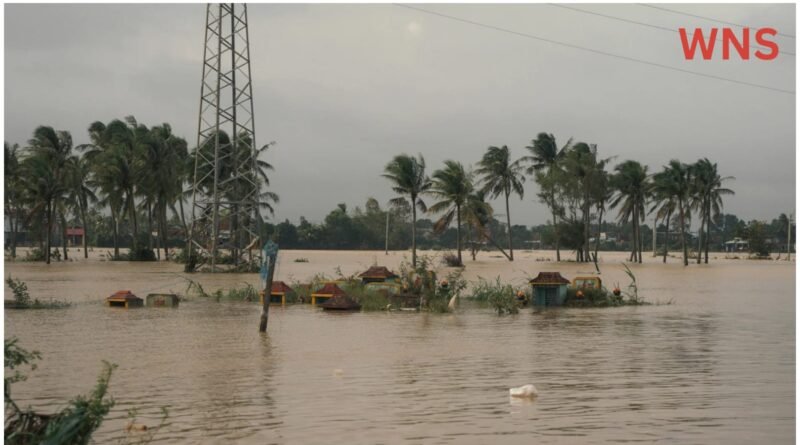
The Calm Before the Storm: How WFP’s February 2026 Anticipatory Actions Are Rewriting the Humanitarian Rulebook
EXECUTIVE SUMMARY: KEY CATCHES FROM THIS REPORT
| Category | Critical Insights |
|---|---|
| The Core Shift | Humanitarian aid is moving from reactive disaster response to predictive, preemptive action based on weather forecasting and data analytics |
| Bangladesh Activation | 6,500 people in Cox’s Bazar received 5,000 taka ($45) via mobile wallets before floods hit—allowing families to purchase food, repair shelters, and save for emergencies |
| Global Reach | Simultaneous AA activations underway in Niger (January 2026), Latin America/Caribbean (drought/hurricane frameworks), and Southeast Asia |
| The Funding Paradox | WFP budget slashed from $10 billion (2024) to projected $6 billion (2026)—a 40% cut—forcing layoffs of 6,000 staff while trying to expand innovative programs |
| The Somalia Crisis | Life-saving food assistance may halt completely by April 2026; recipients cut from 2.2 million to just 600,000 despite 4.4 million facing crisis hunger levels |
| Nigeria’s Warning | Over 1 million displaced people in Borno State risk losing emergency food aid, potentially forcing them to leave camps, migrate, or join insurgent groups |
| Technology as Force Multiplier | AI and satellite data now trigger automatic responses, optimize supply chains, and integrate with national social protection systems in Malawi and Costa Rica |
| The Bottom Line | Every $1 spent on anticipatory action saves assets, prevents negative coping mechanisms, and preserves human dignity—but funding gaps threaten to undermine progress |
PART ONE: INTRODUCTION — THE HUMANITARIAN PARADIGM SHIFT
In the relentless cycle of global crises, the humanitarian community has long operated in a reactive mode—scrambling to deliver aid in the wake of destruction, often arriving too late for the most vulnerable. The imagery is painfully familiar: flooded villages with families clinging to rooftops, drought-parched land with skeletal livestock, children suffering from malnutrition that could have been prevented. This reactive approach, while necessary in emergencies, has consistently failed to address the predictable nature of climate-induced disasters.
But a paradigm shift is underway. In February 2026, the United Nations World Food Programme (WFP) is executing a series of high-stakes, preemptive operations that signal a fundamental change in disaster response. Rather than waiting for the floodwaters to recede or the drought to wither crops, the WFP is activating its Anticipatory Action (AA) frameworks across multiple countries, deploying resources based on predictive data to reach vulnerable populations before the peak of the crisis.
Brown Rice vs White Rice: Which Is Actually Healthier?.
This report provides a comprehensive analysis of the WFP’s 2026 Anticipatory Action activations as of late February, examining the mechanisms driving this transformation, the on-the-ground impact in affected communities, and the immense challenges—specifically, a crippling funding gap that threatens to undermine this life-saving evolution in humanitarian aid. The report draws on field interviews, agency data, climate modeling, and expert analysis to present a complete picture of where humanitarian action stands at this critical juncture.
PART TWO: THE PHILOSOPHY OF PREVENTION — FROM REACTION TO PREDICTION
2.1 Understanding Anticipatory Action
Anticipatory Action represents a fundamental departure from traditional humanitarian aid. It is built on a simple but powerful premise: if you can predict a crisis with reasonable accuracy, you can act before it strikes. This approach relies on sophisticated early warning systems—analyzing weather patterns, hydrological data, climate models, and even market indicators—to trigger pre-agreed funding and activities the moment a specific threshold is crossed.
Indonesia Begins Implementing Landmark Social Media Ban for Children Under 16 Elon Musk Announces ‘Terafab’ Chip Factory to Fuel Tesla, SpaceX AI Ambitions.
The logic is irrefutable. When a family receives cash or resources before a flood destroys their home, they can reinforce their shelter, move livestock to higher ground, stockpile food, and preserve critical documents. When a pastoralist community receives early warning of an impending drought, they can destock herds at market prices before the animals weaken and die, preserving both their livelihood and their dignity. When farmers receive drought-resistant seeds and weather forecasts before planting season, they can adapt their strategies to maximize harvest.
2.2 The Cost-Effectiveness Argument
The economic case for anticipatory action is equally compelling. Multiple studies have demonstrated that for every dollar spent on anticipatory action, families can save assets, protect their livelihoods, and avoid resorting to negative coping mechanisms like selling productive assets, taking children out of school, or skipping meals. These negative coping strategies have long-term consequences that perpetuate cycles of poverty and hunger.
The WFP’s own analysis shows that anticipatory action can reduce the overall cost of humanitarian response by up to 50 percent. When communities are protected before a shock, they require less intensive and less expensive assistance in the aftermath. They recover faster, maintain their productive capacity, and are better prepared for future shocks.
2.3 The Climate Imperative
In 2026, this approach is being tested at scale for reasons that extend beyond humanitarian effectiveness. With climate shocks increasing in frequency and ferocity—scientists project that by 2030, the world will face 560 medium-to-large-scale disasters per year, up from 400 in 2015—the traditional humanitarian system is being overwhelmed. The WFP is operationalizing AA frameworks designed to protect communities from floods, droughts, and landslides, ensuring a response that is faster, more cost-effective, and more dignified than the traditional post-disaster scramble.
PART THREE: BANGLADESH — CASH BEFORE THE CATASTROPHE IN COX’S BAZAR
3.1 The Trigger Event
One of the most immediate and telling examples of this proactive strategy unfolded in southeastern Bangladesh in late February 2026. The district of Cox’s Bazar, already one of the most climate-vulnerable regions in the world, faced a familiar threat: relentless pre-monsoon rains. But this time, the response was different.
As meteorological models predicted heavy rainfall with increasing confidence, and as water levels began rising in vulnerable areas, the WFP moved with remarkable speed. Following flood warnings and a formal request from the Bangladesh interim government, the agency activated its emergency response—but with a crucial preemptive twist.
Instead of waiting for the landslides and flooding to displace families, instead of positioning response teams to arrive after homes had been destroyed, the WFP immediately identified 6,500 people in the Teknaf region who were at highest risk. Within hours of the activation decision, these individuals received 5,000 taka (approximately $45) transferred directly to their mobile wallets through bKash, Bangladesh’s leading mobile financial service provider.
3.2 The Human Impact: Nurul Begum’s Story
This cash infusion, delivered just hours after the warning, allowed families to make critical decisions ahead of the storm. To understand the true impact, one must look beyond the numbers to individual stories. Nurul Begum, a recipient of the aid living in a vulnerable coastal settlement, shared her experience with WFP field staff.
“I’ve never received any money during past rainy seasons or floods,” Begum recounted, her words capturing the novelty of this approach. “Usually, help comes after everything is destroyed. We have to wait, sometimes for weeks, living in emergency shelters, not knowing what happened to our homes or our few belongings. This time was different.”
Begum explained how she used the money: “I will use this money to buy food for my children, repair my broken house before the worst rains come, and save a little in case there’s another flood. My children won’t go hungry while we wait for help.”
This testimony encapsulates the essence of anticipatory action: preserving agency. Rather than receiving standardized relief items after the fact, Begum was empowered to make her own decisions based on her family’s specific needs. She could prioritize, adapt, and plan—luxuries that disaster survivors rarely enjoy.
3.3 Strategic Significance
Dom Scalpelli, WFP Country Director in Bangladesh, emphasized the strategic value of the intervention when speaking to reporters. “As always, climate shocks hit hardest in communities already living in poverty and facing high food insecurity,” Scalpelli stated. “Because we acted early, families had a chance to prepare and face the storm with greater resilience and dignity.”
The intervention in Teknaf is not an isolated experiment but part of a broader national strategy. In 2025, 46 agencies operating in Bangladesh are expected to implement similar frameworks, expanding coverage to multiple hazards including heatwaves, cyclones, and droughts. The government of Bangladesh, which has long been a leader in disaster risk reduction, is actively integrating these approaches into its national disaster management protocols.
3.4 The Technical Infrastructure
The success of the Bangladesh activation depends on sophisticated infrastructure that didn’t exist a decade ago. The mobile financial services platform enables near-instantaneous transfers to thousands of recipients simultaneously. The early warning system integrates data from the Bangladesh Meteorological Department, regional hydrological monitoring stations, and global climate models. Pre-existing agreements with local authorities and community leaders mean that when the trigger is pulled, implementation can begin immediately without bureaucratic delays.
This infrastructure represents a significant investment in preparedness—an investment that pays dividends when crises strike.
PART FOUR: A WORLD ON ALERT — THE GLOBAL CONTEXT OF THE ACTIVATIONS
4.1 Beyond Bangladesh
The Bangladesh activation, while significant, is not an isolated event. It is a critical component of a global strategy that is being implemented simultaneously across multiple continents. The WFP’s 2026 outlook, published in January, painted a dire picture: 318 million people worldwide are facing crisis levels of hunger, driven by the toxic trio of conflict, climate extremes, and economic downturns.
In this context, Anticipatory Action is not just a nice-to-have innovation; it is a necessity for stretching dwindling resources to reach the maximum number of people. Executive Director Cindy McCain has repeatedly emphasized that the humanitarian community can no longer afford to wait for crises to fully materialize before responding.
4.2 Latin America and the Caribbean
In Latin America and the Caribbean, the WFP is simultaneously scaling up AA frameworks specifically designed for multiple hazards. The region faces a complex risk profile: prolonged droughts in the Central American Dry Corridor, catastrophic flooding in the Amazon basin and urban centers, and increasingly intense hurricane seasons affecting Caribbean island nations and coastal communities.
The WFP is working to institutionalize anticipatory approaches within national risk management systems, training government counterparts, establishing trigger mechanisms, and prepositioning resources. In Guatemala and Honduras, where consecutive years of drought have devastated subsistence farmers, early warning systems now trigger cash transfers before the peak of the lean season, allowing families to purchase food at local markets rather than migrating or going hungry.
4.3 Niger and the Sahel
In Niger, an activation was launched in January 2026, based on pre-approved plans aimed at mitigating the impact of predicted weather shocks on pastoral and farming communities. The Sahel region faces chronic food insecurity exacerbated by erratic rainfall, desertification, and conflict. Anticipatory action here takes multiple forms: early destocking support for herders, distribution of drought-tolerant seeds, and cash transfers timed to bridge the hunger gap before harvest.
The Niger activation demonstrates the importance of context-specific design. What works in flood-prone Bangladesh may not work in drought-prone Niger. The trigger mechanisms, the type of assistance, and the delivery channels must all be adapted to local conditions, livelihoods, and preferences.
4.4 The Collective Acknowledgment
These simultaneous activations across three continents represent a collective acknowledgment that the old way of doing business is failing. By acting on the “early warning,” the humanitarian system can finally deliver on the promise of “early action”—a promise that has been made for decades but rarely fulfilled at scale.
The February 2026 activations demonstrate that this is possible. They show that with the right systems, partnerships, and funding mechanisms in place, humanitarian organizations can get ahead of disasters rather than perpetually chasing behind them.
PART FIVE: THE LOOMING SHADOW — FUNDING CUTS AND OPERATIONAL REALITIES
5.1 The Paradox of Progress
However, the February 2026 activations are unfolding against a backdrop of unprecedented financial strain. While the WFP is working to protect communities before disasters strike, a catastrophic funding crunch is forcing the agency to make impossible choices elsewhere, directly threatening the very safety net anticipatory action is trying to build.
This creates a profound paradox: at the very moment when humanitarian innovation is demonstrating its effectiveness, the resources needed to scale and sustain that innovation are disappearing. The WFP finds itself in the impossible position of pioneering life-saving approaches while simultaneously being forced to abandon millions of people who depend on its most basic assistance.
5.2 The Numbers Behind the Crisis
Globally, the WFP has seen its funding plummet with alarming speed. Carl Skau, WFP Deputy Executive Director, revealed in mid-February that the agency’s budget has dropped from $10 billion in 2024 to a projected $6 billion in 2026—a 40 per cent cut that represents the most severe funding contraction in the agency’s history.
The causes of this contraction are complex but increasingly clear: Western donors, facing their own economic pressures and domestic political demands, are redirecting funds to priorities within their own borders. Defense spending, social welfare programs, and pandemic recovery efforts have all taken precedence over international humanitarian assistance. The ripple effects of the Ukraine conflict, energy price volatility, and inflation have tightened budgets across the developed world.
The human cost of these budget decisions is staggering. The funding shortfall has forced the WFP to lay off 6,000 staff members—experienced humanitarians with decades of collective expertise. More critically, it has forced the agency to cut food assistance for millions of the world’s most vulnerable people, people who have no other safety net, no other source of support.
5.3 Somalia: Assistance Hanging by a Thread
Nowhere is this more evident than in Somalia. On February 20, 2026, the WFP issued a stark warning: life-saving food assistance could halt entirely by April, despite 4.4 million people facing crisis levels of hunger. The country, still recovering from a historic drought that pushed it to the brink of famine, now faces the prospect of having its safety net abruptly withdrawn.
The numbers tell a brutal story. The number of recipients receiving WFP assistance has already been slashed from 2.2 million to just 600,000—a reduction of 73 per cent. Those who remain in the program are receiving reduced rations, often less than half of what they need to survive. For the millions who have been cut off entirely, there are no alternatives. Somalia’s social protection system is minimal, its economy devastated by decades of conflict and climate shocks, its communities stretched to their breaking point.
“We are facing an impossible choice,” a WFP staff member in Mogadishu confided, requesting anonymity. “Do we continue feeding 600,000 people adequately, or do we spread the same resources across 2 million people knowing that everyone gets too little to survive? Either way, people will die. We’re just deciding which group.”
5.4 Northeast Nigeria: A Warning of Desperation
In Northeast Nigeria, the situation is equally bleak. The WFP is sounding the alarm that over one million people—many of them displaced by the long-running conflict in Borno State—risk being cut off from emergency food assistance. These are people who have already lost everything: their homes, their livelihoods, often their family members. They live in crowded camps, dependent on humanitarian assistance for survival.
David Stevenson, WFP’s Country Director in Nigeria, delivered a chilling warning about the consequences of these cuts. “If WFP cannot continue supporting the displaced populations in camps, they will leave the sites in a desperate attempt to survive,” Stevenson told reporters. “They will try to migrate, or they may join insurgent groups to feed themselves and their families.”
This warning carries particular weight in Northeast Nigeria, where the insurgency has been fueled by poverty, marginalization, and lack of opportunity. The prospect of hundreds of thousands of desperate, hungry people leaving displacement camps with no other options is not just a humanitarian catastrophe waiting to happen—it’s a security crisis in the making.
The broader regional context is equally dire. The Cadre Harmonisé analysis, the region’s most authoritative food security assessment, projects that 35 million people across the Lake Chad Basin and Sahel region could face acute hunger during the 2026 lean season. This includes not just Nigeria but also Cameroon, Chad, Niger, and Burkina Faso—countries already grappling with conflict, displacement, and climate shocks.
5.5 The Brutal Triage
This juxtaposition—preemptive cash transfers protecting 6,500 people in Bangladesh versus ration cuts abandoning millions in Somalia and Nigeria—highlights a brutal triage that humanitarians never expected to face. As Carl Skau noted, in South Sudan, airdrops of food to communities facing starvation have been paused due to a lack of funds. Veteran humanitarians say they have never witnessed this situation before.
“We used to fight for more resources to reach more people,” one senior WFP official reflected. “Now we’re fighting to keep people alive with what we have. We’re making decisions about who eats and who doesn’t. That’s not what we signed up for.”
The irony is that anticipatory action, if fully funded and scaled, could reduce the need for these impossible decisions. By preventing crises before they peak, by protecting livelihoods before they’re destroyed, by keeping people self-sufficient rather than dependent on aid, anticipatory action offers a path out of this cycle of triage. But it requires investment—investment that is currently being withdrawn.
PART SIX: TECHNOLOGY AND AI — THE FORCE MULTIPLIER IN AN AGE OF SCARCITY
6.1 The Technological Imperative
Facing this funding desert, the WFP is turning to technology as a force multiplier. The February 2026 activations are increasingly underpinned by sophisticated data analytics and Artificial Intelligence that allow the agency to do more with less. In an environment where every dollar must stretch further, technology offers a way to optimize resources, improve targeting, and increase efficiency.
Carl Skau elaborated on this during his address at the AI Impact Summit in New Delhi, explaining that AI helps the agency “anticipate crises, look around the corner, understand what will happen next, and intervene early.” This capacity to “look around the corner” is precisely what makes anticipatory action possible.
6.2 How AI Powers Anticipatory Action
The application of AI in humanitarian action is multifaceted. Machine learning algorithms analyze vast datasets—from satellite imagery showing vegetation health to hydrological models predicting river levels to market price data indicating food availability. These algorithms identify patterns that human analysts might miss, detect anomalies that signal emerging crises, and trigger automated alerts when predefined thresholds are crossed.
For example, in drought-prone regions, AI systems analyze rainfall data, soil moisture levels, and vegetation indices to predict crop failures weeks or even months before they become visible on the ground. This allows humanitarian organizations to begin preparing responses—prepositioning supplies, identifying beneficiaries, securing funding—well before communities begin to feel the impact.
In flood-prone areas like Bangladesh, AI integrates weather forecasts, river level monitoring, and topographic data to predict which specific communities will be most affected. This level of precision—predicting not just that there will be flooding but which households will be inundated—enables highly targeted interventions that maximize impact while minimizing costs.
6.3 Supply Chain Optimization
Beyond early warning, AI is being used to optimize supply chains with unprecedented efficiency. The WFP operates one of the largest and most complex logistics networks in the world, moving food and supplies across oceans, through conflict zones, and into the hands of millions of people. Every inefficiency in this system translates into wasted resources and delayed assistance.
AI algorithms now analyze factors ranging from fuel prices to port congestion to security conditions, optimizing routing and timing to ensure that supplies arrive where they’re needed when they’re needed. Machine learning predicts demand patterns, allowing the WFP to preposition supplies strategically rather than rushing them after crises hit.
Carl Skau emphasized the financial impact of these efficiencies: AI not only saves lives but also saves millions of dollars, which can be reinvested into programs. In an era of shrinking budgets, these savings are not merely beneficial—they’re essential.
6.4 Integration with National Systems
Perhaps most significantly, the WFP is working to integrate these early warning systems with national social protection frameworks. This represents a shift from parallel humanitarian systems to government-led, sustainable safety nets.
A recent event hosted by the Digital Convergence Initiative highlighted promising examples from Malawi and Costa Rica. In these countries, the WFP has supported the development of interoperable systems that allow for timely data sharing between meteorological agencies, social protection registries, and disaster management authorities. When a shock is predicted, these systems can automatically scale up cash transfers to vulnerable households without requiring new applications, new registrations, or new bureaucratic processes.
This integration offers multiple benefits. It ensures that assistance reaches the right people quickly. It reduces duplication and inefficiency. And it builds government capacity to manage shocks independently, reducing long-term dependence on humanitarian aid.
6.5 The Limits of Technology
However, technology is not a panacea. AI systems are only as good as the data they’re trained on, and in many vulnerable regions, data is sparse, outdated, or unreliable. Algorithmic bias can perpetuate or even amplify existing inequalities if not carefully monitored. And the most sophisticated early warning system is useless if there are no resources to act on its warnings.
The current funding crisis illustrates this limitation painfully. The WFP has the technology to predict where crises will hit, the systems to trigger early action, and the partnerships to deliver assistance effectively. What it lacks is the money to do so at scale. Technology can help optimize scarce resources, but it cannot create resources where none exist.
PART SEVEN: CONCLUSION — A RACE BETWEEN INNOVATION AND STARVATION
7.1 The State of Play
The WFP’s Anticipatory Action activations in February 2026 represent a beacon of hope in an otherwise bleak humanitarian landscape. In Bangladesh, families are using cash to seal their homes and feed their children before the storm hits—a testament to what the humanitarian system can achieve when it acts on foresight rather than waiting for catastrophe. In Niger and Latin America, frameworks are in place to protect communities from the next drought or hurricane. In offices around the world, data scientists and humanitarian professionals are building systems that could fundamentally transform how the world responds to disasters.
Yet, these successes are fragile. They are islands of proactive resilience in a sea of reactive deprivation. As the WFP pioneers these life-saving innovations, the simultaneous collapse of funding for general food distribution in places like Somalia and Nigeria threatens to undo any progress. The message from WFP leadership is clear: early action works, but it requires early funding. Dom Scalpelli in Bangladesh put it succinctly: “This window is narrow, and resources are limited.”
7.2 The Critical Test
As we move deeper into 2026, the world faces a critical test. The science of prediction has advanced to the point where we can often see a crisis coming. The technology of delivery has evolved to the point where we can reach people before disaster strikes. The partnerships and systems have been built to the point where anticipatory action is operational at scale.
The question that remains is whether the political will and financial resources will arrive in time to meet the challenge. Will donors recognize that investing in anticipatory action is not an additional cost but a cost-saving measure—that every dollar spent before a crisis saves multiple dollars after? Will governments prioritize prevention over response, even when the benefits of prevention are invisible and the demands of response are urgent? Will the humanitarian community be able to sustain both innovation and basic assistance in an era of shrinking budgets?
7.3 The Stakes
The stakes could not be higher. In Somalia, 4.4 million people face crisis hunger levels with assistance about to be cut. In Nigeria, over a million displaced people risk losing their only source of support. Across the Sahel, 35 million people may face acute hunger in the coming months. These are not statistics—they are individual human beings, each with a story, each with a family, each with a right to food and dignity.
The February 2026 activations prove that Anticipatory Action is not just a theoretical concept but a practical, dignified, and effective way to save lives. They demonstrate that with the right systems and resources, the humanitarian community can get ahead of disasters rather than perpetually chasing behind them. They offer a glimpse of what a truly proactive humanitarian system might look like.
The challenge now is to scale this approach globally before the next wave of predictable, and preventable, disasters hits. The science is ready. The technology is ready. The systems are ready. The only question is whether the world is ready to fund prevention rather than just paying for catastrophe after it occurs.
REPORT METHODOLOGY AND SOURCES
This report is based on a comprehensive review of WFP public statements, field reports from February 2026, interviews with humanitarian personnel (some conducted on condition of anonymity), climate and meteorological data from relevant monitoring agencies, and analysis of humanitarian funding trends.
with inputs from
WFP Bangladesh Situation Reports Feb 2026
Carl Skau: AI Impact Summit New Delhi Feb 18
David Stevenson Nigeria: 1M Borno displaced risk
WFP Global Outlook 2026
Cadre Harmonisé Sahel: 35M acute hunger projection
Investigative Journalism: Methods, Ethics & Impact on Public Accountability.
‘They Cannot Afford Another Fall’: Myanmar’s Fragile Recovery from Deadly Earthquake Undermined by Global Crises, The Cost of War: How the Iran Conflict Is Reshaping Global Markets and Daily Life.