Elon Musk Announces ‘Terafab’ Chip Factory to Fuel Tesla, SpaceX AI Ambitions
Project in Austin aims to produce 1 terawatt of computing power annually, reduce reliance on TSMC and Samsung
AUSTIN, Texas — March 22, 2026 — Elon Musk has officially unveiled plans for a massive semiconductor manufacturing facility called “Terafab” that will produce custom AI chips for Tesla vehicles, Optimus humanoid robots, and SpaceX space-based data centers, marking a dramatic expansion of his companies’ ambitions into chip production .
The project, announced Saturday evening at the defunct Seaholm Power Plant in Austin, will be a joint venture between Musk’s electric vehicle company Tesla, his rocket company SpaceX, and artificial intelligence firm xAI — which SpaceX acquired in February . The facility will be located near Tesla’s existing Gigafactory in Austin and aims to produce 1 terawatt (1 trillion watts) of computing power annually .
Nepal Arrests Former Prime Minister KP Sharma Oli Over Deadly 2025 Protest Crackdown.
“We’re starting a galactic civilization,” Musk told the audience, which included Texas Governor Greg Abbott, outlining a vision that extends far beyond traditional semiconductor manufacturing .
Why Build a Chip Factory?
Musk said the project is necessary because Tesla and SpaceX’s demand for computing power is expected to far exceed the capacity of global chip suppliers, including current partners TSMC, Samsung, and Micron .
Brown Rice vs White Rice: Which Is Actually Healthier? What Happens to Your Body When You Stop Eating Sugar for 30 Days.
“We’re very grateful to our existing supply chain, to Samsung, TSMC, Micron, and others… but there’s a maximum rate at which they’re comfortable expanding,” Musk said. “That rate is much less than we would like… and we need the chips, so we’re going to build the Terafab” .
The CEO noted that current global AI chip production is only about 20 gigawatts annually, while existing chip factories combined account for just 2 percent of the Terafab’s target output . The project represents a significant capital investment, with previous US media reports estimating the cost between $20 billion and $25 billion .
Two Types of Chips
The Terafab will produce two distinct categories of chips :
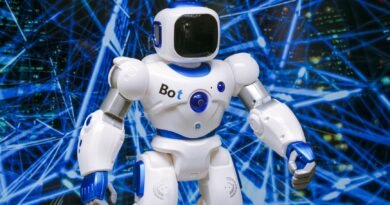
- Edge inference chips optimized for Tesla’s vehicles, robotaxi fleet, and Optimus humanoid robots. Musk said Optimus production volumes are expected to be 10 to 100 times greater than vehicle volumes, driving enormous chip demand .
- High-power space-grade chips designed for SpaceX and xAI, capable of withstanding radiation and operating in the harsh environment of orbit .
Musk revealed a concept design for a “mini AI satellite” with 100-kilowatt power capacity, which he said could eventually scale to the megawatt range. These satellites would form the backbone of a distributed computing network in low Earth orbit .
From Concept to Reality
The idea for Terafab has been taking shape for months. At Tesla’s November 2025 annual shareholder meeting, Musk first floated the possibility of building a chip factory, suggesting a potential partnership with Intel . By January 2026, his tone had shifted to urgency: “We must build a Tesla Terafab” to remove supply bottlenecks expected within three to four years .
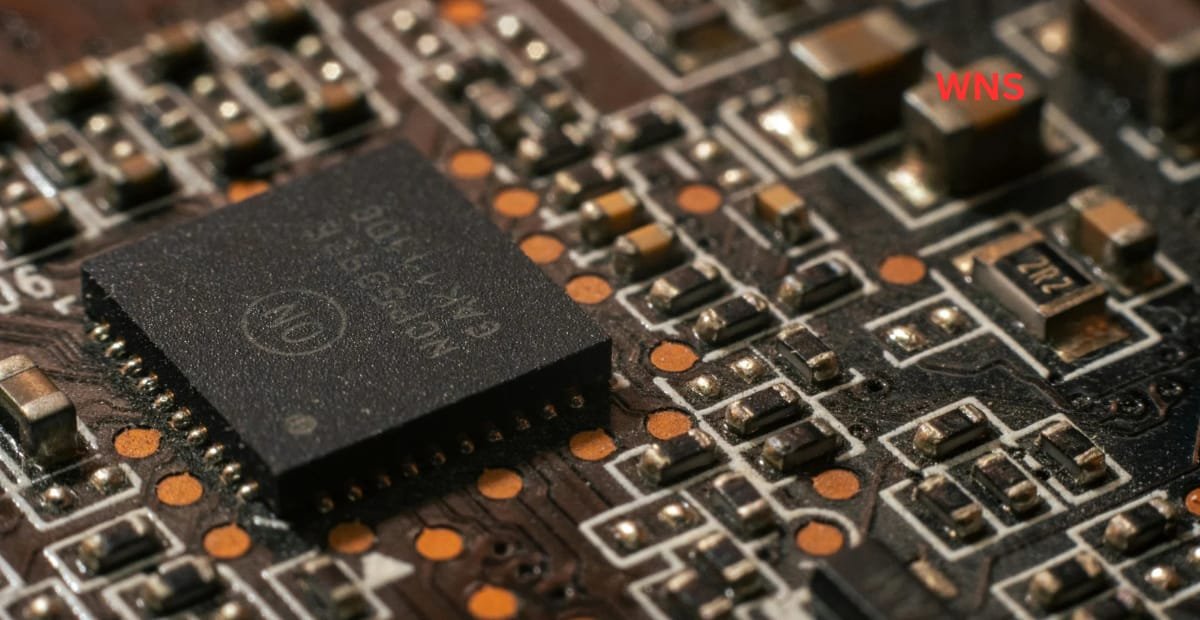
The facility will utilize advanced 2-nanometer process technology and integrate logic chip manufacturing, memory production, and advanced packaging under one roof — a configuration Musk said “doesn’t exist anywhere in the world” . The plant will also include testing and mask revision capabilities to create what Musk described as a “recursive improvement loop” that could operate an order of magnitude faster than industry norms .
Production Targets and Timelines
Initial production capacity is estimated at approximately 100,000 wafers per month, with a long-term expansion target of 1 million wafers monthly — a scale that would rival the output of TSMC’s global operations . Annual chip output is projected between 100 billion and 200 billion units .
The first product will be Tesla’s fifth-generation AI chip, AI5, with pilot production planned for late 2026 and mass production targeted for 2027 .
Space-Based Computing Ambitions
Perhaps the most ambitious aspect of the Terafab project is its focus on space-based applications. Musk said approximately 80 percent of the facility’s chip output will be destined for space deployment, supporting a network of solar-powered AI satellites .
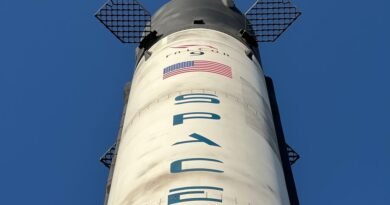
SpaceX has already applied for a Federal Communications Commission license to launch one million data center satellites into orbit, according to reports . The space-based computing network is a key driver behind SpaceX’s planned IPO later this year, which could raise up to $50 billion and value the company at more than $1.75 trillion .
Musk argued that deploying AI in space will eventually become cheaper than terrestrial options, citing constant sunlight (eliminating battery needs), 5 times greater solar efficiency, and no requirement for heavy weather-resistant structures .
A High-Stakes Gamble
The project faces significant hurdles. Musk acknowledged the magnitude of the undertaking, noting that “building a chip manufacturing plant alone is herculean,” as Morgan Stanley’s semiconductor analysts recently wrote . NVIDIA CEO Jensen Huang warned in November 2025 that achieving TSMC’s level of capability is “virtually impossible” .
Tesla’s capital expenditure is projected to reach $20 billion in 2026, up from less than $9 billion in 2025, with no positive free cash flow expected this year . The company is also actively recruiting semiconductor engineers, with Musk directly soliciting applications from Korean chip professionals on social media .
Despite these challenges, Musk presented Terafab as an essential step toward what he called a future of “amazing abundance” — and ultimately, making humanity a “galactic civilization” capable of harnessing the resources of other planets and stars .
SOURCES / INPUTS
Business Insider: Elon Musk unveils moonshot Terafab project. Here are 4 takeaways
The Boston Globe/Bloomberg: Musk says Tesla, SpaceX, xAI chip project to kick off in Texas
The Future of Science & Technology: AI, Space, Biotechnology & Digital Transformation Explained.
Indonesia Begins Implementing Landmark Social Media Ban for Children Under 16, Russia Fines Telegram App $432,000 for Failing to Remove prohibited Content.