Sri Lanka Denied Airport Access to US Warplanes, President Tells Parliament
Colombo rejected requests from Washington to preserve neutral foreign policy amid escalating Middle East conflict
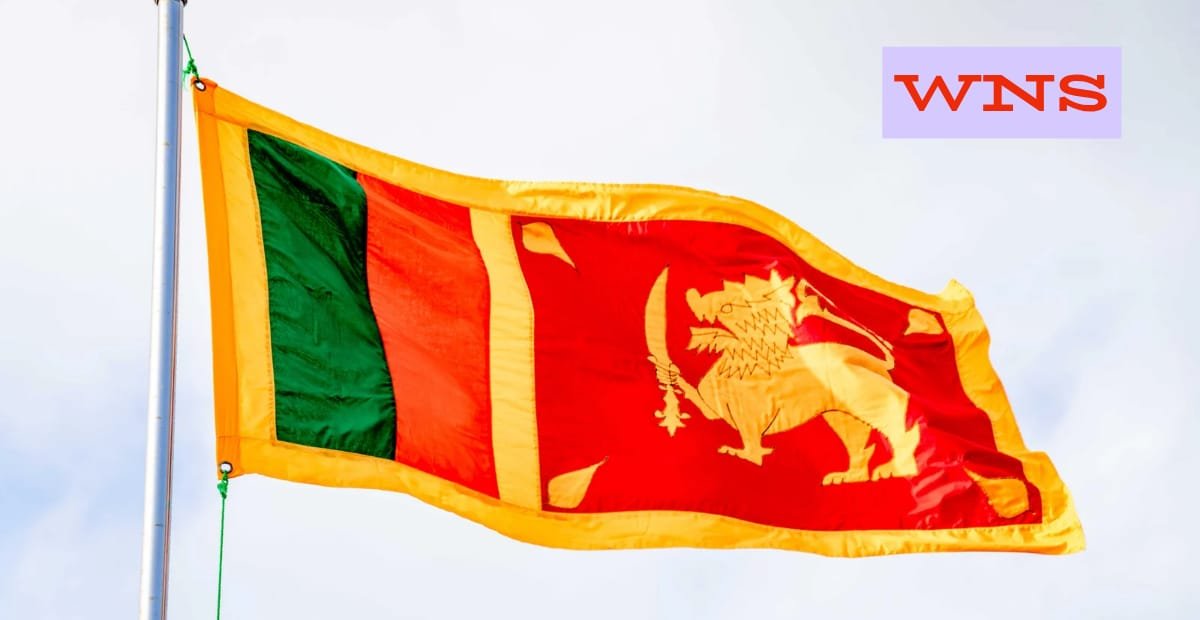
COLOMBO — March 20, 2026 — Sri Lanka refused permission for the United States to station two warplanes at an airport in the island’s south during early March, President Anura Kumara Dissanayake told parliament on Friday, while also confirming that a request from Iran for naval vessels to visit Colombo was denied on the same day .
The disclosure came as the President addressed lawmakers to explain the government’s decision-making process amid escalating military conflict in the Middle East, clarifying that both requests were rejected to uphold Sri Lanka’s longstanding policy of neutrality .
Global Markets Rebound as US-Iran Ceasefire Hopes Drive Oil Below $100, Gold Surges.
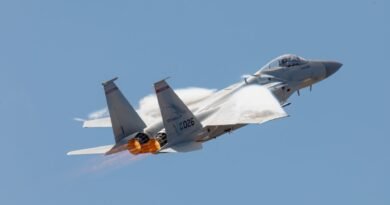
“The United States wanted to bring two warplanes armed with eight anti-ship missiles from a base in Djibouti to the Mattala International Airport from March 4 to 8 and we said ‘no’,” Dissanayake told parliament .
He further explained that the government had been considering a separate request from Iran, received on February 26, for three naval vessels to make a goodwill visit to Sri Lanka between March 9 and 13 . Later that same afternoon, the United States submitted its request for the two fighter aircraft to land at Mattala International Airport .
Oil Surges Past $115 as Middle East War Expands, Stocks Tumble Worldwide Philippines Declares National Energy Emergency as Middle East Crisis Threatens Fuel Supply.
“At that point, we had two documents on our table,” the President said. “One request from Iran asking for entry for naval vessels on March 9 and 13, and another from the United States requesting permission for two naval fighter aircraft to land at Mattala” .
Preserving Neutrality Amid Regional Conflict
President Dissanayake emphasized that the government’s decision was made with clarity as signs of escalating military conflict were already emerging internationally . “We will not do that,” he said, reiterating that under no pressure would Sri Lanka compromise the neutral stance it has protected .
Responding to criticism from some Members of Parliament and sections of public opinion who had accused the government of favouring one side, the President rejected those claims as “completely false” . He warned that had permission been granted to either party, Sri Lanka’s neutrality would have collapsed—either by appearing to side with one party or by being compelled to grant similar access to the other .
“Such a move would have brought a distant conflict closer to Sri Lanka, potentially involving Mattala International Airport and the Port of Colombo,” he said .
The President further explained that one party is trying to bring about regime change, while the other, lacking proper technologies, believes it can cause major disruptions to global trade and still win the war—describing this as part of the complex dynamics shaping the conflict and its wider implications .
Military Context and Strategic Implications
The US aircraft were reportedly stationed near the Djibouti port, a strategic location for American military operations in the region . The two warplanes were armed with eight anti-ship missiles, according to the President’s statement .
The Iranian vessels were part of a tour aimed at strengthening bilateral cooperation, a proposal the government had been considering before the US request arrived on the same day .
Sri Lanka maintains close ties with the United States, its biggest export market, while Iran is a key buyer of tea, the country’s main export commodity . The rejections reflect Colombo’s careful balancing act between two nations with which it has significant economic relationships.
Official Admission Follows Earlier Speculation
Friday’s parliamentary statement marked the first official admission by a Sri Lankan official regarding the US request . Last week, the Secretary of the Defence Ministry had admitted that it was the UN Naval Command that first informed the Sri Lankan Navy via email about an emergency incident reported in Sri Lanka’s Exclusive Economic Zone (EEZ), though there was no mention of the US request at that time .
Earlier in March, former cabinet minister Wimal Weerawansa had claimed that the United States had held discussions with the government about using its airports and seaports for military purposes, warning that such an arrangement would expose Sri Lanka to serious security risks .
Iranian Ship Incident and Aftermath
The President also addressed the recent incident involving the Iranian ship IRIS Dena, which was attacked by the US Navy, resulting in the deaths of over 150 Iranian sailors . He stated that all recovered bodies had been repatriated, while 32 wounded sailors have fully recovered and are currently staying at Koggala Air Force Base .
Conclusion
Sri Lanka’s decision to deny both requests reflects its consistent policy of non-alignment, a principle the country has maintained since the Cold War era. As the Middle East conflict continues to expand, with Iran launching retaliatory strikes on Gulf energy infrastructure and Israel conducting operations against Iranian targets, Colombo’s neutrality underscores the challenges faced by smaller nations navigating the pressures of major power rivalries .
“That is neutrality,” President Dissanayake said, reiterating that under no pressure would Sri Lanka compromise the neutral stance it has protected .
SOURCES / INPUTS
The Hindu: Sri Lanka refused ground access to U.S. warplanes
Sri Lanka Guardian: Sri Lanka Rejects Both Iranian Ships and US Jets — President Says
Ada Derana: President explains Sri Lanka’s decision to reject Iranian Naval and US aircraft requests
Modern World Order Explained: Power, Alliances & Global Systems.
Kuwait Says Airport Fuel Tanks Ablaze After Iran Drone Attack, Summons Ambassador, Australian Prime Minister Anthony Albanese Calls for Clarity from Trump on Objectives of Iran War.