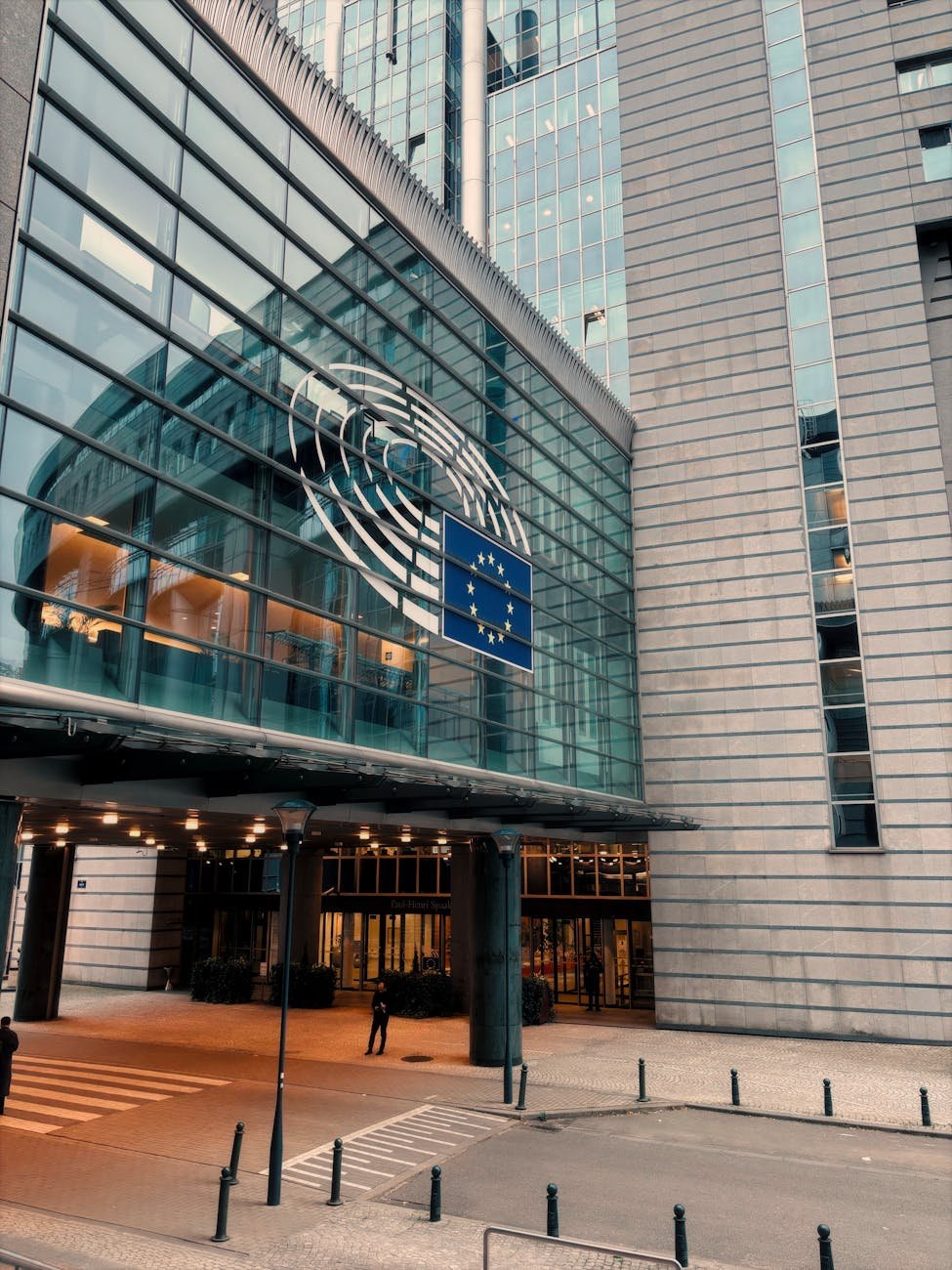
EU Approves €90 Billion Loan for Ukraine After Hungary Drops Opposition
BRUSSELS — April 24, 2026 — The European Union has formally approved a €90 billion loan package for Ukraine, finalizing the financial mechanism to support Kyiv’s budget and defense industrial needs for 2026 and 2027 after Hungary lifted its months-long veto, the Council of the EU announced on Thursday, April 23.
The Council adopted the final key piece of legislation underpinning the loan, which was agreed in principle by EU leaders in December 2025, following the resumption of Russian oil flows through the Druzhba pipeline to Hungary and Slovakia . The move allows the European Commission to begin disbursements as soon as possible, with the first tranche expected within the coming month .
Norway Proposes Ban on Social Media for Children Under 16 in Landmark Digital Safety Push | Armed Attack on Mining Site in Pakistan’s Balochistan Kills at Least 9, Abducts Turkish National.
All 24 member states participating in the enhanced cooperation mechanism approved the loan, with Hungary, Slovakia and the Czech Republic having secured exemptions that mean they will not participate in the joint borrowing .
Structure of the Loan Package
European Council President Antonio Costa confirmed the approval on social media platform X, stating: “The EU’s strategy to achieve a just and lasting peace in Ukraine rests on two pillars: strengthening Ukraine; increasing pressure on Russia. Today we moved forward on both” .
The loan will provide approximately €45 billion annually in 2026 and 2027 to help cover Ukraine’s most urgent budgetary and defence industrial capacity needs .
Of the total package:
Modern World Order Explained: Power, Alliances & Global Systems.
- €30 billion is allocated for macroeconomic support to Ukraine, channelled via macro-financial assistance or through the Ukraine Facility to address urgent budgetary needs
- €60 billion is designated for Ukraine’s defence industrial capacities, including procurement of defence products
In 2026 specifically, Ukraine is expected to receive €16.7 billion for budget support and €8.3 billion directed to defence needs, according to Ukraine’s Finance Ministry .
Hungary’s Veto Lifted
The approval came after Hungary dropped its opposition, which had been in place since February 2026. Outgoing Prime Minister Viktor Orbán had vetoed the payment after Ukraine suspended Russian oil transit via the Druzhba pipeline, which had been damaged in a Russian attack in late January .
Orbán, who was defeated in Hungary’s April 12 parliamentary election and is set to leave office after 16 years, had made approval conditional on the resumption of oil deliveries .
Ukraine confirmed on Tuesday, April 21, that repairs to the damaged pipeline section had been completed and that pressurising of the pipeline had begun. Oil resumed flowing into Slovakia on April 22 and into Hungary shortly thereafter .
Ukrainian Foreign Minister Andrii Sybiha stated that with the resumption of operations on the Druzhba pipeline, Ukraine had removed all obstacles to the loan’s allocation .
Terms and Conditions
The financing will be raised by the EU on international capital markets, with obligations backed by the EU budget reserve . The loan is intended to be repaid by reparations due from Russia to Ukraine .
Funding will be linked to strict conditions on Ukraine’s side, including adherence to the rule of law and anti-corruption measures .
The Council also adopted a Council Implementing Decision approving the assessment of Ukraine’s financing strategy, which sets out that €45 billion should be made accessible to Ukraine for 2026, distributed as:
- Up to €8.35 billion for budget assistance under the Ukraine Facility
- Up to €8.35 billion for macro-financial assistance
- Up to €28.3 billion to support Ukraine’s defence industrial capacities
Concurrent Sanctions Package
Alongside the loan approval, the EU also adopted its 20th package of sanctions against Russia, centered on cutting its energy income . The measures include laying the groundwork for a future ban on maritime services for Russian crude oil and petroleum products, expanding restrictions on the “shadow fleet,” and tightening controls on tankers and LNG shipping .
The package introduces 36 designations across Russia’s energy sector and blacklists 46 additional vessels, bringing the total number targeted under shadow-fleet measures to 632 .
Reactions
Ukrainian President Volodymyr Zelenskyy said the EU’s decision was “strong and fundamental,” adding that it will help strengthen Ukrainian forces, boost air defence and protect the energy system for winter .
European Commission President Ursula von der Leyen stated: “The more Russia is doubling down on its war of aggression, the more Europe is doubling down on supporting Ukraine” .
EU foreign policy chief Kaja Kallas said ahead of the approval that “Ukraine really needs this loan and it’s also a sign that Russia cannot outlast Ukraine” .
Ukraine’s Finance Minister Sergii Marchenko thanked EU partners for what he described as “effective cooperation, which helps maintain Ukraine’s financial stability despite significant defence and recovery expenditures” .
Looking Ahead
The first tranche of funding is expected to be raised within the next month, helping strengthen Ukraine’s economy during the wartime period . The EU financial assistance will also support Ukraine’s path as an EU candidate country by advancing reforms in the rule of law and public administration .
“Loan disbursements will start flowing as soon as possible, providing vital support for Ukraine’s most pressing budgetary needs,” said Cyprus Finance Minister Makis Keravnos, whose country holds the EU presidency .***
SOURCES / INPUTS
Council of the EU Press Release: Council finalises €90 billion support loan to Ukraine
Ukraine Ministry of Finance: EU Council approves €90 billion Ukraine Support Loan
Jaggery vs Sugar: Which Is Actually Healthier for Your Body? | Why Hydration Is More Important Than You Think for Your Health.
Nothing in this content constitutes professional advice of any kind, including legal, medical, financial, or technical advice.
Some content may be created or assisted using editorial tools and technologies; however, all material is subject to editorial review and oversight to ensure accuracy, clarity, and relevance in accordance with our publishing standards.
Images, graphics, and visual elements are used for illustrative purposes unless otherwise stated and may not always represent exact events, locations, or individuals.
For detailed information regarding our editorial standards and AI usage practices, please review our AI-Generated Content Disclosure Policy, Editorial Policy, Privacy Policy, Terms of Service, and Corrections & Updates Policy.