Pakistan Strikes Inside Afghanistan as ‘Open War’ Declared Over Militant Sanctuaries
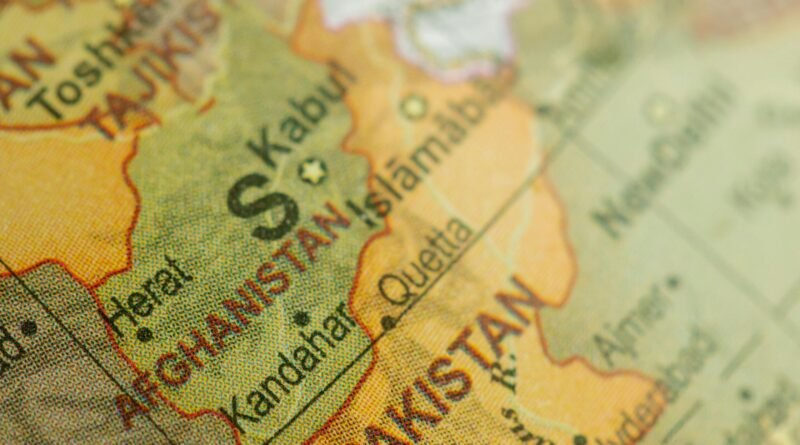
ISLAMABAD/KABUL — March 4, 2026 — Pakistan has launched dozens of airstrikes against Afghan military installations, including the strategic Bagram Airbase, and declared a state of “open war” after cross-border clashes killed more than 200 people over the past week, pushing the neighbors toward their most significant military confrontation in years .
The escalation, which began Feb. 26 with Afghan Taliban forces attacking Pakistani border posts, has drawn in regional mediators and triggered competing casualty claims that independent observers have been unable to verify. Pakistani Foreign Minister Ishaq Dar confirmed that Operation Ghazab-ul-Haq has struck 37 locations across seven Afghan provinces, including Kabul, Kandahar, and Nangarhar, in what Islamabad describes as self-defense against Tehrani Taliban Pakistan (TTP) militants operating from Afghan soil .
Cross-Border Strikes Intensify
Afghan Taliban spokesman Zabihullah Mujahid told AFP on Sunday that anti-aircraft fire was directed at Pakistani aircraft over Kabul after explosions rocked the capital before dawn . The Afghan defense ministry claimed its forces engaged Pakistani planes, though the extent of damage remains unclear.
Satellite images reviewed by The New York Times show that one aircraft hangar and two warehouses at Bagram Airbase—once the centerpiece of U.S. military operations in Afghanistan—were destroyed in the strikes, according to GTV News reports citing the publication . The Afghan government confirmed a Pakistani air attack had taken place at the facility .
Pakistani Information Minister Attaullah Tarar said the operations targeted militant infrastructure, including a major ammunition depot and drone storage site in Jalalabad and the Khogani base in Nangarhar province . Security sources said the strikes are part of a broader campaign to neutralize threats from groups Pakistani authorities refer to as Fitna al-Khawarij .
The Afghan Taliban’s Interior Minister Sirajuddin Haqqani warned that the conflict would be “very costly,” while Pakistani Defense Minister Khawaja Muhammad Asif characterized the situation as “open warfare” .
Civilian Casualties Mount
Deputy Afghan government spokesman Hamdullah Fitrat announced Tuesday that at least 110 Afghan civilians, including 65 women and children, have been killed and 123 others injured in Pakistani airstrikes and mortar shelling between Feb. 21 and March 2 . The official further reported that 353 residential houses were completely or partially destroyed, one health center damaged, and a school affected .
In Kandahar province, construction workers described being hit by two airstrikes Sunday. “Everything went dark before our eyes,” said 20-year-old Enamullah, who only gave one name. “I came from Kabul just to earn a piece of bread” . The site manager said three people were killed .
Fitrat also stated that Pakistani fire has killed 30 civilians across eastern Khost, Kunar, and Paktika provinces since Thursday . Casualty claims from both sides remain difficult to verify independently due to restricted access to conflict zones .
On the road between Kabul and the border, an AFP journalist in Jalalabad heard a jet and two explosions Saturday . Residents in Paktika reported ongoing exchanges of fire, while in Khost, some families fled their homes near the frontier. “The bombardments started, children, women, everyone just got out,” 63-year-old Mohammad Rasool told AFP after reaching another district. “Some didn’t have shoes, some weren’t veiled” .
Competing Military Claims
Both governments have released starkly different figures regarding military casualties and infrastructure damage.
Pakistani Information Minister Attaullah Tarar claimed Tuesday that 502 Afghan Taliban operatives and suspected militants have been killed and hundreds injured in airstrikes and clashes since Thursday . He further asserted that Pakistani forces destroyed 188 Afghan military posts, captured 31 others, and eliminated 185 tanks and armored personnel carriers .
Tarar also reported that Afghan Taliban forces carried out attacks at dozens of locations in Balochistan and Khyber Pakhtunkhwa provinces, which Pakistani forces repelled. One Frontier Corps soldier “gave the ultimate sacrifice while defending the motherland,” he said in a statement on X . According to Pakistani tallies, 13 soldiers and one civilian have died, with one soldier missing .
Afghan defense ministry spokesman Enayatullah Khowarazmi countered Monday that Afghan forces had killed more than 100 enemy personnel and captured more than 25 Pakistani military posts . The Afghan government earlier put its own troop deaths at 13 .
Kabul also claimed to have shot down a Pakistani fighter jet and captured its pilot, which Islamabad denied as “totally untrue” . The Afghan defense ministry additionally reported shooting down an unmanned aerial vehicle in Logar province .
The defense ministry in Kabul has carried out its own air strikes on Pakistani territory over the past two days, which observers suggested could have involved drones .
Verification of Key Claims
The following table assesses major assertions from both sides against available evidence:
| Claim | Status |
|---|---|
| Pakistan struck Bagram Airbase, destroying hangar and warehouses | confirmed by Afghan MoD |
| 110 Afghan civilians killed, 123 injured | Official Afghan government figure |
| Pakistan carried out 50+ airstrikes inside Afghanistan | Claimed by NYT, cited by Pakistani officials |
| 502 Afghan Taliban/militants killed | Pakistani government claim |
| 13 Pakistani soldiers killed | Pakistani government tally |
| Afghan forces shot down Pakistani fighter jet | Denied by Pakistan as “totally untrue” |
| Pakistani strikes targeted 37 locations across 7 provinces | Confirmed by Foreign Minister Dar |
Diplomatic Efforts Stall
International mediation attempts have yet to yield a ceasefire. Saudi Arabia and Qatar have engaged in efforts to halt the fighting, but no progress has been reported . The Afghan Taliban previously indicated willingness to negotiate, though the concurrent Gulf conflict involving US-Israeli strikes on Iran has complicated regional diplomacy .
China said it was “working with” both countries and called for calm . The United States backed “Pakistan’s right to defend itself against Taliban attacks,” Allison Hooker, the under secretary of state for political affairs, wrote on X after talks with her Pakistani counterpart .
Pakistan’s Foreign Minister Ishaq Dar emphasized Monday that Islamabad is making “full diplomatic efforts” to defuse tensions but maintained that the military response was necessary . “We have the capacity, the will and the kinetic capability to handle it in a meaningful way, but we have exercised extreme restraint,” Dar told a media briefing .
President Asif Ali Zardari, addressing a joint session of parliament Monday, said Pakistan “will not allow any entity either domestic or foreign to use neighboring territory to destabilize its peace” . He cited a recent UN report describing the presence of terrorist groups in Afghanistan as an “extra-regional threat” .
Zardari asserted that “despite multiple diplomatic engagements by Pakistan and friendly countries, the Afghan de facto regime continues to provide safe sanctuaries to a variety of terrorist groups including Al-Qaeda, BLA and TTP” . He stated that promises made in Doha not to allow these groups to operate from Afghan soil “have been conveniently forgotten” .
Domestic Political Repercussions
The conflict has prompted rare unity appeals from across Pakistan’s fractured political landscape. Five senior leaders of the Pakistan Tehreek-e-Insaf (PTI) party, imprisoned at Kot Lakhpat Jail, issued a statement through their lawyer Tuesday calling for “national reconciliation” to address escalating regional tensions .
Shah Mahmood Qureshi, Yasmin Rashid, and other jailed PTI figures warned that “business as usual is no longer possible” and that “current developments will have a negative impact on Pakistan’s economy, security, and stability” . They expressed alarm over growing strategic cooperation between India and Israel and cautioned that rising oil and gas prices following Middle East hostilities could undermine Pakistan’s macroeconomic stability .
The leaders urged the government to urgently revisit its policies, stressing that “we do not have the luxury of time anymore; we must reconcile immediately” .
Root Causes and Historical Context
The current hostilities represent the most severe test of Pakistan-Afghanistan relations since the Taliban returned to power in Kabul in 2021. Islamabad accuses Afghanistan of failing to act against TTP militants who carry out attacks in Pakistan, which the Taliban government rejects .
Many attacks have been claimed by the TTP, which has stepped up assaults in Pakistan since 2021 . This week’s escalation marked the first time Pakistan has focused its air strikes on Afghan government facilities rather than exclusively targeting militant hideouts, representing a significant shift in strategy .
Mosharraf Zaidi, a spokesman for Pakistan’s prime minister, told AFP that gunmen associated with the Pakistani Taliban attacked a checkpoint in the northwest, though there was no immediate claim of responsibility .
Defense analysts cited by GTV News suggest that weapons left behind after the US withdrawal from Afghanistan have been used in attacks against Pakistan . Despite repeated warnings, cross-border attacks have continued, prompting the current operation .
As fighting enters its sixth day, the trajectory remains uncertain. Pakistan’s Foreign Minister Dar reiterated Monday that “dialogue and diplomacy are the only way forward” while insisting that “our sovereignty and security are non-negotiable” . He framed Pakistan’s position narrowly: “Pakistan has had only one ask, and that’s that Afghan soil shouldn’t be used against Pakistan. This is the only issue we have, as long as it is settled, we have no other issue with Afghanistan” .
The Afghan government has called for “dialogue” to resolve the conflict . However, with both sides claiming significant military victories and domestic audiences demanding strong action, the path to de-escalation remains obstructed.
The timing compounds regional instability. The Pakistan-Afghanistan confrontation coincides with US-Israeli strikes on Iran and Tehran’s retaliation, creating a volatile security environment across the Middle East and South Asia . Pakistan’s condemnation of attacks on Iran, alongside its own military operations against Afghanistan, illustrates the delicate diplomatic balancing act Islamabad faces .
Several rounds of negotiations between Pakistan and Afghanistan last year followed a ceasefire brokered by Qatar and Turkey . Saudi Arabia intervened this month after repeated breaches, mediating the release of three Pakistani soldiers captured by Afghanistan in October . Whether those mediators can achieve another breakthrough remains an open question as both capitals show no signs of stepping back .
For civilians on both sides of the 2,600-kilometer border, the human cost continues to mount. Mohammad Rasool, displaced from his home in Khost, now waits with his family in another district, uncertain when—or if—they can return. “Children, women, everyone just got out,” he told AFP. “Some didn’t have shoes, some weren’t veiled” .
With inputs from:
NYT: Pakistan Strikes Afghanistan Bagram
Al Jazeera: Pakistan bombs Kabul open war
Reuters: Pakistan strikes Afghanistan targets
BBC: Pakistan-Afghanistan escalation
For broader context, see our in-depth analysis on Modern World Order Explained: Power, Alliances & Global Systems.
Also in this section: Iranian Missile Strikes US Al-Udeid Air Base in Qatar, Destroying $1.1 Billion Radar System and UN Watchdog Confirms Damage to Natanz Nuclear Site Entrance, Says No Radiation Risk.