Israel strikes Tehran oil depots as Iran retaliates against Haifa refinery
War enters ninth day with first attacks on energy infrastructure, sending massive fires and black smoke across Iranian capital
TEHRAN, Iran — March 8, 2026 — Israeli warplanes struck multiple oil storage depots in Tehran late Saturday, hitting Iran’s energy infrastructure for the first time since the war began and triggering massive fires that sent thick plumes of black smoke billowing across the Iranian capital, officials and state media reported .
The Israeli military confirmed it attacked “several fuel storage facilities in Tehran” that it said were used by Iran’s armed forces “to operate military infrastructure” . The strikes targeted at least four oil storage sites, including facilities in southern Tehran near the city’s main refinery, as well as depots in the western Shahran district and the neighboring city of Karaj in Alborz province .
Global Markets Tumble as Iran Conflict Sparks Oil Surge, Safe-Haven Rush Reverses.
Videos circulating on social media and verified by news agencies showed towering columns of fire lighting up the night sky, with burning oil leaking into streets and even Tehran’s sewage system, creating a “river of fire” along roadways . At least four tanker drivers were killed in the attacks, according to Iran’s Fars news agency .
Iran retaliates against Haifa refinery
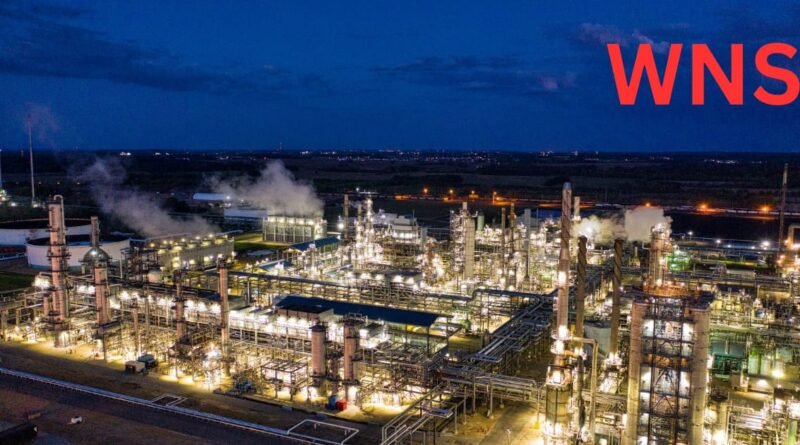
Hours after the strikes on Tehran, Iran’s Islamic Revolutionary Guard Corps (IRGC) launched retaliatory missile attacks on Israel’s largest oil refinery in Haifa, the IRGC announced in a statement .
The IRGC said it targeted the Bazan Group oil refinery in Haifa Bay using Kheibar Shekan solid-fuel ballistic missiles, describing the strike as direct retaliation for “the Israeli regime’s attack on Tehran refinery” . The Haifa facility supplies approximately 50 to 60 percent of Israel’s domestic fuel and was previously hit during an Iranian missile barrage in June 2025, an attack that killed three workers and forced the refinery to shut down for several months .
Air raid sirens sounded in the Haifa area Saturday night, though Israeli officials have not confirmed damage or casualties from the Iranian strike .
Escalating conflict and civilian toll
The strikes on energy infrastructure mark a significant escalation in the war that began February 28 when the US and Israel launched strikes on Iran that killed Supreme Leader Ayatollah Ali Khamenei . The conflict has now entered its ninth day with no signs of de-escalation.
Iranian state media reported that US and Israeli warplanes carried out the attacks on Tehran’s oil depots, with the official IRNA news agency stating that “an oil depot in southern Tehran was targeted by the US and Zionist regime” . The ILNA news agency reported that while the depot near Tehran’s key oil refinery was hit, the refinery’s facilities “were not damaged” .
The overall death toll continues to climb. At least 1,230 people have been killed in Iran, more than 290 in Lebanon, and 11 in Israel, according to officials in those countries. Six US troops have also been killed .
In Tehran, residents woke Sunday to an eerie landscape. Al Jazeera’s Tohid Asadi reported seeing “black raindrops” on his windows and described the capital engulfed by a “thick black cloud” from the burning oil facilities. “There is a high risk of being surrounded by toxic air,” he said .
Regional spillover intensifies
The conflict continued to spread across the region Sunday. Iranian attack drones struck targets in Saudi Arabia and Kuwait, with the Saudi Defense Ministry reporting at least 15 drones intercepted and destroyed, some attempting to attack the diplomatic quarter in Riyadh .
In Kuwait, fuel tanks at the international airport were targeted, with the Defense Ministry confirming it intercepted three ballistic missiles and reporting damage to civilian facilities from falling debris . Social media footage showed a skyscraper in Kuwait City engulfed in flames .
Oil prices surge past $100 per barrel for first time since 2022 as Iran war disrupts global supply NASA’s DART Mission Alters Orbit of Asteroid System Around Sun in Planetary Defense Milestone.
Bahrain’s Interior Ministry reported that an Iranian drone attack caused material damage to a water desalination plant, while falling missile fragments injured three people in the city of Muharraq .
The strikes on Gulf states continued despite Iranian President Masoud Pezeshkian on Saturday apologizing to Iran’s neighbors and pledging to halt attacks if no strikes originate from their territories . Pezeshkian later insisted Iran has a “legitimate right to defend itself” against US-Israeli attacks .
Israeli operations expand
Israel expanded its operations beyond Iran’s borders Sunday, striking a hotel in central Beirut that killed at least four people. The Israel Defense Forces said the “precise strike” targeted “key commanders” from Iran’s Islamic Revolutionary Guard Corps operating in Beirut who were planning attacks against Israel .
The Israeli military also issued forced displacement orders for residents in several southern Lebanese villages, warning of imminent attacks on Hezbollah fighters and facilities .
Israeli Energy Minister Eli Cohen said the attacks on Iran’s oil facilities represent an escalation “and we will see additional escalations in the coming days.” He added that “all targets that will help us harm the current regime in Iran” remain on the table .
Environmental and economic fallout
The strikes on Tehran’s oil depots have created an environmental crisis in the capital. Burning oil has leaked into sewage systems, igniting surface fires along streets, while thick smoke continues to blanket the city . Health officials have warned residents to stay indoors and wear masks due to toxic air.
The National Iranian Oil Products Distribution Company confirmed that four oil depots and a petroleum products transport centre were hit, but assured that “there is no shortage of fuel distribution” and firefighting operations are ongoing .
Global oil markets, already volatile since the war began, face renewed pressure from the direct strikes on energy infrastructure. The attacks mark the first time Iran’s oil facilities have been targeted in the conflict, raising concerns about broader disruptions to global energy supplies .
Military assessments
The IRGC claimed Sunday that Iran’s armed forces “are capable of continuing at least a 6-month intense war at the current pace of operations,” according to a spokesman quoted by the official Fars news agency . The spokesman added that Iran has so far used only “first and second generation” missiles but will deploy “advanced and less-used long-range missiles in the coming days” .
The White House said last week it expects the joint US-Israeli campaign to fulfill its objectives in four to six weeks . President Donald Trump told reporters aboard Air Force One Saturday: “They’d like to settle. We’re not looking to settle” .
Saturday night’s strikes on Tehran’s oil depots mark a significant escalation in the US-Israeli war with Iran, expanding the conflict to target the Islamic Republic’s critical energy infrastructure for the first time. Iran’s swift retaliation against Israel’s Haifa refinery demonstrates its determination to respond in kind, raising the stakes in a conflict that has already killed more than 1,500 people across the region.
With Iranian missiles continuing to strike Gulf states despite diplomatic overtures, and Israeli officials promising “additional escalations,” the ninth day of fighting brings no respite for civilians caught in the crossfire. Tehran residents now face not only the threat of continued bombardment but an environmental crisis as burning oil chokes their city with toxic smoke.
As the war enters its second week with no end in sight, the targeting of energy infrastructure threatens to further destabilize global markets and deepen a humanitarian catastrophe that has already displaced hundreds of thousands across the Middle East.
With inputs from
BSS/AFP: US, Israel strikes hit oil depot in Tehran: Iran state media
DW: Iran war: Israel strikes oil storage sites near Tehran
New York Times: Israel Strikes Oil Facilities in Iran
Xinhua: Iran’s IRGC says targets Israeli refinery as Israel targets Iranian oil depot
Al Jazeera: Israel strikes Iran’s oil facilities for first time as war enters ninth day
News18: Iran Strikes Israel’s Haifa Refinery Linked To India In Response To Attack On Oil Depots
Al Jazeera Live: Iran war live: Israel hit Tehran oil depots; Bahrain desalination plant hit
Moneycontrol: Iran strikes Israel’s Haifa refinery in response to attack on oil depots in Tehran
Modern World Order Explained: Power, Alliances & Global Systems.
Iran assembly says consensus reached on Khamenei’s successor as Israel threatens to target clerics, Sri Lanka hospital releases 22 rescued Iranian sailors as regional fallout from US submarine attack widens.