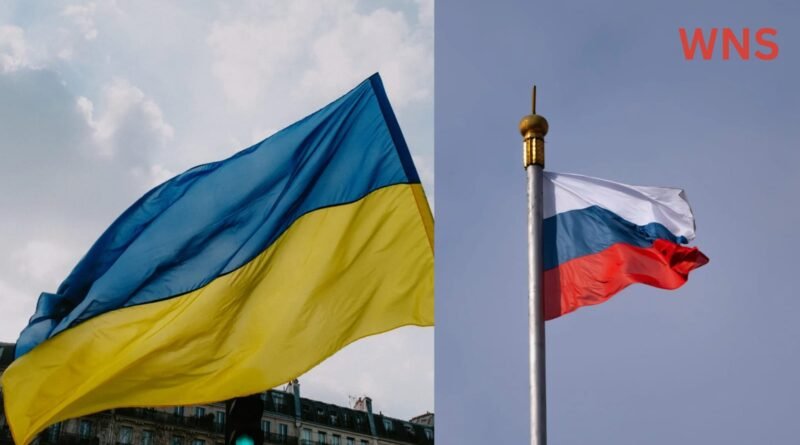
Four Years of War: Russia’s ‘Special Operation’ Becomes a Grueling Test of Endurance for Ukraine and Its Allies
KYIV, Ukraine — On February 24, 2022, residents of Kyiv awoke to the sound of missile strikes, and the first column of Russian tanks crossed into Ukraine’s Luhansk region at around 3:40 a.m. Four years later, to the day, the “three-day special military operation” envisioned by the Kremlin has morphed into Europe’s most devastating conflict since World War II, a war of attrition with no end in sight .
As the fourth anniversary of Russia’s full-scale invasion is marked, the front lines in eastern Ukraine remain locked in a brutal stalemate. While hopes for a negotiated peace have flickered back to life following a series of U.S.-mediated talks, the fundamental positions of Moscow and Kyiv remain irreconcilably opposed. On the ground, the conflict has evolved into a high-tech war of drones and depletion, exacting a staggering toll in lives, treasure, and the very social fabric of both nations .
Indonesia Begins Implementing Landmark Social Media Ban for Children Under 16.
A War of Attrition: The Battlefield Stalemate
The front line stretching through the Donbas region tells a story of incremental gains at an enormous cost. Military analysts describe the current phase as a “high-consumption” positional war. Russian forces are continuing a strategy of slow, grinding advances, particularly around the strategic city of Pokrovsk in the Donetsk region, a goal they have pursued for months. Ukrainian officials, however, deny claims of a “victorious” capture of the city .
In 2025, Russian forces managed to reclaim territory in the Kursk region and secure key logistical hubs like Kupiansk, but these gains have come at a price that has stunned military observers. According to Ukraine’s Commander-in-Chief, Oleksandr Syrskyi, 2025 marked a significant turning point: for the first time, Russia’s losses in Ukraine exceeded its recruitment levels. He reported that Russia mobilized and conscripted approximately 406,000 personnel last year, while its total killed and wounded reached an estimated 418,000 soldiers . Cumulatively, the General Staff of the Armed Forces of Ukraine estimates Russia’s total combat losses since the invasion began at a staggering 1,261,420 personnel .
Nepal Arrests Former Prime Minister KP Sharma Oli Over Deadly 2025 Protest Crackdown Balendra Shah Sworn In as Nepal’s Youngest Prime Minister After Landslide Election Victory.
Despite these numbers, Ukraine has not been able to mount a decisive counter-offensive. Syrskyi noted that Ukrainian forces have regained control of nearly 400 square kilometers of territory since the end of January, but the broader picture is one of fierce defense. The war has been transformed by technology. The skies above the trenches are filled with drones, making large-scale troop movements nearly impossible and turning the conflict into a battle of constant surveillance and precision strikes .
Ukraine has also taken the war to Russian territory, launching deep strikes with long-range drones against Russian oil refineries and military airfields. These attacks, while not altering the front lines, are designed to degrade Russia’s economic ability to sustain the war effort and bring the conflict home to Russian citizens .
The human cost for Ukraine’s defenders has been immense. In a rare and somber disclosure, President Volodymyr Zelenskyy confirmed that 55,000 Ukrainian soldiers have been killed since the start of the full-scale invasion, with thousands more missing in action . As of February, over 7,000 Ukrainian servicemembers remain in Russian captivity, though Ukraine has successfully negotiated the return of more than 6,400 prisoners and civilians through 71 exchanges .
Civilians Pay the Heaviest Price
While soldiers fight and die on the front lines, civilians in cities, towns, and villages across Ukraine continue to endure relentless attacks on their homes, hospitals, and schools. The United Nations Human Rights Monitoring Mission in Ukraine reports that since February 2022, more than 15,000 civilians have been killed and over 41,000 injured . Alarmingly, 2025 saw a 31% increase in civilian casualties compared to 2024, a stark refutation of any notion that the war is de-escalating .
The targeting of civilian infrastructure has been systematic. The World Health Organization has recorded more than 2,870 attacks on medical facilities over the past four years, resulting in at least 233 deaths . Russia’s campaign against Ukraine’s energy grid has been particularly devastating. With roughly 65% of the country’s electricity generation capacity destroyed, rolling blackouts have become a harsh reality, depriving millions of heat, light, and water, especially during the brutal winter months .
This energy war has a disproportionate impact on women, according to the UN Women agency. Sofia Calltorp, UN Women’s Chief of Humanitarian Action, explained that blackouts are not just technical disruptions. “They directly undermine women’s safety, protection and economic security,” she said, noting that the lack of street lighting and disrupted transport restrict mobility and increase the risk of harassment. Furthermore, women working in sectors like education and retail often lose their livelihoods when the power goes out .
The war’s toll on children is equally devastating. UNICEF reports that more than 2.5 million Ukrainian children, one-third of the country’s child population, have been displaced. This includes over 791,000 internally displaced and nearly 1.8 million living as refugees abroad. Since the invasion began, more than 3,200 children have been killed or injured by bombardments. The psychological scars are profound, with one in four adolescents aged 15-19 losing hope of a future in their homeland . First Lady Olena Zelenska has highlighted that 684 children are confirmed killed, and preliminary data suggests over 19,000 Ukrainian children have been illegally deported or forcibly transferred to Russia .
The Grim Arithmetic of Two Economies
The war has fundamentally reshaped the economies of both nations, though in starkly different ways. Russia’s economy initially defied Western sanctions, buoyed by military Keynesianism. A massive fiscal stimulus concentrated on the defense sector drove GDP growth to 4-5% in 2023-24. However, this model has created a “twin-speed” economy where the civilian sector is starved of resources, and the boom has now exhausted itself. Rising inflation and interest rates are leading economists to forecast growth at or below 1.0% for the coming year. While Russia can likely fund the war for several more years, it has entered a period of prolonged stagnation marked by technological isolation and rising financial vulnerabilities .
Ukraine’s economic situation is far more precarious. It is running a massive budget deficit of around $50 billion a year—roughly 21% of its GDP—a gap that must be filled entirely by foreign donors. Since the start of 2025, U.S. financial aid has ceased, placing the burden primarily on European partners. Despite these challenges, Ukraine has made remarkable strides in building its own defense industry, now meeting roughly half of its frontline requirements domestically .
The World Bank, in a report released on the eve of the anniversary, estimates the direct damage to Ukraine from the invasion at $195 billion. The cost of rebuilding the country over the next decade is a staggering $588 billion, a figure roughly three times Ukraine’s pre-war GDP . Poverty in Ukraine has soared to 36.9%, creating a “new poor” of professionals who once lived comfortably but now struggle for basic necessities .
The Elusive Path to Peace: Stalled Diplomacy
The past year has seen a flurry of diplomatic activity, driven largely by the return of Donald Trump to the U.S. presidency, who pledged to swiftly end the war. Three rounds of trilateral talks involving the U.S., Russia, and Ukraine have been held in Abu Dhabi and Geneva in early 2026. For the first time, parallel negotiating tracks were established to address political, security, and military issues .
Yet despite the increased dialogue, the talks are effectively deadlocked. According to senior European and NATO officials, there is no indication that Russian President Vladimir Putin is willing to budge from his maximalist demands, which include full control over the Donetsk and Luhansk regions and the retention of the Zaporizhzhia nuclear power plant. Ukraine, for its part, rejects any territorial concessions and insists on security guarantees from the West as a precondition for any lasting ceasefire .
The fundamental chasm between the sides is vast. Moscow demands recognition of its annexation of four Ukrainian regions, while Kyiv insists on the restoration of its 1991 borders. The issue of Western peacekeepers in Ukraine is a red line for the Kremlin. Samir Puri, a war studies expert at King’s College London, noted that while the U.S. may claim the gap is narrowing, “if you ask the two sides, the answer might be very different” .
Concerns are growing among Kyiv’s allies that Putin might agree to a tactical ceasefire that allows Trump to claim a diplomatic victory, while Russia continues a campaign of hybrid warfare—sabotage, cyber-attacks, and political interference—aimed at destabilizing Ukraine from within .
International Support: A Shift in the Coalition
The composition of Ukraine’s international support has shifted significantly over the past year. With the United States winding down direct military aid, European nations have stepped up, funding weapons purchases through mechanisms like the Prioritised Ukraine Requirements List (PURL) program. However, Europe is struggling to fully offset the loss of U.S. support while also trying to fund its own military modernization .
On the fourth anniversary, a powerful display of European unity was on show in Kyiv. European Commission President Ursula von der Leyen, European Council President António Costa, French President Emmanuel Macron, British Prime Minister Keir Starmer, and the leaders of the Nordic and Baltic countries gathered in the Ukrainian capital. They participated in a memorial ceremony, visited a damaged energy facility, and attended a meeting of the “Coalition of the Willing” to discuss continued support .
Finnish President Alexander Stubb, who joined the delegation, described the visit as a powerful message of solidarity. Later in the day, the Nordic-Baltic leaders met with President Zelenskyy in the NB8 format .
Moldova, which has taken in the highest number of Ukrainian refugees per capita in Europe, used the anniversary to call for accountability. At a UN Human Rights Council event, Deputy Prime Minister Mihai Popsoi presented a joint statement on behalf of 44 states, condemning the targeting of civilians and the deportation of Ukrainian children, acts he described as war crimes .
Looking Ahead: A War Without a Clear End
As the war enters its fifth year, both sides are locked in a contest of endurance. Ukraine’s goal, as articulated by Deputy Head of the Presidential Office Pavlo Palisa, is to methodically degrade Russia’s military potential to the point where continuing the war becomes strategically irrational . Russia, despite its staggering losses, shows no sign of abandoning its imperial ambitions, willing to absorb immense costs for what it sees as its future security.
The outcome may ultimately be determined not by a single decisive battle, but by demographics and will. Ukraine faces a severe manpower shortage and a demographic crisis, with mortality rates far exceeding births. Russia, too, is burning through its professional military cadre. For the millions of Ukrainians living through blackouts, burying their dead, and raising children in a nation under siege, the “resilience” praised by foreign leaders is a heavy burden to bear.
As one Ukrainian official put it, “Victory means a future where Russia can no longer kill our people or dictate our destiny” . Four years in, that future remains agonizingly out of reach.
With inputs from
NYT: Russia attacks ahead of 4th anniversary
Al Jazeera: Europe vows support on war anniversary
Guardian: Zelenskyy marks 4 years
UK Gov: Starmer anniversary remarks
NATO: Rutte marks 4th anniversary
Investigative Journalism: Methods, Ethics & Impact on Public Accountability.
‘They Cannot Afford Another Fall’: Myanmar’s Fragile Recovery from Deadly Earthquake Undermined by Global Crises, The Cost of War: How the Iran Conflict Is Reshaping Global Markets and Daily Life.