“Haiti’s Death Spiral: UN Exposes Gang Takeover, Police Killings, 1.4M Displaced”
Haiti’s Descent: UN Report Exposes Gang Strongholds, Police Executions, and a Nation in Peril
PORT-AU-PRINCE, Haiti — The Caribbean nation of Haiti, once a beacon of revolutionary resilience, is now being systematically devoured from within. A devastating new report from the United Nations, released Tuesday in Geneva, confirms what humanitarian workers, displaced families, and beleaguered officials have long whispered in desperation: Haiti is no longer merely facing a crisis—it is barreling toward state collapse. The report, compiled by the UN Office of the High Commissioner for Human Rights (OHCHR), documents a 16-month period of relentless terror, revealing that heavily armed gangs have consolidated control over key maritime and overland routes, the national police force stands accused of nearly 250 summary executions, and over 1.4 million Haitians have been forcibly displaced from their homes.
The violence, which claimed more than 5,500 lives last year alone, has metastasized far beyond the crowded slums of Port-au-Prince. Gangs have pushed into the Artibonite and Centre departments—rural regions once considered Haiti’s breadbasket—establishing fortified strongholds that now choke off essential supply lines. “Gangs have fortified strategic corridors and maintain dominance over critical maritime and overland routes that sustain their financing and operational resilience,” the report states. This dominance is not accidental; it is the result of a calculated expansion by coalitions like the ‘Viv Ansanm’ alliance, which have evolved from fragmented street crews into sophisticated, hierarchical criminal enterprises with diversified revenue streams that include extortion, kidnapping for ransom, child trafficking, and armed theft at illegal checkpoints.
Global Markets Rebound as US-Iran Ceasefire Hopes Drive Oil Below $100, Gold Surges.
A Humanitarian Catastrophe Unfolds
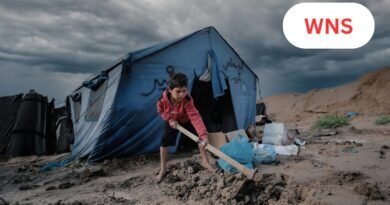
The human toll of this gang ascendancy is staggering. The UN report details how 1.4 million people—roughly one in every eight Haitians—have been displaced, a 36 percent surge since late 2024. Families who once lived in modest homes now crowd into makeshift tent camps in abandoned schoolyards, church courtyards, and the grounds of shuttered factories. Aid groups, already stretched thin, have scaled back operations as gang firefights and targeted attacks on humanitarian convoys make delivery nearly impossible. In the seaside slum of Cité Soleil, residents queue for hours under the watchful eyes of armed gang members, hoping for a ration of rice or a jug of clean water—commodities that have become luxuries in a country where cholera has resurfaced and malnutrition rates among children are soaring.
The violence has grown increasingly sadistic. The UN report documents 13 massacres committed by gangs in the latter half of 2025 alone, often targeting entire families or neighborhoods suspected of cooperating with authorities. Victims are frequently executed in public, their bodies doused with gasoline and set ablaze—a horrific tactic designed not just to kill, but to terrorize entire communities into submission. “Some victims were executed, their bodies often doused with gasoline and burned,” the report reads, in a clinical summation of unimaginable brutality. Those who manage to flee often leave behind everything: homes, businesses, and the bodies of loved ones who were not fast enough to escape.
The Accused: Security Forces Under Fire
As gangs tighten their grip, the institutions meant to protect Haitians are facing grave accusations of their own. The Haitian National Police (HNP), a force of roughly 10,000 officers tasked with securing a nation of more than 12 million, has long been overmatched. But the UN report alleges that in some instances, the police have abandoned the rule of law entirely, instead engaging in “unnecessary and disproportionate lethal force” that amounts to summary executions.
Investigators documented nearly 250 actual or attempted summary executions of suspected gang members or individuals believed to support gangs, carried out by police officers. Human Rights Watch, which collaborated on the research, identified 174 such cases by September 2025 and noted that despite 90 internal investigations being opened, not a single one has resulted in a completed probe or meaningful accountability. In one particularly egregious instance detailed in the report, a prosecutor in the coastal town of Miragoâne allegedly ordered the extrajudicial killings of 43 individuals suspected of gang ties—a massacre that remains uninvestigated by judicial authorities.
Perhaps even more alarming are the revelations about private military contractors operating on behalf of the Haitian government. The UN report raises serious concerns about the legality of security operations involving drone strikes and helicopter gunships, describing them as potential “targeted killings” conducted without judicial oversight. “Some, or even most, of these drone strikes and helicopter operations could be described as targeted killings, given the apparent predetermined, intentional, and deliberate use of lethal force against individuals specifically identified in advance,” the report warns. “No investigation appears to have been opened by the judicial authorities to establish the legality of these operations.”
Vigilante Justice and the Cycle of Retaliation
In the vacuum left by a compromised police force and an absent government, vigilante justice has flourished. Self-defense groups and mobs, armed initially with stones and machetes but increasingly wielding high-caliber firearms, have taken to lynching suspected gang affiliates in what they call “popular justice.” The UN report notes that these extrajudicial killings are sometimes “allegedly encouraged, supported, or facilitated by police elements,” blurring the line between law enforcement and lawlessness.
This vigilante violence, in turn, fuels gang retaliation. Armed groups execute anyone perceived as a collaborator, often burning bodies in public squares to deter others from cooperating with authorities. Women and children bear the brunt of this cycle. Human trafficking has spiked, with gangs forcibly recruiting children as young as eight as lookouts, porters, and even combatants. Sexual violence, used as a weapon of terror, goes largely unpunished, with survivors too terrified to seek justice.
The UN’s High-Stakes Intervention
The international community, long criticized for its slow and fragmented response, is now pinning its hopes on a new, more aggressive security mission. The UN-backed Gang Suppression Force (GSF), authorized in September 2025, is mandated to deploy up to 5,550 personnel—including police, military, and civilian experts—for offensive operations aimed at neutralizing gangs, dismantling arms trafficking networks, and protecting critical infrastructure. Unlike its predecessor, the Multinational Security Support (MSS) mission, which was hobbled by restrictive rules of engagement and a fraction of the promised personnel, the GSF is explicitly authorized to conduct proactive operations against criminal coalitions.
Early 2026 has brought tentative signs of progress. The GSF, working alongside the newly reconstituted Haitian Armed Forces (FAd’H), has conducted operations that resulted in the arrest of several high-profile gang leaders, the seizure of illicit weapons caches, and the reclamation of small pockets of territory in Port-au-Prince’s eastern suburbs. Earlier this month, Daniela Kroslak was appointed to lead the United Nations Support Office in Haiti (UNSOH), a new logistics hub designed to provide the GSF with the equipment, fuel, and supplies necessary for sustained operations.
Yet even as these forces deploy, the obstacles remain immense. Deployment is behind schedule, with only a fraction of the 5,550 personnel currently on the ground. Funding for the mission remains uncertain, and humanitarian appeals continue to face chronic shortfalls. Most critically, the gangs have proven remarkably adaptive, shifting tactics, consolidating alliances, and exploiting the political vacuum to entrench their power.
Philippines Declares National Energy Emergency as Middle East Crisis Threatens Fuel Supply NASA Confirms Artemis II Mission on Track for April 1 Launch After Final Preparations.
The Political Void and the Path Forward
Volker Türk, the UN High Commissioner for Human Rights, has repeatedly emphasized that security operations alone cannot solve Haiti’s crisis. “Sustained international backing is critical for Haitian-led recovery,” he said in a statement accompanying the report. But recovery requires a functioning state—something Haiti has lacked since the assassination of President Jovenel Moïse in 2021. The country has not held national elections since 2017, and the transitional governing council established to chart a path forward has been paralyzed by infighting, corruption allegations, and the sheer scale of the crisis.
International partners, including the United States, Kenya, and Brazil, have pledged support for the GSF and for long-term stabilization efforts. But experts warn that without simultaneous investments in disarmament, demobilization, and reintegration programs—coupled with anti-corruption courts and job creation initiatives for the country’s disaffected youth—the GSF risks becoming merely another actor in a complex war, rather than a catalyst for lasting peace.
The International Organization for Migration (IOM) has warned that without a dramatic escalation in intervention, displacement could double by the end of 2026. As the rainy season approaches, bringing the twin threats of flooding and waterborne disease, the 1.4 million displaced Haitians face an increasingly desperate future.
The UN report is not merely a document; it is a warning. Haiti is not just fighting gangs. It is fighting for the survival of its state, its institutions, and the very fabric of its society. Whether the international community can muster the will to meet this moment remains the central question—and the clock is ticking.
SOURCES / INPUTS
UN News: Haitian gangs expand reach as police are accused of ‘summary executions’
OHCHR: Gangs expand reach in Haiti amid persistent deadly violence – UN Human Rights Office report
Human Rights Systems Explained: Law, Enforcement & Global Justice.
Indonesia Arrests Four Military Officers Over Acid Attack on Human Rights Activist, UN Says Over 36,000 Palestinians Displaced in West Bank by Israeli Settlement Expansion.