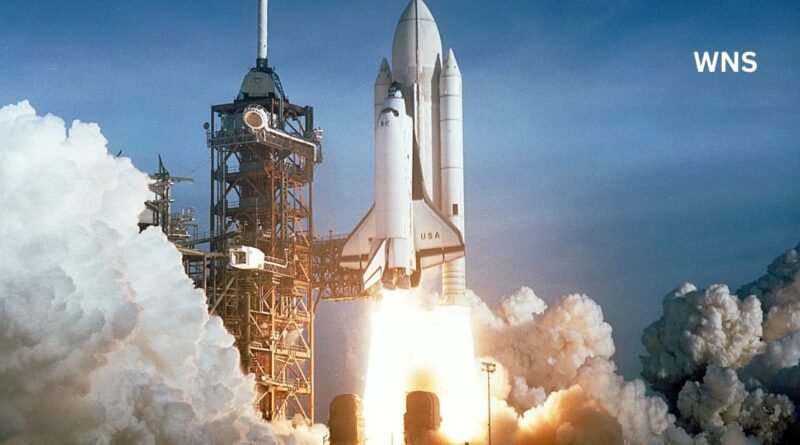
NASA Confirms Artemis II Mission on Track for April 1 Launch After Final Preparations
Four astronauts to make first crewed lunar flyby in over 50 years as agency outlines plans for permanent moon base
WASHINGTON, D.C. — March 25, 2026 — NASA officials confirmed on Tuesday, March 24, that the Artemis II mission remains on target for launch no later than Wednesday, April 1, following the successful rollout of the Space Launch System (SLS) rocket and Orion spacecraft to Launch Pad 39B at the Kennedy Space Center in Florida .
The mission, which will send four astronauts on a 10-day journey around the moon, marks the first crewed lunar flyby in more than half a century and represents a critical test of spacecraft systems before future lunar surface landings .
Global Markets Rebound as US-Iran Ceasefire Hopes Drive Oil Below $100, Gold Surges.
“We have a deliberate and achievable plan,” NASA Administrator Jared Isaacman said during a gathering of space industry leaders in Washington, D.C., on Tuesday, outlining the agency’s vision for sustained lunar exploration .
Technical Issues Resolved After February Delays
The Artemis II mission encountered several delays after technical issues emerged during testing earlier this year. During a wet dress rehearsal on February 19, engineers identified a problem with helium flow to the rocket’s upper stage, prompting NASA to roll the SLS rocket and Orion spacecraft back to the Vehicle Assembly Building on February 25 for repairs .
NASA teams have since addressed the helium issue, installed new batteries for the SLS upper stage, core stage, and solid rocket boosters, and completed retesting of the flight termination system to meet Eastern Range safety requirements .
The 11-million-pound stack, including the mobile launcher, was transported by NASA’s crawler-transporter 2 at roughly 1 mph along the four-mile crawlerway from the Vehicle Assembly Building to Launch Pad 39B, a journey that took approximately 11 to 12 hours . The rollout began at 12:20 a.m. EDT on Friday, March 20, after a brief delay due to high winds .
“At the conclusion of the flight readiness review, all the teams polled go to launch and fly Artemis II around the moon pending completion of some of the work before we roll out to the launch pad,” Lori Glaze, acting associate administrator of NASA’s Exploration Systems Development Mission Directorate, said earlier this month .
The Artemis II Crew
The Artemis II mission will carry three NASA astronauts and one Canadian Space Agency astronaut on its lunar flyby trajectory .
Reid Wiseman, 50, serves as mission commander. A former U.S. Navy pilot with 27 years of service, Wiseman joined NASA in 2009. He previously spent 165 days aboard the International Space Station in 2014 and later served as chief of NASA’s Astronaut Office. Wiseman is a widower raising two daughters .
Victor Glover, 49, will pilot the Orion spacecraft. A U.S. Navy commander and the first African American astronaut to serve on a long-duration International Space Station mission in 2020, Glover will become the first person of color to journey to the moon. He is a father of four daughters .
Christina Koch, 47, will serve as mission specialist. An engineer and experienced explorer who has worked in extreme environments including Antarctica, Koch holds the record for the longest single spaceflight by a woman at 328 days. She participated in the first all-female spacewalk with colleague Jessica Meir in 2019 .
Jeremy Hansen, 50, of the Canadian Space Agency completes the crew. A former Royal Canadian Air Force fighter pilot, Hansen joined the Canadian Space Agency in 2009. He will become the first non-American astronaut to travel to the moon .
Philippines Declares National Energy Emergency as Middle East Crisis Threatens Fuel Supply Planetary Warning: UN Agency Flags Record ‘Climate Imbalance’ as Earth Accelerates Toward Chaos.
The crew entered quarantine on February 20 in Houston to limit exposure to illness before launch, a standard procedure for crewed missions .
Mission Profile
The Artemis II mission will send the four astronauts on a trajectory around the moon and back to Earth, lasting approximately 10 days. The mission will test Orion’s life support, navigation, and communication systems with a crew aboard before Artemis III, which aims to return astronauts to the lunar surface .
NASA has established a launch window extending from Wednesday, April 1, through Monday, April 6, with additional backup opportunities available . The mission marks the first crewed flight under NASA’s Artemis program and the first human journey to lunar orbit since Apollo 17 in December 1972 .
Moon Base and Future Missions
NASA leaders used Tuesday’s gathering to outline the agency’s long-term vision for lunar exploration, including plans for a permanent moon base.
“The moon base will not appear overnight,” Isaacman said. “We will invest approximately $20 billion over the next seven years and build it through dozens of missions, working together with commercial and international partners towards a deliberate and achievable plan” .
According to Carlos Garcia-Galan, NASA Moon Base Program Executive, the future lunar outpost will include infrastructure for power generation—potentially including nuclear and solar arrays—along with pressurized rovers, advanced lunar terrain vehicles, and multiple landing sites for both human and cargo missions .
The agency is pivoting from its Gateway Program architecture, an orbiting lunar outpost, to instead focus on the lunar surface, with a goal of establishing a “semi-permanent crew presence” beginning in 2032 .
NASA has added a new mission to its architecture—Artemis III—scheduled for mid-2027 to test commercial lunar lander capabilities in low Earth orbit before proceeding to surface landings. Artemis IV remains targeted for early 2028 to return astronauts to the lunar surface for the first time since 1972, followed by Artemis V later in 2028 to accelerate moon base construction .
International and Commercial Partnerships
The Artemis program operates under the Artemis Accords, a U.S.-led framework of over 40 nations—including India—designed to establish international norms for peaceful space exploration and resource utilization .
Commercial partners including SpaceX and Blue Origin are developing lunar lander capabilities under contract with NASA, with both companies’ systems scheduled for testing in the new Artemis III mission .

Economic Impact
Florida Republican Congressman Mike Haridopolos, whose district includes the Kennedy Space Center, highlighted the mission’s economic significance.
“As I like to say, the Space Coast is literally taking off with so many jobs for not only the people there now, but our future, as we’re investing in high schools and colleges to make sure that they have the skills to make us the dominant space nation in the world,” Haridopolos told Spectrum News .
SOURCES / INPUTS
NASA: NASA Begins Artemis II Launch Pad Ops After Successful Fuel Test
Global Education Systems Explained: Access, Research & Innovation.
Seven-Ton Meteor Streaks Across Cleveland Sky, Startling Residents Across Multiple States, Pi Day 2026: Celebrating Mathematics’ Most Famous Constant with Pie, Puzzles, and Einstein’s Birthday.