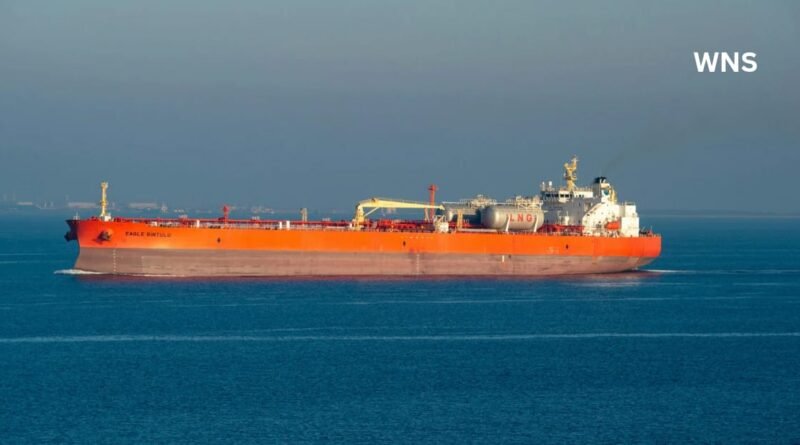
QatarEnergy Declares Force Majeure on LNG Contracts After Iranian Missile Attacks
State-owned company says repairs to damaged Ras Laffan facilities could take up to five years, wiping out 17% of export capacity and causing $20 billion annual revenue loss
DOHA — March 24, 2026 — QatarEnergy has declared force majeure on some of its long-term liquefied natural gas (LNG) supply contracts following Iranian missile strikes that damaged key production facilities at the Ras Laffan industrial complex, the state-owned company announced on Tuesday, March 24.
The measure applies to contracts with customers in China, Italy, Belgium and South Korea, according to a statement cited by Qatari media . Force majeure is a legal clause in contracts that allows suppliers to suspend obligations such as delivery schedules without penalties due to events beyond their control, such as attacks on critical infrastructure .
Global Markets Rebound as US-Iran Ceasefire Hopes Drive Oil Below $100, Gold Surges.
The declaration follows missile strikes on the Ras Laffan industrial complex on March 18 and March 19, which caused significant damage to two LNG processing units and a gas-to-liquids (GTL) facility .
Production Capacity Severely Reduced
Saad al-Kaabi, Qatar’s Minister of State for Energy Affairs and QatarEnergy chief executive, said the attacks have knocked out 17 percent of the country’s LNG export capacity, resulting in an estimated $20 billion in lost annual revenue .
“The damage sustained by the LNG facilities will take between three to five years to repair,” al-Kaabi told Reuters in an interview on March 19 . He added that QatarEnergy would be “compelled to declare force majeure for up to five years on some long-term LNG contracts” .
Two of Qatar’s 14 LNG production trains—Train 4 and Train 6—were damaged in the strikes, taking offline 12.8 million tonnes per annum (MTPA) of production, according to the company . Train 4 is a joint venture between QatarEnergy (66 percent) and U.S. oil major ExxonMobil (34 percent), while Train 6 is owned by QatarEnergy (70 percent) and ExxonMobil (30 percent) .
The attacks also targeted the Pearl gas-to-liquids (GTL) facility, operated by Shell. One of the facility’s two trains is expected to remain offline for a minimum of one year, al-Kaabi said .
Broader Impact on Associated Products
The production outages extend beyond LNG. QatarEnergy anticipates annual export reductions of approximately 24 percent for condensates, 13 percent for liquefied petroleum gas (LPG), 6 percent for naphtha, 6 percent for sulfur, and 14 percent for helium .
These losses have wide-ranging implications, from LPG used in restaurants in India to helium relied upon by South Korea’s chipmakers, according to al-Kaabi .
Hostilities Must Cease for Production to Resume
Al-Kaabi emphasized that production cannot resume fully until hostilities cease.
“For production to restart, first we need hostilities to cease,” he told Reuters .
The QatarEnergy chief expressed dismay that the country’s energy infrastructure had become a target in the escalating conflict.
Philippines Declares National Energy Emergency as Middle East Crisis Threatens Fuel Supply NASA Confirms Artemis II Mission on Track for April 1 Launch After Final Preparations.
“I never in my wildest dreams would have thought that Qatar would be—Qatar and the region—in such an attack, especially from a brotherly Muslim country in the month of Ramadan, attacking us in this way,” al-Kaabi said .
“If Israel attacked Iran, it’s between Iran and Israel. It has nothing to do with us and the region,” he added, appealing to all parties to stay away from oil and gas facilities .
Regional Conflict Escalates
The attacks on Qatar’s energy infrastructure came amid a broader escalation of hostilities in the Middle East. The United States and Israel launched joint attacks on Iran on February 28, killing more than 1,340 people, including then-Supreme Leader Ayatollah Ali Khamenei .
Iran has retaliated with drone and missile strikes targeting Israel, along with Jordan, Iraq and Gulf countries hosting US military assets . The Iranian attacks on Ras Laffan followed Israeli strikes on Iran’s offshore South Pars gas field, which is an extension of Qatar’s North Field .
Qatar’s Ministry of Foreign Affairs condemned Israel for targeting South Pars, calling it “a dangerous and irresponsible step amid the current military escalation in the region” and noting that “targeting energy infrastructure constitutes a threat to global energy security” .
Impact on Global LNG Supply
Qatar is one of the world’s largest LNG exporters, and the loss of 12.8 MTPA of capacity represents a significant disruption to global supply chains. The affected LNG trains supply buyers including Italy’s Edison, Belgium-based EDF Trading, South Korea’s KOGAS, and buyers in China .
According to Rystad Energy, the damage at the Qatari facilities marks “a directional shift for the gas market,” with analysts noting that “once critical Gulf energy infrastructure is seen as vulnerable, buyers will price that risk for longer than the initial outage itself” .
Kpler analysis suggests that Qatar’s LNG exports could be cut to 50.6 million tonnes per annum in 2026, dragging global supply down by almost 6 percent to 441 million tonnes per annum—the lowest Qatari output since 2009 .
Construction Projects Delayed
Al-Kaabi also revealed that no work is currently taking place on Qatar’s massive North Field expansion project, which could be delayed for more than a year . The damaged units cost approximately $26 billion to build, he noted .
“The scale of the damage from the attacks has set the region back 10 to 20 years,” al-Kaabi said .

SOURCES / INPUTS
Anadolu Ajansı: QatarEnergy declares force majeure on liquid natural gas contracts with 4 countries
Egyptian Gazette: Qatar loses 17% of LNG capacity for up to five years after Iran attack
Al Jazeera: QatarEnergy declares force majeure on some LNG contracts due to Iran war
Global Business Systems: Corporations, Trade, Finance & Market Structures Explained.
Global Markets Rebound as US-Iran Ceasefire Hopes Drive Oil Below $100, Gold Surges, OnePlus India CEO Robin Liu Quits as Market Share Plummets, Fueling Exit Speculation.