Major Gulf Energy Facilities Halt Production as Saudi Refinery and Qatar LNG Plants Hit by Iranian Strikes
DUBAI/DOHA — Saudi Arabia’s state-owned oil giant Saudi Aramco partially shut its massive Ras Tanura refinery on March 2, 2026, following a drone strike, while QatarEnergy suspended all liquefied natural gas production after Iranian attacks on its two main processing complexes, marking the most significant disruption to global energy supplies since the outbreak of regional conflict .
The coordinated strikes on critical infrastructure across the Gulf region represent a dramatic escalation in the confrontation between Iran and the US-led coalition, with Tehran’s retaliatory operations now directly targeting the economic lifeblood of its Arab neighbors . The disruptions have sent shockwaves through global energy markets, with oil prices surging above $82 per barrel and natural gas benchmarks spiking nearly 50 percent as traders priced in the risk of prolonged supply outages .
Saudi Aramco’s Ras Tanura Refinery Partially Shut
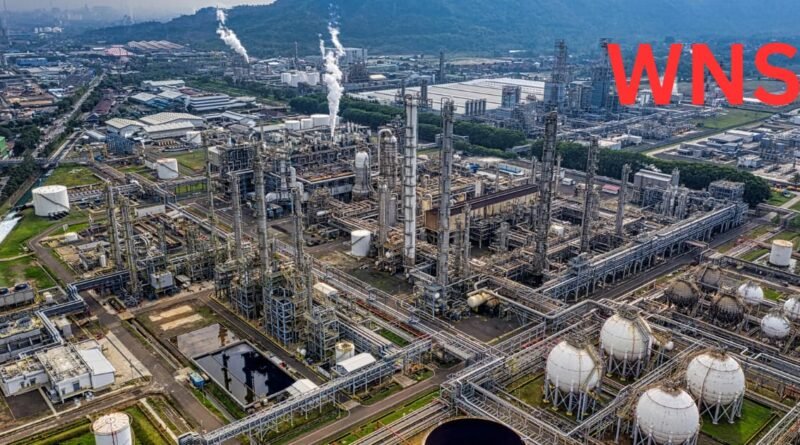
Saudi authorities confirmed that the Ras Tanura refinery, located on the kingdom’s Gulf coast, was targeted by drones on Monday, with Saudi air defenses intercepting two unmanned aircraft at the facility . Debris from the intercepted drones caused a limited fire, but no injuries were reported, according to the Saudi defense ministry spokesperson who spoke to Al Arabiya TV .
The facility, operated by state oil giant Saudi Aramco, processes approximately 550,000 barrels per day, making it one of the largest refineries in the Middle East . It forms part of a sprawling energy complex that also serves as a critical export terminal for Saudi crude oil, with integrated storage and deepwater loading infrastructure that handles a significant portion of the kingdom’s exports .
An industry source confirmed to Reuters that the refinery was shut as a precautionary measure following the attack . However, Saudi state news agency SPA reported, citing an unnamed energy ministry official, that the supply of petroleum and derivatives to local markets was not affected by the closure of some refinery units .
The attack on Ras Tanura marks the first time during the current conflict that Gulf energy infrastructure has been directly targeted. Torbjorn Soltvedt, principal Middle East analyst at risk intelligence firm Verisk Maplecroft, described it as “a significant escalation, with Gulf energy infrastructure now squarely in Iran’s sights.” He added that the attack “is also likely to move Saudi Arabia and neighboring Gulf states closer to joining US and Israeli military operations against Iran” .
Saudi Arabia’s heavily fortified energy facilities have been targeted previously, most notably in September 2019 when drone and missile attacks on the Abqaiq and Khurais plants temporarily knocked out more than half of the kingdom’s crude production . Ras Tanura itself was attacked by Yemen’s Iran-aligned Houthi rebels in 2021 .
QatarEnergy Halts LNG Production, Prepares Force Majeure
In a separate but equally significant development, state-owned QatarEnergy announced on Monday that it had ceased production of liquefied natural gas and associated products following military attacks on its operating facilities in Ras Laffan Industrial City and Mesaieed Industrial City .
The Qatari Ministry of Defense confirmed that two Iranian drones targeted the country’s energy infrastructure . The first drone struck a water tank at a power plant in Mesaieed, located approximately 40 kilometers south of Doha, while the second targeted a QatarEnergy facility in Ras Laffan Industrial City, about 80 kilometers north of the capital . No casualties were reported, and authorities are still assessing the damage .
Ras Laffan is home to Qatar’s massive gas-processing trains, which handle the vast majority of the country’s LNG production. Mesaieed houses petrochemical and manufacturing facilities crucial to the energy sector .
According to a source cited by Reuters, QatarEnergy is preparing to declare force majeure on LNG shipments, a legal mechanism that allows the company to temporarily relieve itself of liability for non-performance of contractual obligations to gas buyers around the world . Qatar is one of the world’s largest exporters of LNG, accounting for approximately 20 percent of global supply, and its shipments are critical to balancing demand in Asian and European markets .
The suspension sent natural gas prices soaring, with Europe’s benchmark Dutch TTF front-month contract rising 46 percent on Monday . Oil prices also jumped as much as 13 percent intraday to above $82 per barrel, the highest level since January 2025, as shipping through the Strait of Hormuz slowed sharply .
North Field Expansion Project Suspended
The conflict has also forced QatarEnergy to suspend work on its massive North Field Expansion project, according to industry publication Offshore Magazine . The project, which aims to increase Qatar’s LNG production capacity by more than 60 percent, includes the North Field East (NFE) phase involving four mega-trains with total capacity of 33 million tonnes per year, and the North Field South (NFS) phase adding two additional trains for another 16 million tonnes .
Prior to the conflict, NFE was approximately 85 percent complete, with production expected to start in late 2026. The suspension of operations following military strikes has halted the final stages of subsea pipeline laying and platform commissioning . Analysts suggest that NFE startup could now slip into 2027 if regional tensions prevent the return of international technical staff required for final commissioning .
The offshore expansion activities have been effectively paralyzed by the closure of the Strait of Hormuz, which Iran’s Revolutionary Guards have declared closed to all traffic . Most international marine insurers have canceled war risk cover for vessels in the Gulf, making it impossible to operate drilling rigs and construction barges .
The North Field is a shared reservoir with Iran, where it is known as South Pars. Intensified military activity around this shared border has forced the evacuation of non-essential personnel from offshore rigs and construction barges .
Broader Regional Disruptions
The energy disruptions extended well beyond Saudi Arabia and Qatar. In Iraqi Kurdistan, which exported approximately 200,000 barrels of oil per day via pipeline to Turkey’s Ceyhan port in February, companies including DNO, Gulf Keystone Petroleum, Dana Gas, and HKN Energy have stopped output at their fields as a precautionary measure . No damage has been reported at those facilities .
Offshore Israel, the Israeli government instructed Chevron to temporarily shut down the giant Leviathan gas field, where the company is in the process of expanding capacity to around 21 billion cubic meters per year as part of a $35 billion export deal to Egypt . A Chevron spokesperson, which also operates the Tamar gas field offshore Israel, said its facilities remained safe . Energean also shut down its production vessel serving smaller gas fields .
In Iran itself, explosions were heard on Saturday at Kharg Island, which processes approximately 90 percent of the country’s crude exports . The extent of damage to facilities there remains unclear. Iran, the third-largest producer in OPEC, pumps about 3.3 million barrels per day of crude, plus 1.3 million barrels per day of condensate and other liquids, accounting for roughly 4.5 percent of global oil supplies .
Market Impact and Analyst Warnings
The cumulative impact of these disruptions has sent shockwaves through global energy markets. Oil prices surged as much as 13 percent to above $82 per barrel on Monday, the highest since January 2025 . Natural gas prices rose even more sharply, with European benchmarks jumping nearly 50 percent .
Analysts warn that the duration of the shutdowns will be critical in determining the trajectory of energy prices. Mohd Sedek Jantan, director of investment strategy at IPPFA Sdn Bhd, told Bernama that a restart within 24 to 48 hours would have minimal operational impact, as buffer stocks at export terminals would allow shipments to continue . The current “fear premium” of around $7 per barrel would likely unwind, pulling Brent crude back toward $74-76 .
However, a restart within one week would tighten fuel inventories and lift refining margins as buyers seek alternative supplies, with Brent crude holding higher around $82-88 amid shipping concerns through the Strait of Hormuz . A disruption lasting up to a month could push prices toward $95-100 as supply constraints intensify, forcing Saudi Arabia to prioritize domestic fuel needs and curtail exports .
Mohd Sedek warned that any disruption beyond one month would become systemic. “With Ras Tanura offline and transit through the Strait of Hormuz constrained, storage would fill rapidly, forcing upstream shut-ins at fields such as Ghawar, while Brent crude could spike to the $120-140 range, triggering demand destruction and escalating into a global energy security crisis” .
Similarly, Al-Madinah International University economist Professor Emeritus Dr Barjoyai Bardai told Bernama that a prolonged outage lasting weeks would trigger a steeper supply shock, with Brent crude moving significantly higher and potentially prompting coordinated releases from strategic oil reserves .
Strategic Implications
The strikes on Gulf energy infrastructure represent a significant departure from previous patterns of conflict in the region. Iran’s willingness to directly target Saudi and Qatari facilities marks an escalation that analysts say could fundamentally alter the strategic calculus of Gulf states .
Saudi Arabia’s heavily fortified energy facilities have long been considered potential flashpoints, but Monday’s successful drone interception—and the resulting precautionary shutdown—demonstrates the vulnerability of even the most protected infrastructure . The Ras Tanura complex, which combines refining capacity with critical export infrastructure, presents an attractive target for any actor seeking to disrupt global oil supplies .
For Qatar, the stakes are even higher. As the world’s largest LNG exporter, any prolonged disruption to its production capacity would have immediate and severe consequences for global gas markets, particularly in Asia and Europe, which have grown increasingly dependent on Qatari supplies following the reduction of Russian pipeline gas exports .
The suspension of the North Field Expansion project also threatens to delay the addition of new supply capacity at a time when global gas markets remain tight. Prior to the conflict, the NFE phase had been scheduled for fourth-quarter 2026 startup, with NFS targeted for late 2027 or early 2028 . Those timelines are now highly uncertain .
Looking Ahead
As the conflict enters its fourth day with no signs of abating, the energy industry and global markets are bracing for further disruptions. The Strait of Hormuz remains effectively closed to shipping, with marine insurers refusing to cover vessels transiting the waterway . Tankers are beginning to pile up on either side of the strait, unable to secure passage or insurance .
For consuming nations, the crisis raises the specter of coordinated releases from strategic petroleum reserves, a tool deployed during previous supply disruptions. But as one analyst noted, strategic reserves are designed to bridge temporary gaps, not compensate for the prolonged shutdown of critical export infrastructure .
The coming days will reveal whether the precautionary shutdowns can be reversed quickly or whether the damage to facilities proves more significant than initially reported. Either way, the message from Tehran has been received clearly across the Gulf: energy infrastructure is now in the crosshairs, and no facility can consider itself safe.
With inputs from:
CNBC: QatarEnergy halts LNG Iran drone attacks
The Quint: Drone strike shuts Aramco Ras Tanura
Al Jazeera: QatarEnergy largest LNG halt Iran attacks
Bloomberg: Saudi Ras Tanura refinery drone attack shut
Straits Times: Qatar halts LNG Iran strikes Gulf
For broader context, see our in-depth analysis on Global Business Systems: Corporations, Trade, Finance & Market Structures Explained.
Also in this section: UN Watchdog Confirms Damage to Natanz Nuclear Site Entrance, Says No Radiation Risk and Iran Death Toll Rises to 787 as US-Israeli Strikes Continue, Red Crescent Says 153 Cities Hit.