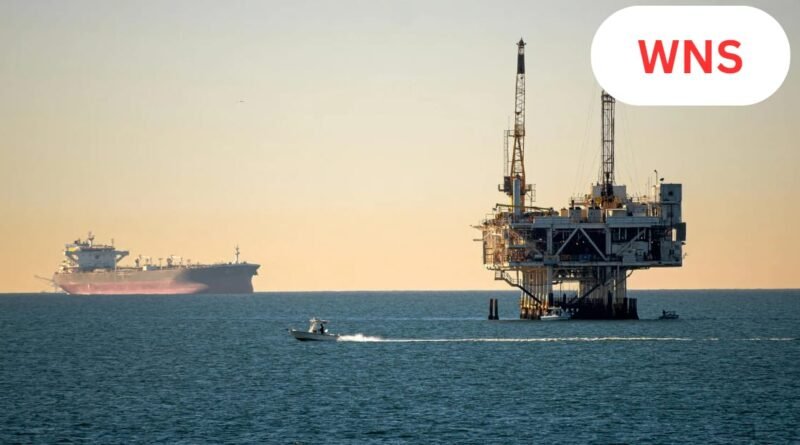
Russia Announces Four-Month Ban on Gasoline Exports Amid Global Energy Turmoil
Moscow moves to stabilize domestic prices as Middle East crisis and Ukrainian drone strikes disrupt fuel supplies; ban takes effect April 1
MOSCOW — March 29, 2026 — Russia has announced a ban on gasoline exports starting April 1, 2026, in a decisive move to stabilize domestic fuel prices and ensure priority supply to the local market amid global energy market turbulence caused by the escalating Middle East conflict and ongoing Ukrainian attacks on Russian energy infrastructure .
Russian Deputy Prime Minister Alexander Novak instructed the Ministry of Energy on Friday, March 27, to draft a government resolution prohibiting gasoline exports from April 1 through July 31, according to a statement from the Russian government . The ban applies to all gasoline producers and will remain in effect for four months, with the possibility of extension depending on market conditions .
Global Markets Rebound as US-Iran Ceasefire Hopes Drive Oil Below $100, Gold Surges.
Internal Pressures: Ukrainian Drone Strikes and Domestic Demand
The decision comes as Russia faces mounting internal pressures on its fuel supply chain. Since February 2026, Ukrainian drone attacks have repeatedly targeted Russian oil refineries, temporarily shutting down approximately 17 percent of the nation’s refining capacity . Among the facilities struck were Rosneft’s Saratov plant in the Volga region and Surgutneftegas’s Kirishi refinery near the Baltic coast, which together account for nearly 10 percent of Russia’s total refinery runs .
The attacks have driven sharp increases in domestic fuel prices. According to industry data, wholesale gasoline prices in Russia have risen 14 percent since late February, while retail prices for 95-octane gasoline have surged 54 percent year-on-year . Multiple regions have reported fuel shortages and long queues at filling stations as supplies tightened.
“The Deputy Prime Minister noted that turbulence in the global oil and petroleum product market caused by the crisis in the Middle East is leading to significant price fluctuations,” the government statement read . Novak emphasized that the ban is intended to “stabilize prices and ensure priority supply to the domestic market” .
The timing of the ban coincides with Russia’s spring planting season, when agricultural demand for fuel peaks, followed by the summer travel season — both periods of heightened domestic consumption . Officials stressed that maintaining adequate fuel supplies for farmers and consumers was a primary consideration in the decision .
External Pressures: The Strait of Hormuz Crisis
The export ban is also a direct response to global market instability triggered by the conflict between Iran and the United States-Israel alliance that began on February 28, 2026. Since the onset of hostilities, Iran has effectively blocked the Strait of Hormuz — the strategic waterway through which approximately 20 percent of the world’s oil supply normally passes — in retaliation for US-Israeli strikes on Iranian territory .
The closure has sent shockwaves through global energy markets. Brent crude prices have surged above $110 per barrel, and gasoline prices have followed suit, creating a volatile trading environment that Moscow fears could destabilize its domestic market .
In a meeting with Russian business leaders on March 26, President Vladimir Putin acknowledged that the Middle East conflict had generated “excess profits” for Russia as an energy exporter but warned that such windfalls would not last . The export ban reflects a strategic choice to prioritize domestic stability over short-term revenue gains from volatile international markets.
What the Ban Covers — and What It Does Not
The ban applies specifically to gasoline exports and does not restrict Russia’s much larger crude oil exports, which account for the vast majority of the country’s energy revenue . In 2025, Russia exported approximately 430,000 barrels per day of crude oil — more than 40 times its average daily gasoline exports of 100,000 to 120,000 barrels . Gasoline exports represent less than 1.5 percent of Russia’s total energy export revenue .
This is not the first time Russia has imposed such restrictions. The country has repeatedly used temporary export bans as a policy tool to manage domestic fuel prices, including a six-month ban in 2024 that successfully stabilized the market without significantly affecting overall energy revenue . A previous ban on non-producer gasoline exports had been in place until January 2026, when it was lifted; the new ban extends restrictions to all producers .
The Russian Energy Ministry reported that current refining volumes remain consistent with March 2025 levels, and domestic gasoline and diesel reserves are sufficient to meet projected demand during the ban period . Industry representatives have confirmed that refineries are operating at high capacity utilization rates .
Philippines Declares National Energy Emergency as Middle East Crisis Threatens Fuel Supply ‘A New Era of Cosmic Surveys’: NASA to Unveil Complete Roman Space Telescope Ahead of Fall Launch.
Regional and Global Impact
The ban is expected to have the most significant impact on countries heavily dependent on Russian gasoline imports, particularly in Central Asia and the Caucasus. In 2025, Mongolia, Kyrgyzstan, Uzbekistan, and Tajikistan accounted for 87 percent of Russia’s land-based gasoline exports, with import dependence on Russian fuel exceeding 95 percent in some cases .
During Russia’s 2024 export ban, Mongolia experienced a 32 percent surge in gasoline prices within one month, leading to supply shortages that were eventually mitigated by emergency imports from China . Analysts expect similar disruptions in the region when the new ban takes effect, though neighboring countries with spare refining capacity, including China and Kazakhstan, are likely to fill the gap within one to two months .
Maritime buyers, particularly Turkey and Egypt — which together purchased nearly half of Russia’s seaborne gasoline exports in 2025 — will need to seek alternative supplies from India, the Middle East, or domestic refineries, likely at higher costs due to extended shipping routes and elevated freight rates .
For major consumers such as the United States, China, and the European Union, the impact is expected to be minimal. The EU has largely decoupled from Russian energy imports since the 2022 invasion of Ukraine, while the US and China are both net gasoline producers with high self-sufficiency rates .
Background: A Pattern of Export Restrictions
Russia has a history of using fuel export restrictions to manage domestic prices. In 2023, the government imposed a temporary ban on gasoline and diesel exports to address shortages and curb price increases. Similar measures were implemented in 2024 and extended multiple times before being partially lifted earlier this year .
The current ban follows a meeting chaired by Novak on March 27, which included representatives from the Energy Ministry, the Federal Antimonopoly Service, and major oil companies . Participants reviewed domestic market conditions and discussed measures to ensure stable fuel supplies during the upcoming high-demand seasons.
“Particular attention was paid to the objective set by the Russian President of preventing domestic fuel prices from rising above forecasts,” the government statement said .
Market Outlook
The four-month ban comes at a time of heightened uncertainty in global energy markets. The Strait of Hormuz remains effectively closed, and the Iran-Israel conflict shows no signs of immediate resolution as it enters its second month. Ukrainian drone strikes on Russian energy infrastructure have continued, with recent attacks targeting facilities in the Leningrad region, which houses one of Russia’s largest refineries .
While Russia’s export ban removes approximately 100,000 to 120,000 barrels per day of gasoline from global markets — a fraction of total global supply — the cumulative effect of supply disruptions from multiple sources has kept prices elevated and markets volatile .
As of Saturday, March 29, the Russian government had not yet published the formal text of the export ban resolution, though the Energy Ministry is expected to finalize the document in the coming days. The ban is scheduled to take effect on April 1 and remain in force through July 31, with the possibility of extension depending on domestic market conditions and the trajectory of global energy prices .

SOURCES / INPUTS
https://tass.com/economy/2108253
Modern World Order Explained: Power, Alliances & Global Systems.
Millions Protest Across US in Third Wave of ‘No Kings’ Rallies Against Trump Policies, Missing Aid Sailboats Arrive Safely in Cuba After Days-Long Search, Delivering Final Shipments of Solidarity Convoy.