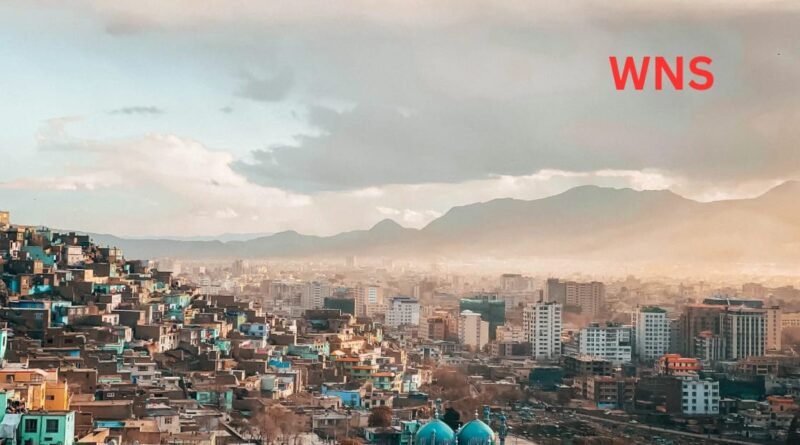
Pakistan Airstrike on Kabul Hospital Kills Hundreds, Afghan Officials Say, Triggering International Condemnation
Islamabad denies targeting civilians, says it struck militant infrastructure; UN calls for restraint as death toll reaches 400
KABUL — March 17, 2026 — A Pakistani airstrike on a drug rehabilitation hospital in the Afghan capital late Monday killed at least 400 people and injured approximately 250 others, Afghan government officials said, marking the deadliest single incident in the rapidly escalating conflict between the two neighboring countries .
The strike targeted the Omid Addiction Treatment Hospital, a 2,000-bed facility dedicated to treating drug addiction, at approximately 9:00 p.m. local time, according to Hamdullah Fitrat, deputy spokesman for the Islamic Emirate of Afghanistan . Large sections of the hospital were destroyed in the attack, with rescue teams working through the night to control fires and recover bodies from the rubble .
Sri Lanka Reintroduces QR Code Fuel Rationing System Amid Middle East Supply Disruption.
Sharafat Zaman, spokesman for Afghanistan’s Health Ministry, confirmed that those killed were “innocent civilians and admitted patients,” stating emphatically that “there is no military base, and there are no military related departments or anything else” at the facility .
Conflicting Accounts from Islamabad
Pakistan’s government vehemently rejected the allegations, dismissing Afghan claims as “baseless” and “false and misleading” . In a statement issued late Monday, Pakistan’s Ministry of Information said its forces had “precisely targeted military installations and terrorist support infrastructure, including technical equipment storage and ammunition storage of the Afghan Taliban and Fitna al-Khawarij in Kabul and Nangarhar (province) that were being used against innocent Pakistani civilians” .
Prime Minister Shehbaz Sharif’s spokesman, Mosharraf Zaidi, asserted that the strikes were “precise and carefully undertaken to ensure no collateral damage is inflicted” and that no hospital was targeted in Kabul .
The Pakistani military pointed to secondary explosions following the strike as evidence that ammunition storage facilities had been hit, stating that “the post-strike detonation of stored ammunition being used by the master terror proxy also fully contradicts the fake claim” of civilian targeting .
Horrifying Scenes at the Hospital
Local television stations posted footage on social media showing security forces using flashlights as they carried out casualties while firefighters struggled to extinguish flames among the ruins of the building . Fitrat said rescue teams were working to control the fire and recover the bodies, warning that the death toll could rise further .
Afghan government spokesperson Zabiullah Mujahid condemned the strike in strong terms, accusing Pakistan of “targeting hospitals and civilian sites to perpetrate horrors” . In a statement issued as the death toll mounted, he said: “We strongly condemn this crime and consider such an act to be against all accepted principles and a crime against humanity” .
International Response and Condemnation
The United Nations Assistance Mission in Afghanistan (UNAMA) expressed grave concern over the incident, with human rights organizations demanding an independent investigation to establish responsibility and ensure accountability if violations of international law are confirmed .
Richard Bennett, UN special rapporteur on the situation of human rights in Afghanistan, expressed sympathy for the victims’ families and urged both Kabul and Islamabad to exercise restraint . He called on the two sides to respect international humanitarian law and ensure the protection of civilians and public facilities such as hospitals and treatment centres .
The strike came just hours after the UN Security Council unanimously adopted a resolution calling on Afghanistan’s Taliban rulers to immediately step up efforts to combat terrorism . The resolution condemned “in the strongest terms all terrorist activity including terrorist attacks” but did not specifically name Pakistan .
Escalating Conflict and ‘Open War’
Monday’s strike represents a dramatic escalation in what Pakistani officials have characterized as “open war” with Afghanistan . The conflict began in late February when Pakistan launched airstrikes inside Afghanistan in response to militant attacks it says originate from Afghan soil .
Russia Accuses Ukraine of ‘Reckless’ Drone Strikes on TurkStream Gas Pipeline Supplying Europe Pi Day 2026: Celebrating Mathematics’ Most Famous Constant with Pie, Puzzles, and Einstein’s Birthday.
According to Pakistani security sources, the country has “irrefutable evidence” that militants in Afghanistan were behind a recent wave of attacks and suicide bombings targeting Pakistani military and police . The government specifically blames the Tehreek-e-Taliban Pakistan (TTP), commonly known as the Pakistani Taliban, which it says operates from safe havens in Afghanistan .
The TTP, formed in 2007, has been responsible for numerous deadly attacks inside Pakistan, including the 2012 shooting of Nobel laureate Malala Yousafzai . Militancy has increased every year since 2022 with attacks by the TTP and Baloch insurgents growing, according to Armed Conflict Location & Event Data, a global monitoring organization .
Afghan authorities have repeatedly denied allowing militants to use their territory to launch attacks against Pakistan and accuse Islamabad of harboring fighters from the Islamic State group, a charge Pakistan denies .
Regional Implications and Humanitarian Concerns
The fighting has already displaced tens of thousands of civilians on both sides of the border. UN Human Rights Chief Volker Türk last week implored both Pakistan and Afghanistan to immediately end the fighting, warning that “civilians on both sides of the border are now having to flee from airstrikes, heavy artillery fire, mortar shelling and gunfire” .
According to UN data cited by Anadolu Ajansı, 185 civilian casualties, including 56 deaths from indirect fire and aerial attacks, were reported in Afghanistan between February 26 and March 5 . Monday’s strike alone has more than doubled that toll.
Historical Context and Broken Ceasefire
The current hostilities represent the most severe fighting between the two neighbors in years. A Qatari-brokered ceasefire in October 2025 had ended intense clashes that killed dozens of soldiers, civilians, and suspected militants . However, Islamabad says the ceasefire did not hold due to continued militant attacks from Afghanistan, leading to repeated clashes and border closures that have disrupted trade and movement along the rugged frontier .
Pakistan’s relationship with the Afghan Taliban has deteriorated dramatically since the group’s return to power in 2021. While Islamabad initially welcomed the Taliban takeover, with then-Prime Minister Imran Khan saying Afghans had “broken the shackles of slavery,” the two sides have since clashed over Islamabad’s demands that Kabul rein in the TTP .
On paper, there is a wide mismatch between the military capabilities of the two sides. At 172,000 personnel, the Taliban have less than a third of Pakistan’s 600,000-strong active military . Pakistan’s armed forces include more than 400 combat aircraft and the country is nuclear-armed, while the Taliban possess no fighter jets or effective air force .
Unverified Claims and Ongoing Investigation
Reuters and other international news organizations have been unable to independently verify the casualty figures or the precise details of what was targeted in Monday’s strike . The conflicting accounts from Kabul and Islamabad highlight the information war accompanying the military conflict.
Afghan authorities have called for an international investigation into the strike, while Pakistan has rejected calls for any outside inquiry, insisting its forces acted in self-defense against legitimate militant targets.

Mujahid issued a stern warning to Pakistan following the strike, stating that the attack would not go unanswered . His remarks have raised concerns among regional analysts who fear the incident could trigger further military escalation between the two neighboring countries .
The strike on the Omid hospital comes amid a wider regional conflagration that has already drawn in the United States, Israel, Iran, and multiple Gulf states. The international community, already struggling to contain the broader Middle East conflict, now faces the prospect of a full-scale war between two nuclear-armed neighbors in a region where militant groups including al-Qaeda and the Islamic State maintain active presence.
SOURCES / INPUTS
Times of Oman/DW: Pakistan bombs Kabul and Afghan border provinces
Modern World Order Explained: Power, Alliances & Global Systems.
Magnitude 5.8 Earthquake Strikes Eastern Cuba Amid Nationwide Blackout and Political Tensions, Multiple Suicide Bombings Kill 23 in Nigeria’s Maiduguri, Wounding Over 100.