‘On the Edge of a Wider War’: Guterres Issues Stark Warning as Middle East Conflict Enters Second Month
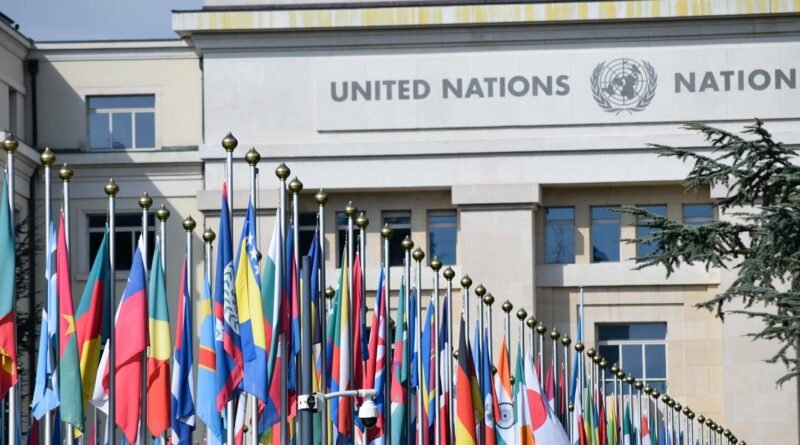
UNITED NATIONS, New York — The Middle East crisis has lurched into its second month with no end in sight, prompting UN Secretary-General António Guterres to issue a stark warning on Thursday morning that the world is “on the edge of a wider war” with potentially catastrophic global implications. Speaking to reporters outside the Security Council in New York, the UN chief painted a grim picture of a rapidly deteriorating situation as Israel and the United States continue bombing Iran while Tehran carries out attacks on neighboring Gulf states and threatens shipping in the crucial Strait of Hormuz.
“Every day this war continues, human suffering grows. The scale of devastation grows. Indiscriminate attacks grow,” Guterres stated, his voice carrying the weight of a conflict that has already claimed thousands of lives, displaced millions, and sent shockwaves through global energy markets. The Secretary-General noted that the targeting of civilians and civilian infrastructure, as well as general perils to the world economy—especially the most vulnerable societies which depend on energy imports—are mounting daily.
The conflict, which erupted in early March following a series of escalating exchanges between Iran and Israel, has rapidly drawn in the United States on Israel’s behalf and has spread to the Gulf, where Iran has launched repeated attacks on US allies, including the United Arab Emirates, Saudi Arabia, and Bahrain. The war has now entered its second month with no diplomatic breakthrough in sight.
A Conflict No Longer Contained
Guterres emphasized that the impacts of the crisis are no longer contained within the region. While the direct fighting has taken place in the skies over Iran, Israel, and the Gulf states, the economic consequences are being felt across the globe—particularly in the world’s poorest and most vulnerable nations.
‘They Cannot Afford Another Fall’: Myanmar’s Fragile Recovery from Deadly Earthquake Undermined by Global Crises | The Cost of War: How the Iran Conflict Is Reshaping Global Markets and Daily Life.
“When the Strait of Hormuz is strangled, the world’s poorest and most vulnerable cannot breathe,” he warned. The strait, a narrow waterway between Iran and Oman, is one of the most critical chokepoints in global energy trade. Approximately 20 percent of the world’s oil—some 20 million barrels per day—transits through the strait, along with a significant portion of global liquefied natural gas.
Since the outbreak of hostilities, tanker traffic through the strait has plunged by more than 90 percent, according to UN and industry data. The resulting disruption has sent energy prices soaring, with ripple effects across food, fertilizer, and transportation costs.
The Secretary-General noted that the consequences are already visible “in the daily lives of people struggling with rising food and energy costs from the Philippines…to Sri Lanka…to Mozambique.” In each of these countries, he explained, families who were already living on the edge are being pushed into hunger and destitution by price spikes driven by a conflict thousands of miles away.
Shuttle Diplomacy: Envoy Sent to the Region
To curb this escalating trajectory, Guterres announced he is dispatching his Personal Envoy, Jean Arnault, to the region to assist in ongoing peace initiatives. Arnault, a veteran French diplomat with decades of experience in conflict mediation, will engage with all parties in an effort to find a pathway to de-escalation.
“The spiral of death and destruction must stop,” Guterres implored, urging that diplomatic efforts be given the space and support to succeed. He stressed that any resolution must be anchored firmly in international law and the UN Charter, and called for disputes to be settled peacefully, for the sovereignty and territorial integrity of all member states to be respected, and for the protection of civilians and nuclear installations under threat in Iran and elsewhere as the war metastasizes.
A Direct Message to Washington, Jerusalem, and Tehran
In unusually direct language, the Secretary-General addressed the combatants by name.
“To the United States and Israel, it is high time to stop the war that is inflicting immense human suffering and already triggering devastating economic consequences,” he declared. The remark reflected growing frustration at the UN and among many member states that the Biden administration and the Israeli government have shown little appetite for de-escalation, despite mounting civilian casualties and global economic fallout.
Guterres then turned to Tehran: “Iran must stop attacking its neighbors.” He noted that the Security Council has already condemned Iranian attacks on Gulf states and reaffirmed the need to respect navigational rights in critical maritime routes.
The UN chief reminded world leaders that the power to end the crisis lies in their hands. “Conflicts do not end on their own,” he concluded. “They end when leaders choose dialogue over destruction. That choice still exists. And it must be made—now.”
Security Council: Gulf States Decry Iranian Attacks
Earlier Thursday, the Security Council convened to discuss boosting cooperation between the UN and Arab states in the Gulf. The meeting took on added urgency as representatives from Gulf nations detailed the scale of Iranian aggression against their territories.
Assistant Secretary-General Khaled Khiari told the council that the Middle East stands “at a dangerous precipice.” He condemned the attacks by the US and Israel on Iran but also cited the demand—outlined in last month’s Council resolution 2817 (2026)—for an immediate end to all attacks by Tehran against Bahrain, Kuwait, Oman, Qatar, Saudi Arabia, the United Arab Emirates, and Jordan.
The Secretary-General of the Gulf Cooperation Council (GCC), Jassim Albudaiwi, delivered a particularly damning account. He told ambassadors that Iran had targeted vital civilian infrastructure across the Gulf, including airports, oil facilities, residential and commercial areas, fuel depots, service facilities, and even diplomatic missions.
“The GCC strongly condemns these blatant Iranian attacks, which constitute a flagrant violation of the sovereignty of GCC states,” Albudaiwi stressed, adding that the attacks also violate the principle of good-neighborly relations, international law, and the UN Charter.
“GCC states do not seek war,” he insisted. “They seek the peace, security and stability that all peoples deserve.”
Humanitarian Fallout: Syria and Lebanon in the Crosshairs
While much of the world’s attention has focused on the military dimensions of the conflict, the humanitarian toll continues to mount across the region. Needs in Syria, already devastated by more than a decade of civil war, remain immense—particularly after the return of some 180,000 Syrian nationals who had been living in Lebanon and other neighboring countries, along with 25,000 Lebanese citizens fleeing the fighting.
Tom Fletcher, the UN’s top aid official, highlighted the dire situation in Damascus and beyond, describing how both Lebanese and Syrian families have been fleeing “with virtually nothing.” He also noted that Syrians are nonetheless demonstrating remarkable resilience, “rebuilding…reopening markets, restoring services” wherever security permits.
Fletcher spent two days witnessing the devastating impacts of the conflict in Lebanon, where more than one million people have been displaced in a matter of weeks amid ongoing Israeli and Hezbollah clashes. He described “lives upended” and critical infrastructure “shattered” across the country, which was already grappling with a severe economic collapse before the war began.
“The UN’s humanitarian teams are on hand and constantly adapting to help the many people whose lives have been uprooted by the violence,” Fletcher said, but he warned that funding shortages are hampering the response.
The Global Economic Toll: A Crisis of Bread and Fuel
Perhaps the most far-reaching consequence of the conflict, Guterres warned, is the economic fallout. The disruption to shipping in the Strait of Hormuz has sent energy prices spiraling, and because energy costs are embedded in virtually every good—from food to fertilizer to manufactured products—the impact is being felt from the poorest households in sub-Saharan Africa to middle-class families in Southeast Asia.
For countries like Sri Lanka, which was already struggling to recover from a 2022 economic collapse, the crisis could prove catastrophic. For nations across the Sahel, where food insecurity was already at emergency levels, rising fuel and fertilizer prices threaten to push millions into famine.
“When the Strait of Hormuz is strangled, the world’s poorest and most vulnerable cannot breathe,” Guterres said. It was a reminder that in an interconnected world, no conflict remains truly local.
What Comes Next?
As the Middle East conflict grinds into its second month, the prospects for a rapid resolution appear dim. Iran has shown no willingness to halt its attacks on Gulf states, and the US-Israeli bombing campaign shows no sign of abating. Diplomatic efforts—including the deployment of Guterres’ envoy Jean Arnault—face long odds.
But the Secretary-General insisted that the choice remains. “Conflicts do not end on their own,” he said. “They end when leaders choose dialogue over destruction. That choice still exists. And it must be made—now.”
For millions of people across the Middle East—and for vulnerable families as far away as the Philippines, Sri Lanka, and Mozambique—the hope is that world leaders will heed that warning before the “wider war” Guterres fears becomes an unstoppable reality.
https://news.un.org/en/story/2026/04/1167244
Modern World Order Explained: Power, Alliances & Global Systems.
Drone Attack Triggers Fire at Kuwait’s Mina Al-Ahmadi Refinery, No Casualties Reported | Myanmar Junta Chief Min Aung Hlaing Elected President, Cementing Grip on Power.