Magnitude 7.3 Earthquake Strikes Vanuatu Islands, No Tsunami Threat Reported
Tremor hits near Espiritu Santo island with depth of approximately 88-116 kilometers; authorities report supermarket damage as assessment teams survey region
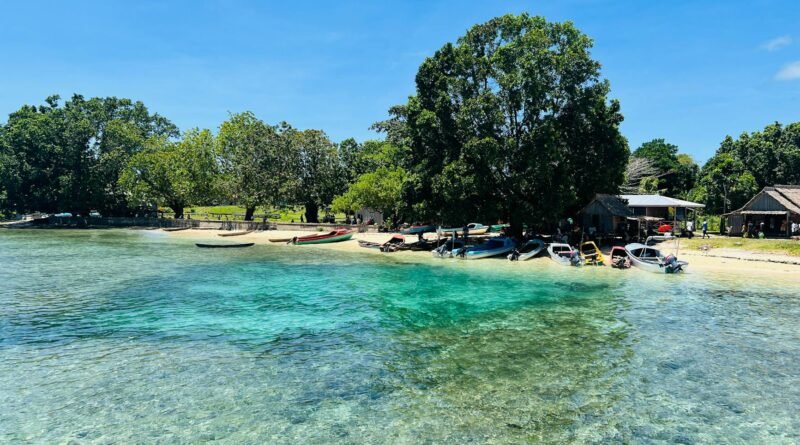
WELLINGTON, New Zealand — March 30, 2026 — A powerful magnitude 7.3 earthquake struck near the Pacific island nation of Vanuatu on Monday, March 30, according to the United States Geological Survey (USGS), shaking the idyllic archipelago but prompting no tsunami warnings from monitoring agencies.
The earthquake occurred at 7:44 p.m. local time (08:44 GMT) with its epicenter located approximately 35 kilometers (22 miles) northeast of Luganville, the country’s second-largest city, on the island of Espiritu Santo in Sanma province. The quake struck at an intermediate depth, with USGS reporting a depth of 87.5 kilometers, while other agencies recorded depths ranging from 88 to 116 kilometers.
Global Markets Rebound as US-Iran Ceasefire Hopes Drive Oil Below $100, Gold Surges.
The Vanuatu Meteorology and Geo-Hazards Department (VMGD) confirmed the quake occurred at a depth of 88 kilometers, according to local reports.
No Tsunami Threat
The Pacific Tsunami Warning Center (PTWC) and US Tsunami Warning Center confirmed that there was no tsunami threat, advisory, watch or warning associated with the earthquake. The depth of the quake—well below the ocean floor—likely prevented significant displacement of water that could generate destructive waves.
Damage Reports Emerging
Initial reports indicate structural damage on Espiritu Santo island. The Vanuatu Broadcasting and Television Corporation reported significant damage to a supermarket in the area. Images from the Santo Nambawan Store showed shelves toppled onto the ground and aisles of products smashed.
According to USGS data, approximately 140,000 people may have experienced strong to very strong shaking, including residents of Luganville, a city of about 18,000 people. The capital, Port Vila, located on a different island approximately 300 kilometers to the south, likely experienced light shaking.
Authorities are currently assessing damage across the affected region. The chairman of Sanma province has called an urgent meeting for Tuesday, March 31, to coordinate response efforts. It remains unclear whether damage has occurred on other nearby islands, as many are remote with limited communications.
Preliminary assessments by monitoring agencies suggest the earthquake is unlikely to have caused major casualties or significant economic losses, though the depth and magnitude could have caused moderate shaking across multiple islands.
Aftershock Risk
Authorities have warned that there remains a risk of aftershocks in the region, which is common following major seismic events.
Vanuatu lies in one of the world’s most seismically active regions, where the Australia and Pacific tectonic plates converge at high speed. Large earthquakes are common along this subduction zone. According to USGS data, 34 earthquakes of magnitude 7.5 or greater have been recorded in the area since 1900.
The quake follows a similar large event near Tonga just days earlier, when a magnitude 7.6 earthquake struck the neighboring Pacific nation on March 24.
Regional Context
Vanuatu, a low-lying archipelago nation with a population of approximately 320,000 people, is situated on the Pacific “Ring of Fire,” a horseshoe-shaped zone of intense seismic and volcanic activity that encircles the Pacific Ocean. The nation’s islands are frequently subject to earthquakes and volcanic eruptions due to this geological positioning.
Oil Surges Past $115 as Middle East War Expands, Stocks Tumble Worldwide ‘A New Era of Cosmic Surveys’: NASA to Unveil Complete Roman Space Telescope Ahead of Fall Launch.
The earthquake occurred at a depth that significantly reduced its surface impact compared to shallower quakes of similar magnitude. Shallow earthquakes typically produce stronger ground shaking and greater potential for tsunamis.
Ongoing Assessment
As of Monday evening local time, assessment teams continued to survey affected areas. Communications with some remote islands remain limited, and authorities have not yet released comprehensive damage reports. The province of Sanma, where the earthquake was most strongly felt, is coordinating with national disaster management officials to evaluate infrastructure damage and provide assistance where needed.
The USGS and other monitoring agencies continue to analyze seismic data and will issue updates if the magnitude or depth estimates are revised. Residents have been advised to remain cautious and follow guidance from local authorities as aftershocks remain possible in the coming hours and days.
SOURCES / INPUTS
USGS Earthquake Hazards Program: Latest Earthquakes
Pacific Tsunami Warning Center – NOAA
Vanuatu Meteorology and Geo-Hazards Department (VMGD)
National Tsunami Warning Center – NOAA
Pacific Tsunami Warning Center – Latest Bulletins

Modern World Order Explained: Power, Alliances & Global Systems.
Australian Prime Minister Anthony Albanese Calls for Clarity from Trump on Objectives of Iran War, Millions Protest Across US in Third Wave of ‘No Kings’ Rallies Against Trump Policies.