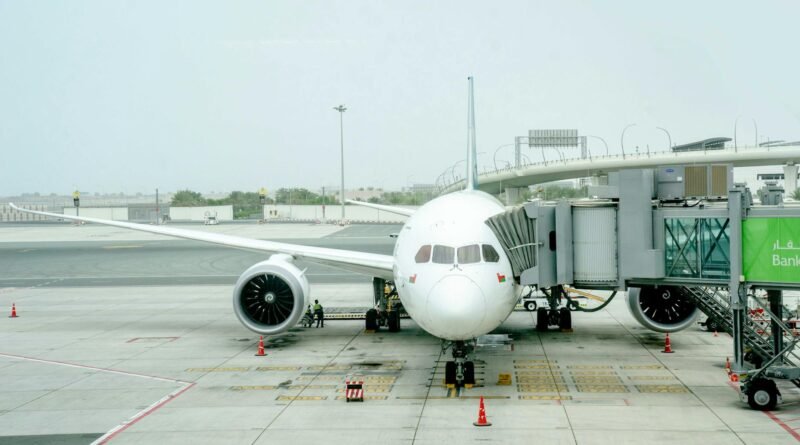
Kuwait Says Airport Fuel Tanks Ablaze After Iran Drone Attack, Summons Ambassador
Civil aviation authority reports ‘large fire’ at fuel storage facility; no casualties reported as Kuwait files formal protest over ‘blatant’ strikes
KUWAIT CITY — April 1, 2026 — Kuwait’s civil aviation authority said Wednesday that the Gulf state’s international airport came under Iranian drone attack, triggering a “large fire” at fuel storage tanks, as the month-long Middle East conflict continued to expand across the region.
The attack on Kuwait International Airport was part of a broader wave of Iranian strikes across the Gulf on Tuesday and Wednesday, with authorities reporting fires at fuel facilities, drones intercepted over Saudi Arabia, and a Kuwaiti oil tanker set ablaze at Dubai port .
Global Markets Rebound as US-Iran Ceasefire Hopes Drive Oil Below $100, Gold Surges.
Kuwait’s General Directorate of Civil Aviation spokesman Abdullah Al Rajhi said “fuel storage tanks at Kuwait International Airport were targeted, resulting in a large fire at the site,” according to the official Kuwait News Agency (KUNA). No casualties were reported, and emergency teams quickly deployed to bring the blaze under control .
The attack marks the latest in a series of Iranian strikes on Kuwait’s critical infrastructure since the war began on February 28, when the United States and Israel launched joint strikes on Iran. Kuwait’s airport has been targeted multiple times in recent weeks, including strikes that damaged its radar system on March 14 and previous attacks on fuel tanks and passenger terminals .
Global Markets Rebound as US-Iran Ceasefire Hopes Drive Oil Below $100, Gold Surges OnePlus India CEO Robin Liu Quits as Market Share Plummets, Fueling Exit Speculation.
Kuwait Summons Iranian Ambassador for Third Time
In response to the latest attack, Kuwait’s Foreign Ministry summoned Iranian Ambassador Mohammad Toutonji for the third time since the conflict began, handing him a formal protest note condemning the strikes as a “grave violation” of international humanitarian law .
The ministry said the attack on the airport—a civilian facility—constituted a “blatant violation” of Kuwait’s sovereignty, territorial integrity and airspace, as well as a breach of international law, the UN Charter and principles of good neighborliness .
Kuwait reaffirmed its right to self-defense under Article 51 of the UN Charter and held Iran “fully responsible for the consequences” of its attacks, the ministry said in a statement .
Regional Escalation Spreads Across Gulf
The attack on Kuwait’s airport was part of a broader escalation across the Gulf region.
In Saudi Arabia, the defense ministry said several drones were “intercepted and destroyed” . Bahrain’s interior ministry reported a fire at a business facility “as a result of the Iranian aggression” .
A Kuwaiti oil tanker, the Al-Salmi, was set ablaze near Dubai port in what its owner called an Iranian attack. The vessel was carrying two million barrels of crude oil at the time, according to maritime intelligence company Tanker Trackers. The fire was extinguished, and all 24 crew members were reported safe with no oil leakage .
The UK Maritime Trade Operations (UKMTO) reported that a tanker in Gulf waters was struck by two projectiles, with one causing a fire that was extinguished and another remaining unexploded within the vessel’s engine room .
Kuwait’s Military Responds to Hostile Threats
Kuwait’s Defense Ministry said its air defenses detected 20 ballistic missiles and nine hostile drones over the past 24 hours, according to a spokesperson cited by KUNA. Thirteen missiles and six drones were destroyed, while two drones struck the airport fuel tank .
A National Guard unit destroyed one drone and five additional unmanned aircraft within its operational areas, the ministry added .
The Kuwait Fire Force said its teams, supported by the army, National Guard and oil sector units, worked to contain the blaze at the airport fuel tanks. Emergency teams also dealt with four separate fires at different locations triggered by falling debris .
Iran’s Campaign Targets Gulf Infrastructure
Iran has fired missiles and drones at Israel and US allies across the Gulf since the war began on February 28, in retaliation for US-Israeli strikes that killed more than 1,340 people, including then-Supreme Leader Ayatollah Ali Khamenei .
Tehran has threatened to target vital infrastructure across the Gulf, including energy sites, and has effectively closed the Strait of Hormuz—through which approximately one-fifth of the world’s oil normally passes—to most shipping since early March .
The oil-rich Gulf has borne the brunt of Iran’s retaliatory attacks, with countries across the region reporting daily drone and missile interceptions. Gulf Cooperation Council countries, including the UAE, Kuwait, Bahrain, Saudi Arabia, Qatar, and Jordan, issued a joint statement this week renewing their condemnation in the “strongest terms” of what they called “blatant Iranian attacks” in the region .
Kuwait Protests to International Civil Aviation Organization
Kuwait’s civil aviation authority has also submitted an official protest letter to the International Civil Aviation Organization (ICAO) over what it described as serious violations and Iranian attacks targeting the country’s airspace and facilities at Kuwait International Airport .
The authority stressed that the attacks constitute a “blatant violation” of international conventions governing civil aviation, exposing passengers, airlines, and airport personnel to significant risks. The incidents have disrupted air traffic, forced flight suspensions, and resulted in substantial financial losses to the civil aviation sector .
Global Oil Markets React
The attacks on Gulf energy and transport infrastructure have sent shockwaves through global oil markets. Brent crude futures have risen more than 50 percent since the conflict began, trading above $115 per barrel on Monday as traders priced in prolonged supply disruptions .
The Kuwaiti tanker attack alone pushed US crude futures up more than $3, or 2.9 percent, to $105.91 per barrel, according to reports .
U.S. Military Presence in the Region
The United States maintains a significant military presence across the Gulf, including at bases in Kuwait, Bahrain, Qatar, and the UAE. On Friday, an Iranian strike on Prince Sultan Air Base in Saudi Arabia wounded 12 US troops, two of them seriously, in one of the most significant breaches of American air defenses since the war began .
The Pentagon has deployed approximately 50,000 troops to the region, including the amphibious assault ship USS Tripoli carrying thousands of Marines, and two aircraft carriers .
Diplomatic Efforts Continue
Despite the escalating violence, diplomatic efforts to end the war continue. President Donald Trump announced a 10-day extension of a pause on strikes against Iranian energy infrastructure last week, claiming “very good and productive” talks with Tehran. Iran’s foreign ministry has publicly denied holding direct negotiations, though officials have acknowledged reviewing a U.S. proposal transmitted through intermediaries .
On Tuesday, the Israeli military reported launching strikes on Iranian military infrastructure and said it detected missiles launched from Iran toward Israel .
As of Wednesday, April 1, Kuwait’s airport remained operational, though authorities continue to assess damage from the latest attack. The civil aviation authority said emergency procedures were activated immediately and firefighters brought the blaze under control with no casualties reported .
SOURCES / INPUTS
The Peninsula Qatar: Drone attack targets Kuwait airport, fuel tanks on fire: aviation agency
BERNAMA: KUWAIT FILES PROTEST WITH ICAO OVER IRANIAN AIRSPACE VIOLATIONS, AIRPORT ATTACKS
Khaleej Times: Day 26: Iran reviewing US proposal; Kuwait dismantles terror cell linked to Hezbollah
Modern World Order Explained: Power, Alliances & Global Systems.
Australian Prime Minister Anthony Albanese Calls for Clarity from Trump on Objectives of Iran War, Magnitude 7.3 Earthquake Strikes Vanuatu Islands, No Tsunami Threat Reported.