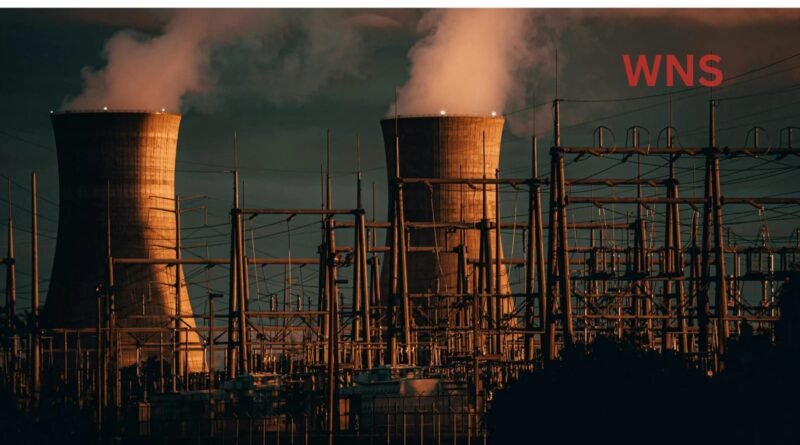
Israeli Strikes Hit Iranian Nuclear Facilities, IAEA Confirms No Radiation Leak
Bushehr plant struck for third time in 10 days; IDF targets Arak heavy water plant and Yazd uranium facility in Operation “Rising Lion”
TEHRAN — March 28, 2026 — Israeli airstrikes hit multiple Iranian nuclear facilities on Friday, March 27, including the Bushehr Nuclear Power Plant, the Arak heavy water plant, and a uranium extraction facility in Yazd, in a significant escalation of military operations that drew urgent warnings from the UN atomic watchdog about the risk of a “major radiological incident.”
The International Atomic Energy Agency (IAEA) confirmed that it had been informed by Iranian authorities of a strike in the area of the Bushehr Nuclear Power Plant — the third such incident at the facility in 10 days . According to Iranian officials, the operating reactor was not damaged, no radiation release was detected, and the plant’s condition remains normal .
Global Markets Rebound as US-Iran Ceasefire Hopes Drive Oil Below $100, Gold Surges.
IAEA Director General Rafael Grossi expressed “deep concern” about the recent military activity near nuclear facilities. “It could cause a major radiological incident if the reactor were to be damaged,” Grossi warned, reiterating his call for “maximum military restraint to avoid the risk of a nuclear accident” .
Multiple Facilities Targeted
The Israeli military confirmed it carried out airstrikes as part of Operation “Rising Lion,” targeting key infrastructure linked to Iran’s nuclear program . In a series of posts on X, the Israel Defense Forces (IDF) stated that its air force struck the heavy water plant in Arak and a uranium extraction facility in Yazd .
“The Air Force struck the heavy water plant in Arak… Despite explicit international commitments, foremost among them the nuclear deal, the Iranian terrorist regime has systematically refrained from converting the reactor in a manner that would prevent the production of weapons-grade plutonium. Therefore, the IDF has now struck the facility once again,” the IDF stated .
Regarding the Yazd facility, the IDF said the strike was aimed at “disrupting Iran’s nuclear weapons program by targeting central infrastructure for the production of precursor materials.” Enriched uranium, the military noted, constitutes “a central and critical component in nuclear weapons development” .
The IAEA separately confirmed that the Shahid Rezayee Nejad Yellow Cake Production Facility in Yazd province — also known as Ardakan — was attacked on Friday. The agency reported that no increase in off-site radiation levels was detected and said it was looking into the incident .
Bushehr: Third Strike in 10 Days
The Iranian Atomic Energy Organisation said a projectile struck the Bushehr Nuclear Power Plant site at approximately 12:40 p.m. local time on Friday, March 27, describing it as the “third attack” on the facility . No casualties, financial, or technical damage were reported, according to the organization .
Iranian state news agency Fars reported that a projectile hit the plant’s grounds at 11:40 p.m. local time (2010 GMT), blaming the “American-Zionist enemy” for the strike . The Bushehr plant in southwestern Iran is the country’s only operational nuclear power reactor and was first connected to the grid in 2011, according to the IAEA .
The agency also reported that the heavy water production plant at Khondab was hit on Friday. The IAEA noted that no radiation risk was associated with that strike, as the installation contains no declared nuclear material .
Steel Plants Also Struck
In addition to nuclear facilities, Israeli strikes targeted major industrial infrastructure. Iran’s state media reported that the US and Israel jointly carried out separate attacks on two major steel companies in Isfahan and Khuzestan provinces .
According to Akbar Salehi, Deputy Governor General of Isfahan, the electricity facility of Mobarakeh Steel Company was targeted while employees were present, resulting in one death and two injuries .
Philippines Declares National Energy Emergency as Middle East Crisis Threatens Fuel Supply ‘A New Era of Cosmic Surveys’: NASA to Unveil Complete Roman Space Telescope Ahead of Fall Launch.
In Khuzestan, the Khuzestan Steel Company suffered damage from an aerial strike, leaving 16 individuals with minor injuries, according to Deputy Governor General Valiollah Hayati .
The IAEA confirmed that the Khuzestan Steel Production Factory — which uses sealed cobalt-60 and cesium-137 radioactive sources for gauging — was subjected to strikes, but there was no off-site radiation release .
Iran Vows ‘Heavy Price’
Iranian Foreign Minister Seyed Abbas Araghchi condemned the attacks in strong terms, warning that Tehran would exact a “HEAVY price” for what he described as Israeli crimes .
“Israel has hit 2 of Iran’s largest steel factories, a power plant and civilian nuclear sites among other infrastructure. Israel claims it acted in coordination with the U.S. Attack contradicts POTUS extended deadline for diplomacy. Iran will exact HEAVY price for Israeli crimes,” Araghchi wrote on X .
The Foreign Minister also criticized US President Donald Trump, noting that the strikes contradicted the extended deadline for diplomatic negotiations that Trump had announced just a day earlier .
Trump Extends Energy Strike Pause
On Thursday, March 26, Trump announced a 10-day extension — until April 6, 2026 — on the pause of strikes targeting Iran’s energy infrastructure, claiming the move came at the request of the Iranian government .
“As per the Iranian Government’s request, please let this statement serve to represent that I am pausing the period of Energy Plant destruction by 10 Days to Monday, April 6, 2026, at 8 P.M., Eastern Time. Talks are ongoing and, despite erroneous statements to the contrary by the Fake News Media and others, they are going very well,” Trump posted on Truth Social .
The Friday strikes on nuclear facilities came just hours after this announcement, raising questions about the coordination between US and Israeli military actions.
International Concern
The IAEA’s repeated calls for restraint underscore the international community’s alarm at military operations near nuclear facilities. The agency noted that it had been informed by Iran of the strikes and was monitoring the situation closely .
Grossi’s warning about the potential for a “major radiological incident” reflects longstanding concerns that damage to operational nuclear reactors could cause catastrophic radiation releases, with consequences extending far beyond Iran’s borders .

Escalating Conflict
The strikes on nuclear facilities mark a significant escalation in the conflict that began on February 28, when the United States and Israel launched joint attacks on Iran . Since then, Iran has retaliated with waves of drone and missile strikes targeting Israel, Jordan, Iraq, and Gulf countries hosting US military assets, causing casualties and infrastructure damage while disrupting global markets and aviation .
Previous attacks on Iran’s nuclear infrastructure were documented earlier this month. On March 3, the IAEA confirmed based on satellite imagery that recent attacks had damaged the entrance buildings of Iran’s underground Natanz Fuel Enrichment Plant (FEP), though no radiological consequences were expected .
SOURCES / INPUTS
BERNAMA: Bushehr Nuclear Plant In Iran Hit In 3rd Attack, No Damage Reported
Times of Oman: Iran’s Araghchi slams Israeli strikes on nuclear sites, steel plants
Modern World Order Explained: Power, Alliances & Global Systems.
Iranian Strike on Saudi Base Injures 12 US Troops, Damages Aircraft, Landslides in Southern Tanzania Kill at Least 20 Amid Heavy Rains.