Iraq shuts down oil ports after tanker attacks kill one crew member near Basra
Baghdad suspends operations at key terminals as precautionary measure following assault on two vessels in territorial waters, escalating regional maritime conflict
BASRA, Iraq — March 12, 2026 — Iraq has halted operations at all oil ports following attacks on two foreign tankers in its territorial waters on March 12 that killed at least one crew member and injured others, authorities said, as the widening Middle East conflict disrupts energy exports from the world’s most important oil-producing region .
Farhan al-Fartousi, Director General of the state-run General Company for Ports of Iraq, confirmed the suspension in a statement on the morning of March 12, saying the decision was taken as a temporary precautionary measure until the security situation can be assessed and the safety of maritime navigation and oil export facilities is ensured . Commercial ports continue to operate normally, he added .
Global markets steady after oil price plunge as Middle East conflict fuels volatility.
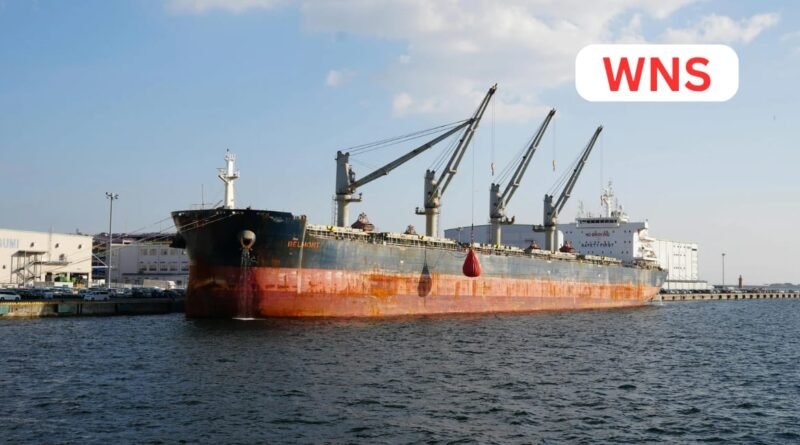
The attack targeted two oil tankers in Iraqi waters near Umm Qasr port, approximately 50 kilometres south of the southern oil hub of Basra, at approximately 1 a.m. local time on March 12 . One vessel was registered under a Maltese flag, according to Iraqi port officials .
Attack details and casualties
Iraqi joint operations command spokesman Saad Maan confirmed in a statement issued in the early hours of March 12 that the袭击 resulted in one fatality, with 38 crew members rescued . Search operations continue for missing personnel, he said, adding that the Iraqi government had deployed six naval vessels to assist in rescue efforts .
“The two tankers were subject to sabotage,” the Iraqi government’s media cell told the national Iraqi News Agency (INA) . Maan described the attack as a violation of Iraqi sovereignty .
Preliminary investigations suggest the attack was carried out by explosive-laden boats, according to Iraqi port security officials cited by multiple news agencies . A employee at the Basra oil terminal told AFP that it remained unclear “whether it was a drone attack or explosive-laded boats” .
Firefighting tugboats from Basra Oil Port were deployed to extinguish blazes that broke out on both vessels, with emergency teams managing to contain the situation and prevent further damage, al-Fartousi said . He added that preliminary information indicates the incident did not result in a major oil spill or significant environmental damage .
UKMTO warning and regional context
The United Kingdom Maritime Trade Operations (UKMTO) issued an urgent warning on March 12 following what it described as a “serious maritime incident in the northern Gulf” involving commercial vessels . In updates posted on the social media platform X, the UKMTO said two tankers had been struck by an unknown projectile approximately five nautical miles south of Al Basrah in Iraqi territorial waters .
Officials said the attack caused fires on board the vessels, though the crews were safely evacuated . The UKMTO also reported a separate incident on March 12 in which a container ship approximately 35 nautical miles north of Jebel Ali in the United Arab Emirates was struck by an unknown projectile, causing a small fire . All crew members on that vessel were reported safe.
The attacks come amid escalating maritime tensions across the Gulf region following the outbreak of war between Iran and the US-Israeli alliance on February 28. Since then, Iran has effectively closed the Strait of Hormuz to commercial shipping, vowing that “not one litre of oil would be exported from the Gulf” while hostilities continue . The strait normally carries approximately one-fifth of the world’s oil production.
Impact on Iraqi oil exports
The suspension of oil port operations represents a severe blow to Iraq’s economy, which relies on oil exports for more than 90 per cent of government revenue . According to Reuters reporting on March 8, Iraq’s crude oil production had already fallen by nearly 70 per cent due to the inability to export through the Strait of Hormuz, with output at southern fields dropping from approximately 3.3 million barrels per day in February to around 800,000 barrels per day by early March .
A senior Iraqi oil ministry official described the situation as “the most serious operational threat Iraq has faced in more than 20 years” .
Russia Accuses Ukraine of ‘Reckless’ Drone Strikes on TurkStream Gas Pipeline Supplying Europe UNESCO report reveals 272 million children out of school worldwide as education targets slip.
Iraq operates two key offshore oil terminals in the Gulf—Al Basrah Oil Terminal and Khor Al Amaya Oil Terminal—supported by multiple single-point mooring systems that handle the majority of the country’s crude exports . The General Company for Ports of Iraq also manages several major commercial ports including Khor Al-Zubair, Abu Floos, and Maqil, while the Al-Faw Grand Port remains under construction .
Al-Fartousi confirmed on March 12 that ships remain in waiting areas while loading and unloading activities continue at Umm Qasr North Port and Umm Qasr South Port, the country’s main commercial harbours .
Regional production cuts and market impact
The attacks on Iraqi vessels are part of a broader pattern of maritime strikes that have severely disrupted energy exports from the Gulf region. According to Bloomberg reporting on March 9, Saudi Arabia, Iraq, the United Arab Emirates, and Kuwait have together reduced their collective oil output by as much as 6.7 million barrels per day—equivalent to approximately 6.5 per cent of global supply—amid the effective closure of the Strait of Hormuz .
Saudi Aramco CEO Amin Nasser described the situation as “by far the biggest crisis the region’s oil and gas industry has faced,” noting that storage facilities are filling up across the region and some producers are preemptively cutting production to delay the point at which they would be forced to shut down completely .
Global oil markets reacted sharply to the March 12 attacks. Brent crude futures surged more than 8 per cent in early trading, briefly touching $99.54 per barrel, while West Texas Intermediate climbed above $94 per barrel . The price spike came despite the International Energy Agency’s announcement on March 11 that member countries would release 400 million barrels from strategic reserves—the largest such release in history—to ease market pressures .
US warnings and military response
The attack on Iraqi tankers occurred just hours after the US embassy in Baghdad warned on March 11 that Iran and Tehran-backed Iraqi armed groups might target American-owned oil facilities in Iraq .
US President Donald Trump said on March 11 that American forces had struck 28 Iranian mine-laying vessels since the conflict began more than a week ago . In remarks on March 12, Trump stated that the United States is in a “favourable position” in the war and would focus on the Strait of Hormuz situation, adding that US forces know where Iran’s “secret organisations” are located and are monitoring them closely .
Trump had earlier suggested on March 9 that the conflict could end “very soon,” a prediction that helped trigger a sharp drop in oil prices, but the March 12 attacks have underscored the continuing volatility and risk of escalation.
Broader regional escalation
The maritime attacks coincide with intensified military action across the region. In the early hours of March 12, Iran’s Islamic Revolutionary Guard Corps announced it had completed the 40th wave of “Operation True Promise-4,” conducting coordinated strikes with Lebanon’s Hezbollah against Israeli targets and US military bases in the Middle East . The Israeli military subsequently announced it had launched “大规模空袭” (large-scale airstrikes) on Tehran .
An Israeli senior defence official described the Iran-Hezbollah coordinated strikes as the first such joint operation since the war began on February 28 .

Meanwhile, images broadcast by Syrian state television channel Al-Ikhbariya on March 12 showed a ship at sea with plumes of smoke rising from a massive fire, though AFP reported it could not independently verify the footage .
The United States, Saudi Arabia, Kuwait, Bahrain, and the United Arab Emirates have all reported intercepting missiles and drones launched from Iran in recent days .
Investigation and next steps
Iraqi authorities have launched an investigation to determine the circumstances of the March 12 attack and identify those responsible, al-Fartousi said . He stressed that maritime authorities are enhancing security measures in shipping lanes and ports to ensure the safety of vessels and the continuity of trade operations at commercial terminals .
The attack has raised questions about Iraq’s ability to protect its maritime infrastructure and maintain energy exports amid the widening regional conflict. With oil revenue accounting for the vast majority of government spending, the prolonged disruption threatens to exacerbate Iraq’s already fragile economic situation.
The General Company for Ports of Iraq said it would continue to assess the security situation and would resume oil port operations only when safe passage for vessels can be guaranteed . For now, Iraq’s ability to export oil—the lifeblood of its economy—remains suspended indefinitely.
Sources / Inputs
BERNAMA: Iraq Announces Closure Of Country’s Oil Ports: Local Media
BOL News: Iraq shuts down Basra Oil Terminals; Israel bombs Beirut
Sinar Daily: Iraq announces closure of country’s oil ports – Local media
Deccan Chronicle: Iraq Suspends Oil Port Operations After Tanker Attacks
Modern World Order Explained: Power, Alliances & Global Systems.
Deadly Escalation: Seven Pakistani Police Killed in IED Blast, Afghanistan Accuses Islamabad of Civilian Deaths in Airstrikes, China Donates $200,000 to Families of Iranian School Strike Victims.