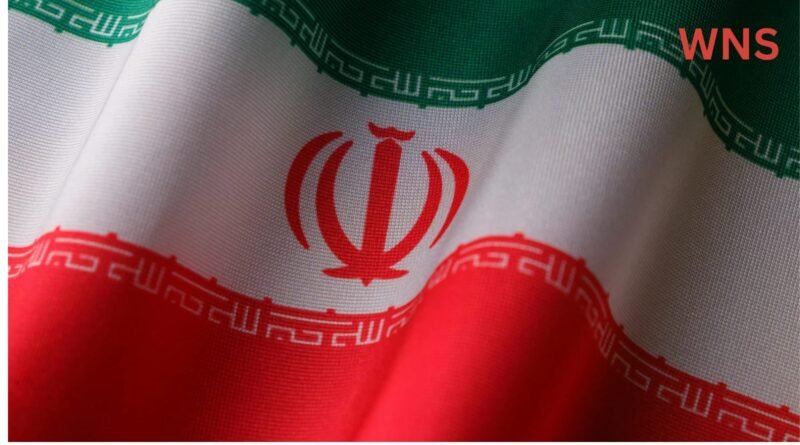
Iran Says US Must Drop ‘Excessive Demands’ in Nuclear Negotiations as Geneva Talks Conclude
GENEVA — Iran has called on the United States to abandon “excessive demands” following the third round of indirect nuclear negotiations in Geneva, with Tehran firmly rejecting American proposals that would require dismantling its nuclear facilities and transferring its enriched uranium stockpile out of the country .
The two-day talks, which concluded on February 26, 2026, saw Iranian and American delegations engage in their longest and most intensive discussions since nuclear diplomacy resumed last month under Omani mediation . While Omani Foreign Minister Badr al-Busaidi reported “significant progress” and “unprecedented openness to new and creative ideas,” fundamental differences remain over the scope and terms of any potential agreement .
Iranian Foreign Minister Abbas Araghchi, who led the delegation, told reporters after the talks that Tehran and Washington “moved closer to agreement” on certain issues and that seriousness between the two sides “was more evident than before” . However, he emphasized that Iran’s red lines remain non-negotiable, including its right to enrich uranium on its own soil and the complete lifting of US sanctions .
US Demands: Dismantlement and Transfer
According to multiple media reports, the American negotiating team, led by Special Envoy Steve Witkoff and President Donald Trump’s son-in-law Jared Kushner, presented far-reaching demands that would fundamentally reshape Iran’s nuclear program .
The Wall Street Journal reported, citing US officials, that Washington is insisting Iran shut down its three principal nuclear sites at Fordow, Natanz, and Isfahan, and transfer its entire remaining stockpile of enriched uranium—estimated at around 10,000 kilograms—to the United States . The Trump administration also demands that any agreement be permanent, with no expiration date or “sunset clause” that would phase out restrictions over time .
These terms go significantly beyond the 2015 Joint Comprehensive Plan of Action, which allowed Iran to maintain limited enrichment activities and included provisions that would gradually lift restrictions after specified periods . US Secretary of State Marco Rubio stated on Wednesday that Iran is not currently enriching uranium, following extensive damage to its facilities during the June 2025 conflict with Israel and the United States .
Washington is offering only minimal sanctions relief upfront, with the possibility of additional concessions if Iran demonstrates sustained compliance over time, US officials told the Wall Street Journal . While the United States insists on zero enrichment, American negotiators may be willing to allow Iran to operate a reactor in Tehran for very low-level enrichment solely for medical purposes .
Tehran’s Rejection and Counter-Proposals
Iranian officials have roundly rejected the American terms. Elyas Hazrati, head of the Iranian government’s information division, posted on X that reports published by The Wall Street Journal and The New York Times on the course of the negotiations “do not reflect the reality of the talks” . He stressed that Iran’s policy on the nuclear issue “remains unchanged,” that the enrichment process will continue, and that “no transfer of nuclear material outside the country is on the agenda” .
Iran’s state-run IRIB TV reported that the Iranian delegation completely rejected transferring Iran’s enriched uranium abroad during the indirect talks, while insisting on the termination of US sanctions against the country . Iran’s Foreign Ministry spokesperson Esmaeil Baghaei described the Geneva atmosphere as “intensive and serious,” saying both sides had put forward “significant and practical proposals” on nuclear issues and sanctions relief, though he noted “contradictory statements” by certain US officials .
According to Xinhua News Agency, Iran has signaled tactical flexibility on uranium enrichment, with Tehran willing to consider capping enrichment at 3.67 percent, accepting an international consortium for fuel supply, and placing its 60 percent stockpile under continuous monitoring of the International Atomic Energy Agency . However, these potential concessions would only apply while keeping Iran’s missile program and regional influence off the negotiating table .
Ali Shamkhani, a senior advisor to Iran’s Supreme Leader Ali Khamenei, posted on X that if the main issue is Iran not making nuclear weapons, “an immediate agreement is within reach,” citing a religious decree against such weapons . Tehran has been firm in securing its right to enrichment on its own soil .
IAEA Involvement and Technical Track
The presence of IAEA Director General Rafael Grossi at Thursday’s talks added a critical technical dimension to the negotiations. Grossi joined the discussions as a technical observer, offering guidance on verifying Iran’s nuclear activities . Araghchi noted that Grossi’s participation “was helpful from a technical standpoint” .
A confidential IAEA report released Friday revealed ongoing challenges in monitoring Iran’s program. The report stated that Iran has denied the agency access to nuclear facilities affected by the June 2025 conflict, and the IAEA “cannot verify whether Iran has suspended all enrichment-related activities” or determine the current size of its uranium stockpile at impacted sites . Without access to the country’s four declared enrichment facilities, the agency cannot confirm the “size, composition, or whereabouts” of Iran’s enriched uranium .
According to the IAEA report, Iran currently holds 440.9 kilograms of uranium enriched up to 60 percent, just a short step below weapons-grade levels of 90 percent . Grossi has warned this stockpile could theoretically produce up to ten nuclear weapons if Iran chose to weaponize its program, though he clarified that the country does not currently possess such weapons .
Special Envoy Witkoff told Fox News on February 21 that Iran is “probably a week away from having industrial-grade bombmaking material” through uranium enrichment, though experts note that developing an actual weapon would require additional time and technical capabilities .
Next Steps: Vienna Technical Talks
Following the conclusion of the Geneva talks, the two sides agreed that technical teams will begin discussions and reviews in Vienna starting Monday, March 2 . Araghchi said a new round of negotiations will be held in less than a week, building on the understandings forged in previous rounds .
The issue of UN Security Council and US sanctions was among Iran’s key demands, and it was agreed that this topic would be addressed in greater detail during the upcoming Vienna meetings . Araghchi added that in the area of sanctions relief, the Iranian side “clearly outlined” its specific demands .
Omani Foreign Minister al-Busaidi, whose country has served as the critical mediator between Tehran and Washington, expressed optimism about the path forward. “We will resume soon after consultation in the respective capitals. Discussions on a technical level will take place next week in Vienna. I am grateful to all concerned for their efforts: the negotiators, the IAEA, and our hosts the Swiss government,” he wrote on X .
Military Buildup and Coercive Diplomacy
The diplomatic engagement has unfolded against a backdrop of significant military escalation. The United States has amassed two aircraft carrier strike groups and over 150 combat aircraft in the Persian Gulf region, including F-35 stealth fighters, while reinforcing its bases in Jordan and Israel . President Trump warned in his State of the Union address on February 24 that he prefers resolving disputes with Iran through diplomacy, while not ruling out military action .
“We wiped it out and they want to start all over again. And they’re at this moment again pursuing their sinister ambitions,” Trump told Congress. “We are in negotiations with them. They want to make a deal, but we haven’t heard those secret words: ‘We will never have a nuclear weapon'” .
Iran has responded with its own military demonstrations, conducting live-fire drills in the Strait of Hormuz last week that temporarily closed the strategic waterway in a show of its ability to disrupt global oil shipments . Tehran has repeatedly stressed readiness to retaliate forcefully against any attack.
Experts describe the current dynamic as “coercive diplomacy,” with both sides applying pressure through military signaling while keeping negotiations alive . Amer Sabaileh, a Jordanian political analyst, argued that the scale of US military preparations suggests Washington is not merely posturing. “The military preparations and reinforcements the United States is carrying out in the region suggest that the possibility of war and U.S. strikes against Iran is highly likely” .
Iranian Foreign Ministry spokesman Baghaei, responding to Trump’s congressional address, accused the US president of telling “big lies” and dismissed Washington’s claims about Iran’s nuclear program and ballistic missiles .
Path Forward: Narrowing Window for Diplomacy
The Geneva talks, while described as the most serious and longest round to date, have laid bare the fundamental rift between the two sides. Washington’s maximalist demands for dismantlement and permanent restrictions clash with Tehran’s insistence on retaining its enrichment capabilities and securing meaningful sanctions relief .
Palestinian political analyst Samer Anabtawi told Xinhua that the Iranian move to prepare a draft agreement shows its “clear seriousness” in the negotiation process, but “Washington’s acceptance of it remains another matter linked to broader political calculations” . He noted that Israel, though not at the table, is “the most influential actor” shaping the dynamics of the talks, with “many of the conditions being raised in this diplomatic process are, in essence, Israeli conditions reflected in American demands” .
For now, both sides have agreed to continue technical discussions in Vienna, keeping the diplomatic door open. But with massive military forces arrayed on both sides and fundamental disagreements unresolved, the window for a negotiated outcome may be narrowing. As Omani analyst Khalfan al-Touqi cautioned, any conflict would be far more destructive than the 12-day war in June 2025. “The strikes will not be limited, as some expect, but will be far more dangerous, with dire consequences not just for Iran, but for the entire region” .
With inputs from
Al Jazeera: Iran rejects US excessive demands
Newsonair: Iran-US talks Geneva Feb 26
CNBC: US-Iran most intense talks no deal
Guardian: Iran-US nuclear talks Geneva
Reuters: High-stakes Geneva talks
For broader context, see our in-depth analysis on Modern World Order Explained: Power, Alliances & Global Systems.
Also in this section: Russia, China, Iran Urge Restraint as Pakistan Declares ‘Open War’ on Afghanistan and World Economic Forum CEO Resigns After Review of Jeffrey Epstein Ties.