Iran Says It Has Allowed Some Ships Through Strait of Hormuz Amid Regional Conflict
Tehran grants passage to vessels from friendly nations as hundreds remain stranded; India confirms three tankers crossed safely
TEHRAN — March 15, 2026 — Iran has allowed “some ships” to pass through the strategically vital Strait of Hormuz, Iranian officials confirmed over the past several days, as the Islamic Republic maintains an effective blockade on vessels linked to the United States and Israel while permitting selective transit for friendly nations .
The confirmation comes from multiple Iranian diplomatic sources, including the ambassador to India and a deputy foreign minister, as hundreds of vessels remain stranded in the narrow waterway that handles approximately one-fifth of the world’s traded oil .
Global markets steady after oil price plunge as Middle East conflict fuels volatility.
Selective Passage for Friendly Nations
Iranian Ambassador to India Mohammad Fathali told reporters in New Delhi on Saturday that Iran has “allowed some ships” to transit the Strait of Hormuz, though he declined to specify the number of vessels granted passage . Speaking at the India Today Conclave 2026, Fathali confirmed that Iranian authorities have cooperated with countries that have engaged in diplomatic dialogue .
“Yes, we have allowed, but let me not tell how many,” Fathali said during an interactive session, with his remarks interpreted from Persian by the deputy chief of mission .
Earlier in the week, Iran’s Deputy Foreign Minister Majid Takht-Ravanchi provided additional context, stating: “Some countries have already talked to us about passing the strait and we have cooperated with them” . He emphasized that countries which “joined the aggression” against Iran should not benefit from safe passage, drawing a distinction between nations perceived as hostile and those maintaining neutrality or friendly relations .
Foreign Minister Abbas Araghchi further clarified Iran’s position in an interview with an American cable news channel, asserting that the Strait of Hormuz “remains operational for international shipping, but vessels linked to the United States and Israel are not permitted to pass through the waterway” . Araghchi maintained that the maritime passage has not been entirely shut down, suggesting that some shipping companies are choosing to avoid the area due to safety concerns rather than an outright blockade .
India Secures Passage for Its Vessels
The most tangible evidence of Iran’s selective policy has emerged in the case of Indian shipping. A senior Indian shipping ministry official confirmed that two Indian vessels — the Shivalik and Nanda Devi — carrying liquefied petroleum gas (LPG) from Gulf countries crossed the Strait of Hormuz early on Saturday morning . This raised the number of Indian ships safely passing through the war-hit narrow shipping lane to three .
Ambassador Fathali had earlier assured that Iran would provide safe passage for Indian-flagged vessels, stating: “Yes, because India is our friend. You will see this within two or three hours” . He emphasized the historical relations between Iran and India, adding: “I believe Iran and India also have common interests. I also believe if there is any rift or gap between these two countries, their enemies will use it” .
The successful transit followed a telephone conversation on Thursday night between Indian Prime Minister Narendra Modi and Iranian President Masoud Pezeshkian, during which they discussed the “serious situation” in West Asia . Approximately 22 Indian ships remain on the western side of the strait on standby as New Delhi continues diplomatic engagement with regional governments .
India imports 60 percent of its LPG needs, with 85 to 90 percent sourced from Gulf countries including Saudi Arabia and the UAE, all of which rely on the Strait of Hormuz for oil and gas shipments .
Conflicting Signals from Supreme Leader
The diplomatic messaging from Iranian officials stands in tension with earlier statements from Iran’s new Supreme Leader, Ayatollah Mojtaba Khamenei, who on Thursday called for the “continued closure of the Strait of Hormuz” and urged that “the lever of blocking the Strait of Hormuz must definitely continue to be used” .
In his first message since being named supreme leader following the death of his father, Ayatollah Ali Khamenei, in the initial US-Israeli strikes on February 28, Mojtaba Khamenei described the waterway closure as a strategic tool against the enemy . He also warned of potential new battlefronts: “Studies have been conducted on the opening of other battlefronts where enemy has little experience and will be extremely vulnerable, and their activation will take place if the war situation continues and based on considering the interests” .
Russia Accuses Ukraine of ‘Reckless’ Drone Strikes on TurkStream Gas Pipeline Supplying Europe Pi Day 2026: Celebrating Mathematics’ Most Famous Constant with Pie, Puzzles, and Einstein’s Birthday.
The supreme leader’s statement, distributed by state television, also called on Gulf countries to close US military bases on their territory, asserting that “the US claim of establishing security and peace was nothing more than a lie” .
Potential Yuan-Based Exceptions
Adding another layer to the shipping crisis, Iranian officials are reportedly considering allowing a limited number of oil tankers to transit the strait if cargo transactions are conducted in Chinese yuan . A senior Iranian official told CNN that the potential move is part of Tehran’s plan to manage the flow of oil tankers through the strategic waterway .
Global oil is predominantly traded in US dollars, except for sanctioned Russian oil, which is priced in roubles or yuan. China has long sought to expand the use of yuan in oil transactions, though the dollar remains the world’s primary reserve currency .
Widespread Disruption Despite Exceptions
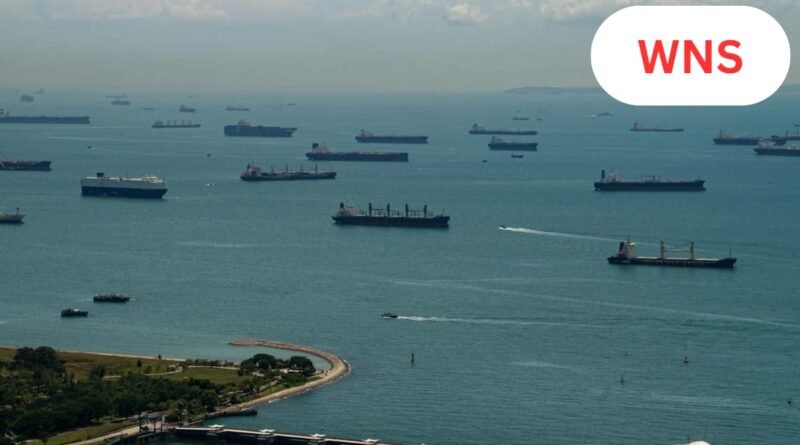
Despite these selective openings, the Strait of Hormuz remains effectively closed to most commercial shipping since early March, following the outbreak of the US-Israeli military campaign against Iran on February 28 . The waterway, which carries about 20 million barrels of oil daily and roughly 20 percent of global liquefied natural gas trade, has seen traffic reduced to a near-standstill .
The disruption has pushed global oil prices to their highest level since July 2022 and raised concerns about energy supply stability . The Paris-based International Energy Agency has warned that the conflict “is creating the largest supply disruption in the history of the global oil market,” surpassing those of the 1970s .
The United Nations has warned that restrictions on shipping through the strait could have a “massive impact” on humanitarian operations in the region, disrupting aid delivery and increasing global shipping costs .
Regional Conflict Context
The shipping crisis unfolds against the backdrop of a widening regional conflict that began on February 28 when the United States and Israel launched joint attacks on Iran, killing more than 1,300 people including former Supreme Leader Ayatollah Ali Khamenei . Iran has since retaliated with missile and drone strikes targeting Israel and US military assets across the Gulf region .
US President Donald Trump has announced that naval escorts for tankers transiting the strait could begin “soon,” as Washington considers deploying Navy vessels to protect commercial shipping . Trump also confirmed that US forces had destroyed all military targets on Iran’s Kharg Island, Tehran’s main oil export hub, though Iran maintains that oil facilities on the island were undamaged .
The conflict has spread to neighboring states, with Bahrain reporting it intercepted 124 missiles and 203 drones since February 28, while Qatar said it intercepted a missile targeting the country . Some oil loading operations at the UAE’s Port of Fujairah were suspended after a drone attack caused a fire .
Current Situation
As of March 15, the Strait of Hormuz remains largely closed to international shipping, with only select vessels from nations engaged in diplomatic dialogue with Tehran receiving permission to transit. The United Nations continues to warn of humanitarian consequences, while global energy markets brace for prolonged disruption.

Iranian officials maintain that the strait will remain closed to US and Israeli-linked vessels, and potentially to any ships whose cargo is denominated in US dollars, as part of Tehran’s strategic response to the ongoing military campaign against its territory .
SOURCES / INPUTS
TASS: Iran to provide safe passage for Indian ships through Strait of Hormuz — ambassador
Modern World Order Explained: Power, Alliances & Global Systems.
Bus carrying Indian pilgrims plunges into gorge in Nepal, killing seven, Ukrainian Drones Strike Major Oil Refinery and Port in Southern Russia, Kyiv Confirms.