Iran and US Prepare for High-Stakes Ceasefire Talks in Islamabad Amid Lebanon Dispute
Washington confirms delegation led by Vice President JD Vance will attend; Tehran conditions participation on halt to Israeli attacks in Lebanon
ISLAMABAD — April 10, 2026 — The United States and Iran are preparing for high-stakes peace talks in Pakistan’s capital on Saturday, April 11, aimed at securing a permanent ceasefire after weeks of devastating conflict, though the negotiations face immediate jeopardy as Iran insists it will not participate until Israel halts its military offensive in Lebanon.
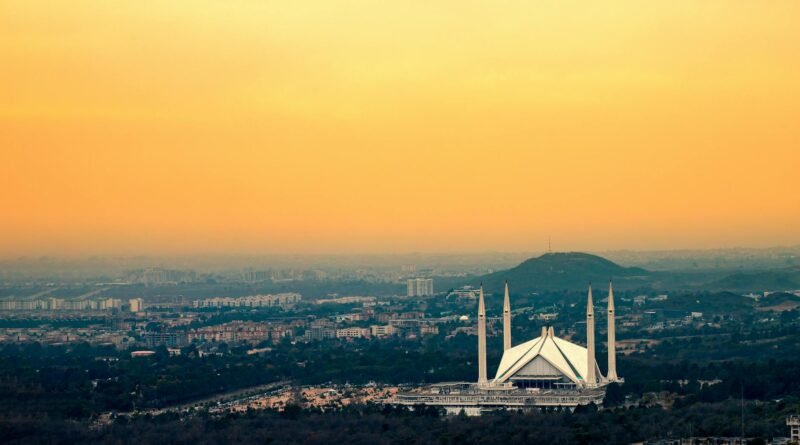
The talks, scheduled to begin at 10:00 a.m. local time at the Serena Hotel in Islamabad’s heavily fortified Red Zone, represent the first direct negotiations between the two adversaries since the outbreak of war on February 28. The discussions follow a fragile two-week ceasefire brokered by Pakistan and announced by President Donald Trump on April 8, which has shown signs of strain amid conflicting interpretations over its scope.
Competing Positions Threaten to Derail Talks
Despite preparations proceeding at full throttle in Islamabad, Iran’s state-affiliated Fars News Agency reported on Thursday, April 9, that no Iranian negotiating delegation has traveled to the Pakistani capital and that Tehran has “no plan to participate in peace negotiations” until a ceasefire is established in Lebanon.
“Until a ceasefire is established in Lebanon, Iran has no plan to participate in peace negotiations in Islamabad with the American side,” Fars News quoted an informed source as saying. The agency categorically denied reports from some US media outlets that an Iranian delegation had already arrived in Islamabad, calling such claims “completely false”.
Science to Space: NASA, SpaceX Target April 8 Launch for Northrop Grumman’s CRS-24 Resupply Mission | ‘A New Era of Cosmic Surveys’: NASA to Unveil Complete Roman Space Telescope Ahead of Fall Launch.
Iranian Foreign Ministry spokesperson Esmaeil Baghaei stated that any talks aimed at ending the war between Iran, the US and Israel would be contingent on Washington honoring ceasefire commitments on all fronts, “particularly in Lebanon”.
The position reflects a fundamental disagreement over whether the April 8 truce extends to Lebanon. While Pakistani mediators and Tehran maintain that the ceasefire covers Lebanon, Washington and Tel Aviv have explicitly denied this, insisting that Israel’s campaign against Hezbollah continues separately.
US Delegation Heads to Islamabad Despite Uncertainty
Undeterred by Iran’s conditional stance, the United States has confirmed its delegation will travel to Islamabad, with Vice President JD Vance leading the American team. Vance departed for Pakistan on Thursday, stating before his departure that he is participating under the guidance of President Trump and expressed optimism about the talks.
“I have received clear instructions from the President on how to negotiate with Iran,” Vance told reporters before departure. The US delegation also includes Special Envoy to the Middle East Steve Witkoff, presidential adviser Jared Kushner, and senior CENTCOM commander Brad Cooper.
Trump, in a social media post late Thursday, expressed frustration with Iran’s compliance with the existing ceasefire, stating that Iran was doing a “very poor job” of allowing oil shipments through the Strait of Hormuz. “That is not the agreement we have,” he wrote.
Iranian Delegation Expected if Conditions Met
According to multiple Pakistani government sources, Iran has indicated it will send a high-level delegation if its conditions regarding Lebanon are addressed. The expected Iranian representatives include Foreign Minister Abbas Araghchi and Parliament Speaker Mohammad Bagher Ghalibaf.
Other Iranian officials expected to participate include Deputy Foreign Minister Majid Takht-Ravanchi and Secretary of Iran’s Supreme National Security Council Mohammad Baqir Zulqadr. Four senior commanders from Iran’s Revolutionary Guard are also expected to take part in the talks, according to Pakistani sources cited by Anadolu Ajansı.
The negotiations may extend beyond a single day and could continue for “two to three days” given the “complex nature of the issue,” Pakistani government sources told Anadolu Ajansı. The talks will be held at a military site under heightened security, with the Pakistani army in charge.
Pakistan’s Diplomatic Coup
Pakistan’s role as mediator represents a significant diplomatic achievement for the nation, which has earned the trust of both Washington and Tehran through its unique geopolitical position. Pakistani officials have described the hosting of the talks as a “matter of national pride”.
“The achievement is highly significant for Pakistan irrespective of how the agreement has since been tested, because Pakistan will remain central to ongoing peace negotiations regardless of outcome,” said Dr. Naveed Elahi, dean of the National Institute of Public Policy.
Prime Minister Shehbaz Sharif personally inspected the venue and reviewed security arrangements, while Deputy Prime Minister and Foreign Minister Ishaq Dar announced that visas on arrival would be issued to all delegates and accompanying journalists.
Security Lockdown in Islamabad
Authorities have implemented unprecedented security measures across the federal capital. The Serena Hotel has been vacated and brought under government supervision, with surrounding roads blocked off. Over 10,000 security personnel have been deployed, including approximately 6,000 capital police officers, 900 Frontier Constabulary personnel, 3,000 from the Punjab Constabulary, along with additional troops from the Rangers and Pakistan Army.
The army and Rangers are responsible for securing the city’s Red Zone, with forces stationed at key buildings and Quick Response Force units positioned at strategic locations. The government declared public holidays on April 9 and 10, limiting essential services with exemptions for hospitals and utilities.
Broader Implications
The talks in Islamabad are seen as a critical test of whether the fragile ceasefire can be transformed into a lasting peace agreement. Iran has presented a 10-point plan that is expected to serve as the basis for negotiations, while the United States has described the proposal as “workable” while maintaining its own non-negotiable demands, including that Iran abandon its nuclear weapons ambitions.
China has played a key role in securing the preliminary ceasefire agreement, with a senior Pakistani official telling Agence France-Presse that Beijing intervened at a critical stage when negotiations were close to collapse and persuaded Iran to accept initial terms.
Despite the preparations, the path to negotiations remains uncertain. As of Friday evening, Iranian state media continued to insist that no delegation had arrived in Islamabad, and that talks would remain suspended until attacks on Lebanon cease. The coming hours will determine whether the talks proceed as scheduled or whether diplomatic efforts falter.
Modern World Order Explained: Power, Alliances & Global Systems.
Boat Capsizes in Yamuna River in India’s Mathura, Killing at Least 10 Pilgrims | ‘Horrific, Very Sad, Alarming’: WHO Says Lebanon’s Health System Overwhelmed After Deadliest Day of Israeli Strikes.