‘Horrific, Very Sad, Alarming’: WHO Says Lebanon’s Health System Overwhelmed After Deadliest Day of Israeli Strikes
BEIRUT — The scale and speed of destruction from a wave of Israeli airstrikes that began just hours after the US-Iran ceasefire announcement has left Lebanon’s already strained health system struggling to cope, the World Health Organization (WHO) warned Thursday. In what the UN agency described as “one of the deadliest single days in the current escalation of violence,” multiple strikes hit densely populated areas, including the capital Beirut, in the middle of the working day, killing more than 200 people and injuring over 1,000.
“In just 10 minutes, yesterday afternoon, explosions struck multiple locations, including densely populated civilian areas in the capital, Beirut,” said Dr. Abdinasir Abubakar, WHO Representative in Lebanon, speaking to UN News from Beirut. “I could see in my window, actually, 10 different strikes in front of me, and buildings collapsing.”
California Wildfire 75% Contained as Evacuation Orders Lifted.
The attacks, which came on the heels of a surprise ceasefire announcement between the United States and Iran, have shattered any hopes that the wider Middle East conflict might be de-escalating. Instead, Lebanon has become the epicenter of a new wave of violence, with civilian infrastructure, residential neighborhoods, and even first responders bearing the brunt.
“The interim assessment is reporting…over 200 deaths and over 1,000 injuries,” Dr. Abubakar said. “Among them, women and children.” He added that first responders and healthcare workers were also among the dead and injured, with many victims still trapped beneath the rubble.
‘Priced Out of the Market’: UN Warns Developing Countries Trapped by Unfair Credit Ratings as Debt Costs Soar | ‘They Cannot Afford Another Fall’: Myanmar’s Fragile Recovery from Deadly Earthquake Undermined by Global Crises.
“It is horrific, very sad, alarming,” he said.
A Day of Horror: Strikes Without Warning
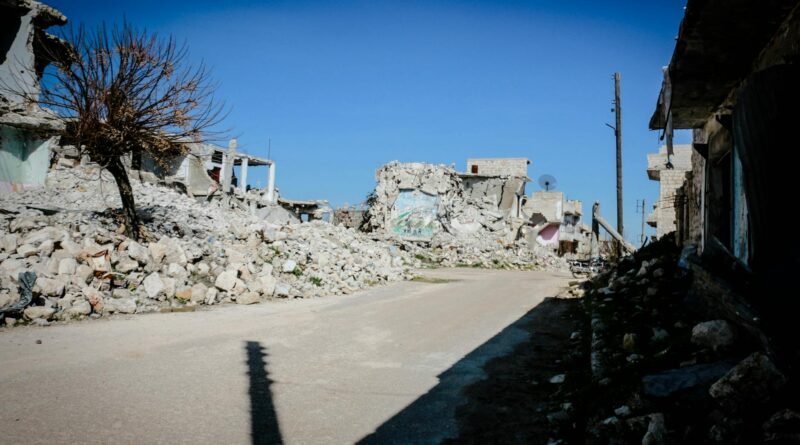
Wednesday’s attacks were notable not only for their intensity but for their timing and location. Unlike many previous strikes, which often occurred at night or in areas that had been partially evacuated, these hits came in the middle of the afternoon in the heart of Beirut and other densely populated urban centers.
People were going about their daily lives—working, shopping, taking children to school—when the explosions began. There was no warning, no evacuation order, no time to seek shelter.
“Civilians went about their daily lives without warning,” Dr. Abubakar said. “The scenes were of panic.”
The strikes targeted multiple locations simultaneously, overwhelming emergency response systems from the first moments. Hospitals, already operating at reduced capacity due to months of economic crisis and previous rounds of violence, were suddenly confronted with hundreds of critically injured patients.
“Hospitals actually have issued an urgent call” to plug the gaps, Dr. Abubakar said. Mass casualty protocols have been activated nationwide, but the sheer number of wounded—more than 1,000 in a single day—has pushed even the most well-prepared facilities to the brink.
Hospitals Overwhelmed: ‘Unidentified Bodies and Body Parts’
The WHO representative described a grim scene at medical facilities across the country. Emergency departments and trauma services are overwhelmed by the scale of injuries. Critical supplies—bandages, antiseptics, surgical equipment, blood—are running dangerously low.
“Hospitals continue to receive reports of unidentified bodies and body parts that have been recovered,” Dr. Abubakar said, highlighting the devastating scale of the attack. The fragmentation of bodies, a hallmark of high-explosive weapons used in densely populated areas, has made identification difficult and added to the trauma of families searching for missing loved ones.
Morgues are overflowing. Funeral services are overwhelmed. And the psychological toll on medical staff, who are working around the clock with limited resources while grieving their own losses, is incalculable.
“We have already consumed most of the available stocks in the last 40 days, but more so, what happened in the last 24 hours,” Dr. Abubakar said. The war has been raging for more than a month, and Lebanon’s health system was already struggling before Wednesday’s strikes. Now, it is on life support.
Healthcare Workers Under Fire
Compounding the crisis is the fact that healthcare workers themselves have been targeted—or caught in the crossfire—throughout the conflict. Since the escalation began, dozens of healthcare workers have been killed and many more injured.
“Many of these healthcare workers were displaced themselves because they’ve been affected by the conflict,” Dr. Abubakar said. In the last 40 days, he noted, attacks on healthcare have killed over 50 healthcare workers and wounded over 150.
When healthcare workers are killed or injured, the consequences extend far beyond the individual loss. Ambulance services are disrupted. Hospitals lose skilled personnel. And communities lose trust in the very systems meant to protect them.
“When you kill healthcare workers and first responders…the end point is that you don’t have first responders and ambulances,” Dr. Abubakar warned. In a conflict where every minute counts, the absence of ambulances can mean the difference between life and death.
A Health System Already on the Brink
Lebanon’s health system was already fragile before this conflict began. Years of economic collapse, the 2020 Beirut port explosion, and the COVID-19 pandemic had depleted resources, driven skilled professionals abroad, and left hospitals operating on a shoestring.
The current war has pushed the system past the breaking point. Hospitals are running out of fuel for generators. Surgical supplies are dwindling. Blood banks are critically low. And the influx of hundreds of wounded patients in a single day has exhausted even the most resilient facilities.
“The health system continues to function under immense strain,” Dr. Abubakar said. “But it is struggling to cope.”
The WHO and its partners are working closely with Lebanon’s Ministry of Health to provide support, including medical supplies, technical assistance, and funding. But resources are being depleted faster than they can be replenished.
Logistical Nightmares: Getting Supplies to Those in Need
Even when supplies are available, getting them to where they are needed most has become a logistical nightmare. Transport options into Lebanon are limited, with commercial flights reduced, roads damaged or blocked, and border crossings operating intermittently.
“We really need to source out different options, how we can transport supplies,” Dr. Abubakar said. The WHO is exploring alternative routes and partners, but every delay costs lives.
Once supplies arrive in the country, they must be distributed to hospitals and clinics across Lebanon—many of which are in areas affected by fighting or displacement. Security conditions, roadblocks, and fuel shortages all complicate the effort.
“We are trying our best to serve the people and to save lives,” Dr. Abubakar said. “But humanitarian assistance will depend on the available resources that the humanitarian partners are receiving.”
An Urgent Appeal for International Support
With needs rising sharply, WHO has issued an urgent appeal for international support. The organization is seeking additional funding to replenish medical supplies, support healthcare workers, and maintain life-saving operations.
“We really need urgent resources and funds for us to continue assisting those people who are in need,” Dr. Abubakar said. Without additional funding, he warned, life-saving operations could be at risk.
The appeal comes as donor fatigue sets in and global attention shifts to other crises. But for the people of Lebanon—for the families trapped under rubble, for the surgeons operating without supplies, for the children who have lost everything—the need has never been greater.
“We are doing everything we can,” Dr. Abubakar said. “But we cannot do it alone.”
The Broader Context: A Ceasefire That Wasn’t
Wednesday’s strikes came just hours after the announcement of a US-Iran ceasefire, raising questions about the timing and intent of the attacks. While the ceasefire was intended to de-escalate the wider Middle East conflict, it appears to have had the opposite effect in Lebanon, where Israeli operations have intensified.
The Israeli government has not publicly commented on the timing of the strikes. But Lebanese officials and UN humanitarian leaders have condemned the attacks as disproportionate and in violation of international humanitarian law, which requires parties to a conflict to distinguish between military targets and civilians.
“This was a horrific day,” Dr. Abubakar said. “And the consequences will be felt for a long time.”
What Comes Next?
In the immediate term, the priority is saving lives. That means getting medical supplies to hospitals, supporting healthcare workers, and ensuring that the wounded receive the care they need. It also means recovering bodies from the rubble and providing dignified burials for the dead.
In the longer term, Lebanon will need massive international support to rebuild its health system, support displaced families, and address the psychological trauma inflicted by Wednesday’s attacks.
But for now, the focus is on the basics: bandages, antibiotics, blood, and fuel for generators.
“We are trying our best,” Dr. Abubakar said. “But we need the world to stand with us.”
SOURCES / INPUTS
https://news.un.org/en/story/2026/04/1167276
Modern World Order Explained: Power, Alliances & Global Systems.
Russia Announces 32-Hour Orthodox Easter Ceasefire in Ukraine; Kyiv Agrees | Four People Die in English Channel as Boat Sinks Off French Coast.