‘A Region Unraveling’: Strikes Persist Across Lebanon and Gaza as Humanitarian Crisis Deepens
UNITED NATIONS, New York — Strikes and counter-strikes continued to rock the Middle East over the weekend, with dozens of casualties reported in Lebanon following Israeli air raids targeting the country’s south and the capital, Beirut. As the conflict enters its second month, humanitarian needs are rising sharply, critical infrastructure is buckling under the strain, and the wider economic and global impacts of the crisis continue to mount, the UN reported Monday.
The latest escalation comes after a week of intense diplomacy at the United Nations, where Secretary-General António Guterres warned that the world is “on the edge of a wider war.” Despite those warnings, the violence has shown no sign of abating. In Lebanon, Israeli strikes over the weekend killed at least two dozen people and injured scores more, according to local health authorities cited by UN humanitarian officials. Many of the casualties were civilians, including women and children.
Afghanistan: History, Geography and Culture Shaping a Nation at the Crossroads of Asia.
In Gaza, where the conflict began in early March following a major Hamas attack and subsequent Israeli invasion, airstrikes and ground operations continued. The UN’s Office for the Coordination of Humanitarian Affairs (OCHA) reported that more than 1.5 million people in the enclave are now displaced, with many sheltering in overcrowded schools and makeshift camps lacking clean water, food, or medical care.
“The violence is not stopping. It is spreading,” a senior UN humanitarian official said during a briefing in Geneva. “And with every day that passes, the needs grow larger and the resources grow smaller.”
Why Fiber Is the Most Underrated Nutrient for Your Health | Bangladesh Launches Emergency Measles Vaccination Campaign as Outbreak Kills Over 110 Children.
Lebanon: A Country Under Fire
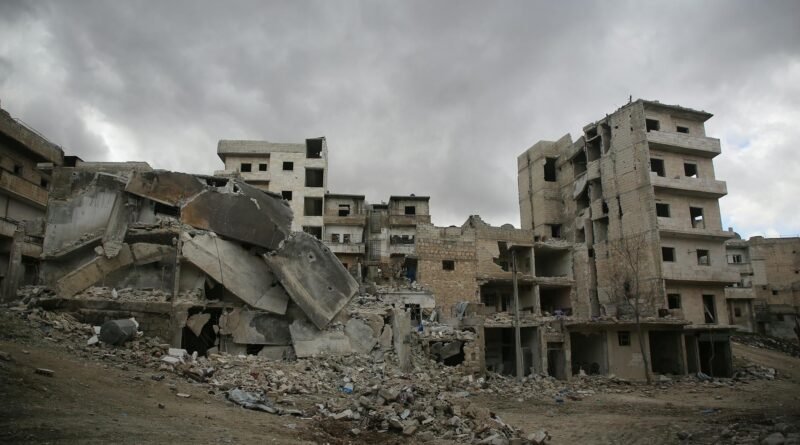
Lebanon, already reeling from years of economic collapse and the devastating 2020 Beirut port explosion, has become the latest front in the expanding conflict. Israeli airstrikes have targeted what the Israel Defense Forces describe as Hezbollah weapons depots and command centers in southern Lebanon and the southern suburbs of Beirut—a densely populated area that is also home to hundreds of thousands of civilians.
The strikes have killed dozens of Lebanese civilians, according to the Lebanese Ministry of Public Health, which is working with UN partners to verify casualty figures. Hospitals in the south, already struggling with shortages of medicine, fuel, and staff, have been overwhelmed by the influx of wounded.
“The health system in Lebanon was already on life support,” said a spokesperson for the World Health Organization (WHO). “Now it is being asked to handle a war. The situation is catastrophic.”
The strikes have also displaced tens of thousands of Lebanese civilians, who have fled north toward Beirut and the Mount Lebanon region. The UN High Commissioner for Refugees (UNHCR) is working with Lebanese authorities to register new displacements and provide emergency shelter, but funding shortfalls have limited the response.
The conflict has also disrupted Lebanon’s already fragile economy. The port of Beirut, still partially in ruins from the 2020 explosion, has seen shipping traffic decline sharply as insurance rates for vessels calling at Lebanese ports have skyrocketed. Food prices are rising, and fuel shortages are already being reported.
Gaza: The Epicenter of Suffering
In Gaza, where the conflict began, the situation has gone from dire to catastrophic. Israeli airstrikes continue to hit residential buildings, schools, and hospitals, according to UN monitors on the ground. The Hamas-run health ministry reports that more than 35,000 Palestinians have been killed since early March, though these figures cannot be independently verified.
The UN has verified numerous strikes on civilian infrastructure, including the shutdown of Gaza’s last functioning hospital in the north. The World Food Programme (WFP) has warned that famine is imminent across much of the enclave, with 1.1 million people facing catastrophic levels of food insecurity—the highest level on the UN’s scale.
“Gaza has become unlivable,” a WFP official said. “People are eating animal feed, grinding up date seeds for flour. Children are dying of malnutrition. And the bombs continue to fall.”
The displacement crisis in Gaza is also unprecedented. More than 1.5 million people—roughly three-quarters of the population—are now internally displaced, with many having been forced to flee multiple times as Israeli forces shift their operations from north to south and back again. The UN Relief and Works Agency for Palestine Refugees (UNRWA) is operating more than 150 shelters, many of them schools that are now overflowing with displaced families.
The Regional Spillover: From the Red Sea to the Gulf
The conflict has also spilled over into other parts of the region. The Houthi movement in Yemen has continued its campaign of missile and drone attacks on commercial shipping in the Red Sea, forcing many vessels to reroute around the Cape of Good Hope, adding weeks to transit times and driving up insurance and freight costs.
In the Persian Gulf, tensions remain high after repeated Iranian attacks on Gulf states and continued US-Israeli bombing campaigns against Iranian nuclear and military sites. The Strait of Hormuz, through which 20 percent of the world’s oil passes, remains a flashpoint, with Iran threatening to close the waterway if its territory is attacked.
The economic consequences of these disruptions are being felt far beyond the Middle East. The UN Conference on Trade and Development (UNCTAD) has warned that global trade is slowing as shipping costs rise and supply chains are rerouted. Food and fuel prices are climbing in developing countries from Sri Lanka to Senegal, pushing millions of people closer to hunger and poverty.
“This is not a regional crisis anymore,” said a UNCTAD economist. “It is a global crisis. And the poorest people in the poorest countries are paying the heaviest price.”
Humanitarian Response: Overwhelmed and Underfunded
The UN and its partners are struggling to keep up with the spiraling needs. OCHA has issued emergency appeals for Lebanon, Gaza, Syria, and Yemen, totaling more than $8 billion. So far, less than 20 percent of that amount has been funded.
“The humanitarian system is stretched to its breaking point,” a senior OCHA official said. “We have multiple Level 3 emergencies—the highest level—happening simultaneously. We need donors to step up. Now.”
The World Food Programme has warned that it may be forced to cut rations for millions of people across the Middle East if new funding does not arrive soon. The WHO has warned that disease outbreaks—including cholera, polio, and measles—are likely in overcrowded shelters in Gaza and Lebanon. UNICEF has warned that an entire generation of children in the region is being traumatized by violence, displacement, and loss.
“We are seeing children who have lost parents, lost homes, lost everything,” a UNICEF spokesperson said. “They are showing signs of severe psychological distress: bedwetting, mutism, aggression, withdrawal. This is a mental health catastrophe that will last for decades.”
Diplomatic Efforts: Stalled and Fragmented
Diplomatic efforts to end the conflict have so far yielded little progress. The UN Security Council has passed two resolutions calling for ceasefires and the protection of civilians, but both have been largely ignored. The United States and its allies continue to support Israel militarily, while Russia and China have vetoed stronger council action against Israel.
The UN Secretary-General’s Personal Envoy, Jean Arnault, is in the region attempting to broker a ceasefire, but sources say his efforts have been hampered by the lack of a unified international position and the unwillingness of the parties to compromise.
“The diplomatic track is not dead, but it is in critical condition,” said a senior UN official familiar with the negotiations. “We need a breakthrough. We need someone to blink. Otherwise, this war will grind on for months, and the human cost will be unimaginable.”
What Comes Next?
As the conflict enters its second month, there is little reason for optimism. The fighting in Lebanon shows no sign of abating. The situation in Gaza worsens by the day. The risks of a wider war—involving Iran directly, or drawing in other regional powers—remain high.
For the millions of civilians caught in the crossfire, the immediate future looks bleak. The UN continues to call for an immediate ceasefire, for the protection of civilians and civilian infrastructure, for unhindered humanitarian access, and for a return to diplomacy. But until the parties agree to stop fighting, the suffering will continue.
“This war must end,” a senior UN official said. “Not next month. Not next week. Now. Every day of delay costs lives. And we have already lost too many.”
SOURCES / INPUTS
https://news.un.org/en/story/2026/04/1167251
Modern World Order Explained: Power, Alliances & Global Systems.
Heavy Rains Across Pakistan Kill at Least 52, Displace Hundreds as Roof and Wall Collapses Mount | Israeli Strikes Across Iran Kill at Least 13 Near Tehran as Trump Threatens Infrastructure Targets.