‘Heading in the Wrong Direction’: UN Report Finds Nearly Half of Migratory Species in Decline Ahead of Global Wildlife Summit
CAMBRIDGE, United Kingdom — The plight of the world’s migratory species is worsening, with nearly half of all animals recognized by governments as needing protection now facing population declines, according to a sobering new interim report released by the UN Environment Programme World Conservation Monitoring Centre (UNEP-WCMC). The data, published just weeks before a landmark global wildlife meeting in Brazil, reveals that 49 percent of migratory species listed under the UN Convention on the Conservation of Migratory Species of Wild Animals (CMS) have declining populations—up from 44 percent just two years ago.
The proportion of migratory species threatened with extinction has also risen, climbing to 24 percent from 22 percent in 2024. The report, which serves as an interim update to the landmark State of the World’s Migratory Species assessment released two years ago, warns that key indicators are moving decisively in the wrong direction despite isolated conservation successes.
Global Markets Rebound as US-Iran Ceasefire Hopes Drive Oil Below $100, Gold Surges.
“The situation for migratory species is deteriorating,” said a spokesperson for UNEP-WCMC, which developed the report in collaboration with CMS, BirdLife International, the University of Queensland, and the Global Initiative on Ungulate Migration (GIUM). “While there have been some encouraging recoveries, the overall trajectory is deeply concerning.”
A Crisis of Movement: Why Migratory Species Matter
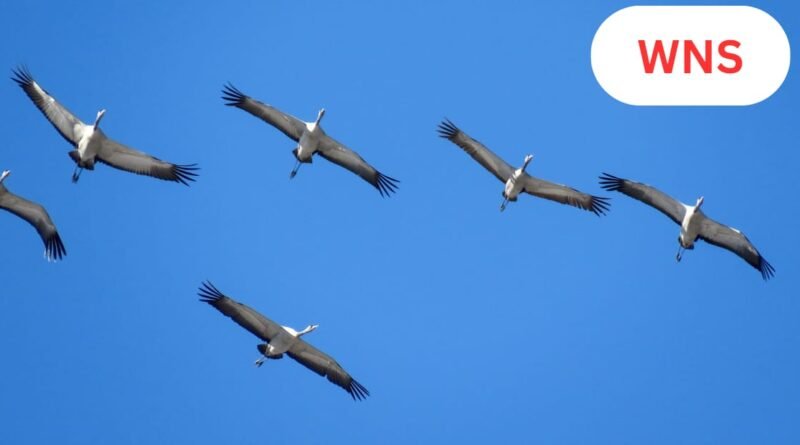
Migratory species—ranging from the vast herds of saiga antelope that traverse Central Asia’s steppes to the shorebirds that connect continents along invisible flyways—are among the planet’s most extraordinary and vulnerable creatures. They depend not on a single protected area but on networks of habitats spanning national borders, oceans, and hemispheres. Their survival hinges on international cooperation, coordinated conservation, and the preservation of migratory corridors that are increasingly fragmented by human development.
The new interim report updates the 2024 baseline, which was the first comprehensive global assessment of migratory animals. That earlier report found that 70 CMS-listed species had become more endangered over the previous three decades, compared to just 14 that improved in status. Migratory fish populations had declined by 90 percent on average since the 1970s, with 97 percent of CMS-listed migratory fish species facing extinction.
Now, the new data suggests that despite growing awareness and some targeted conservation successes, the overall crisis is deepening.
By the Numbers: A Worsening Picture
The interim report tracks significant changes in the conservation status of migratory species since the 2024 baseline. Among its most striking findings:
- 49 percent of CMS-listed migratory species now have declining populations, up from 44 percent.
- 24 percent are now threatened with extinction, up from 22 percent.
- 26 species listed under CMS, including 18 migratory shorebirds, have moved to higher extinction risk categories.
- 47 percent of the area covered by Key Biodiversity Areas (KBAs) important for CMS-listed species remains unprotected by protected or conserved areas.
- Despite progress in mapping critical habitats, the gap between identified important sites and actual protection remains vast.
The report does, however, document 7 CMS-listed species that have shown improvement, including the saiga antelope, whose population has rebounded from the brink of extinction through concerted anti-poaching efforts and cross-border cooperation; the scimitar-horned oryx, which is being successfully reintroduced in Chad after being declared extinct in the wild; and the Mediterranean monk seal, whose numbers are slowly recovering thanks to marine protected areas and reduced human disturbance.
These successes, the report notes, demonstrate that recovery is possible when political will, funding, and coordinated action align. But they remain the exception rather than the rule.
The Drivers: Habitat Loss, Overexploitation, and Fragmentation
According to the report, the two greatest threats to migratory species worldwide remain unchanged: overexploitation (including unsustainable hunting, bycatch, and illegal wildlife trade) and habitat loss and fragmentation (driven by agriculture, infrastructure development, and climate change).
For migratory species, the fragmentation of habitats is particularly devastating. A single migratory bird may require breeding grounds in the Arctic, stopover sites across thousands of kilometers, and wintering grounds in the tropics. If any link in that chain is broken—whether by the draining of a wetland, the construction of a dam, or the conversion of forest to farmland—the entire migration pathway collapses.
The report highlights encouraging developments in the mapping of migratory pathways to inform decision-making. Initiatives such as the Global Initiative on Ungulate Migration (GIUM) , the Migratory Connectivity in the Ocean (MiCO) system, and BirdLife International’s work to identify and map six major marine flyways are helping scientists and policymakers understand where interventions are most urgently needed.
Philippines Declares National Energy Emergency as Middle East Crisis Threatens Fuel Supply ‘A New Era of Cosmic Surveys’: NASA to Unveil Complete Roman Space Telescope Ahead of Fall Launch.
But mapping alone is not enough. The report underscores that 9,372 Key Biodiversity Areas important for CMS-listed species have now been identified—yet nearly half of the area covered by these KBAs lacks any form of legal protection.
Hope Amid Crisis: Recoveries and Technological Advances
Despite the grim headlines, the interim report offers a nuanced view of both progress and persistent gaps. In addition to the seven species that have shown conservation improvements, advances in technology and data availability are enabling more precise and timely monitoring of migratory populations.
Satellite tracking, acoustic monitoring, environmental DNA, and community-based observation networks are revolutionizing scientists’ ability to follow migratory animals across their full annual cycles. This new data is, in part, responsible for the updated population assessments—revealing declines that were previously undetected.
The report also notes progress in identifying important habitats and migratory routes for sharks, rays, and marine mammals. Hundreds of areas specifically important for CMS-listed marine species have now been identified, and work is ongoing to map critical sites for marine turtles.
These advances are crucial because without knowing where migratory species go, and what habitats they depend on, effective conservation is impossible.
The Political Moment: CMS COP15 in Brazil
The release of the interim report is strategically timed. Later this month, the 15th Conference of the Parties to the Convention on the Conservation of Migratory Species of Wild Animals (CMS COP15) will convene in Brazil—one of the most important global wildlife meetings in years. Governments from around the world will gather to negotiate stronger protections for migratory species, designate new species for listing under the convention, and commit to actions to safeguard critical habitats and corridors.
The interim report is designed to provide Parties with the latest available evidence ahead of COP15 deliberations, helping to identify priority areas for action. It will serve as a bridge until the next full State of the World’s Migratory Species report, which is due in 2029 and will offer a comprehensive global view of how the situation has changed since the 2024 baseline.
“This focused update provides Parties with the latest evidence ahead of CMS COP15,” the report states. “It helps identify priority areas for action in advance of the next full report in 2029 at COP16.”
A Call for Action: What Must Change
The interim report makes clear that despite some important successes, the overall trajectory for migratory species remains deeply troubling. The two-year window since the 2024 baseline has not seen a reversal of the long-term trends; instead, declines have accelerated.
Conservation scientists and UN officials are urging governments to use the CMS COP15 meeting to:

- Expand protected area coverage for Key Biodiversity Areas and migratory corridors.
- Address overexploitation through stronger enforcement of hunting regulations and bycatch reduction measures.
- Integrate migratory species considerations into infrastructure planning, ensuring that roads, dams, and wind farms do not fragment critical habitats.
- Increase funding for transboundary conservation initiatives, which are essential for species that cross multiple national jurisdictions.
- Accelerate implementation of existing CMS action plans for priority species and groups, including sharks, birds, and ungulates.
“Despite some important successes, key indicators – such as the overall proportion of CMS-listed species with decreasing populations – are heading in the wrong direction,” the report concludes. “This is a stark reminder that the window for action is closing.”
Looking Ahead: 2029 and the Next Comprehensive Assessment
The interim report released today is not the final word. UNEP-WCMC and its partners are already laying the groundwork for the next full State of the World’s Migratory Species report, which will be delivered in 2029 ahead of CMS COP16. That report will leverage advances in technology and data availability to provide even deeper insights into emerging threats, challenges, and opportunities for the conservation of migratory species.
But for the species in decline today—for the shorebirds whose populations are collapsing, for the marine mammals losing their feeding grounds, for the ungulates whose ancient migration routes are being severed—waiting until 2029 is not an option. The decisions made at COP15 in Brazil in the coming weeks will determine whether the trajectory described in this interim report can be reversed, or whether the decline becomes irreversible.
“The situation for migratory species is deteriorating,” the report warns. “But we have the tools, the knowledge, and the frameworks to act. What we need now is the political will to match the scale of the crisis.”
SOURCES / INPUTS
Climate Change Explained: Science, Global Policy, Economic Impact & Sustainability Strategy.
‘Summer in Spring’: NASA Reports Record March Heat Wave Scorches Southwest, Planetary Warning: UN Agency Flags Record ‘Climate Imbalance’ as Earth Accelerates Toward Chaos.