Flash Floods and Severe Weather Kill 17 Across Afghanistan, Destroy Hundreds of Homes
Disaster management authorities report casualties across 13 provinces as spring rains trigger landslides, damage roads and agricultural land
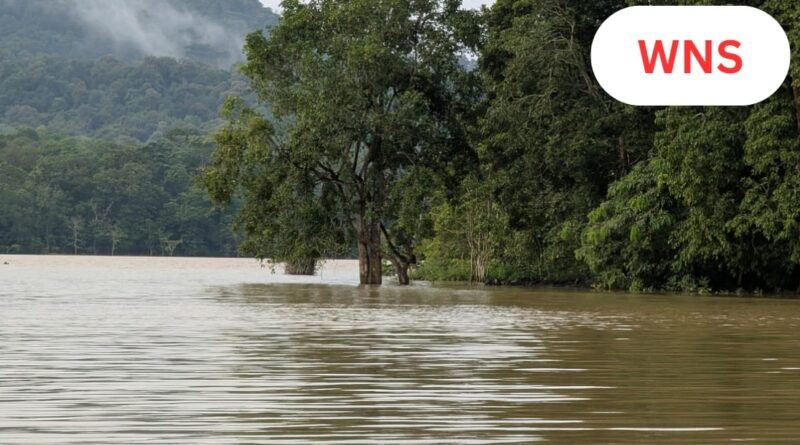
KABUL — March 29, 2026 — Severe flooding, landslides and thunderstorms across Afghanistan have killed at least 17 people and injured 26 others over the past 24 hours, authorities said on Sunday, March 29, as spring rains continue to batter the already vulnerable nation .
The National Disaster Management Authority (NDMA) said the severe weather affected 13 of Afghanistan’s 34 provinces, mostly in the western, central and northwestern parts of the country. Parwan, Daykundi, Logar, Wardak, Farah, Herat, Ghor, Samangan, Faryab, Jawzjan, Badghis, Laghman and Sar-e Pul provinces were among those hit by flash floods and landslides .
Global Markets Rebound as US-Iran Ceasefire Hopes Drive Oil Below $100, Gold Surges.
According to NDMA spokesman Hafiz Mohammad Yusuf Hammad, the death toll currently stands at 17, with 26 others injured. He cautioned that these figures were preliminary and that the number of casualties could change as assessment teams from the authority continue to survey the affected areas .
Extensive Property Damage
The extreme weather has caused significant destruction to infrastructure and housing across the country. According to disaster management officials, at least 147 homes have been either completely or partially destroyed .
Damage assessments vary across different reports, with one agency stating that 37 homes were completely destroyed and 10 shops damaged, while another report indicated that 94 residential houses were destroyed or partially damaged across southern and eastern provinces . The NDMA noted that approximately 500 families have been impacted by the flooding, with some already receiving assistance .
Infrastructure damage includes approximately 80 kilometers of roads washed away, as well as destruction of agricultural land and irrigation canals. Officials also reported that 582 acres of agricultural land have been inundated, along with 31 water canals and irrigation networks across the affected provinces .
Provincial Impact
The southern provinces of Helmand, Kandahar and Zabul, as well as the eastern provinces of Paktia and Parwan, have been particularly hard hit, with reports indicating that 94 homes were damaged or destroyed in these areas .
In Helmand’s Washir district, a newly constructed dam was destroyed due to excessive water, compounding the challenges facing local communities already struggling with the aftermath of flooding .
In Kandahar city alone, authorities reported that 86 homes were damaged and 16 destroyed, with three families displaced .
Earlier Flooding This Week
The latest casualties come after earlier flooding earlier this week. On Thursday, March 26, officials reported that heavy rains had killed five people and injured six others across several provinces, with flash floods sweeping through Parwan, Paktia, Kandahar, Zabul and Helmand .
A separate report from March 25 indicated that five fatalities had been recorded in southern and eastern Afghanistan, with 700 families affected. In Kandahar city, 86 homes were damaged and 16 destroyed .
Forecast and Warnings
Afghanistan’s meteorological authorities have issued new alerts forecasting further rainfall in the coming days, heightening the risk of additional flooding in mountainous and vulnerable areas .
Philippines Declares National Energy Emergency as Middle East Crisis Threatens Fuel Supply ‘A New Era of Cosmic Surveys’: NASA to Unveil Complete Roman Space Telescope Ahead of Fall Launch.
Authorities have warned residents against constructing homes in riverbeds and flood-prone zones, emphasizing the heightened risk during seasonal rains .
Afghanistan’s Vulnerability to Extreme Weather
Afghanistan is highly vulnerable to extreme weather events, with snow and heavy rain that triggers flash floods often killing dozens, or even hundreds, of people at a time. In 2024, more than 300 people died in springtime flash floods .
Decades of conflict, coupled with poor infrastructure, a struggling economy, deforestation and the intensifying effects of climate change, have amplified the impact of such disasters. This is particularly true in remote areas where many homes are built of mud and offer limited protection against sudden deluges or heavy snowfall .
The nation — ravaged by four decades of war and one of the poorest in the world — is considered by scientists to be one of the worst prepared to face the consequences of global warming .
Ongoing Assessment
NDMA spokesman Hammad confirmed that assessment teams are still conducting surveys and evaluations across the affected areas, and that the casualty toll could change as more information becomes available . The authority is coordinating relief efforts for affected families.
A Pattern of Seasonal Devastation
The flooding follows a pattern of seasonal devastation in Afghanistan. Earlier this year, heavy snowfall and flash floods left dozens of people dead across the country .
In May 2024, more than 300 people were killed in flash floods that ripped through multiple Afghan provinces, particularly in northern Baghlan province where 311 fatalities were recorded. Thousands of houses were destroyed or damaged in that disaster, which prompted authorities to declare a state of emergency .
The UN World Food Programme has previously warned that Afghanistan is facing increasingly severe climate-related disasters, with communities already struggling with poverty and food insecurity bearing the brunt of extreme weather events .
Climate Change Explained: Science, Global Policy, Economic Impact & Sustainability Strategy.
‘Heading in the Wrong Direction’: UN Report Finds Nearly Half of Migratory Species in Decline Ahead of Global Wildlife Summit, ‘Summer in Spring’: NASA Reports Record March Heat Wave Scorches Southwest.