El Niño Forecast 2026: Scientists Predict Shift from La Niña with Potential for ‘Super El Niño’
Global weather agencies monitor Pacific Ocean warming as models indicate increasing probability of strong El Niño event by late summer
GENEVA — March 13, 2026 — The world is poised for a significant climate shift as the recent weak La Niña episode fades and conditions become increasingly favourable for the development of El Niño later this year, with some forecast models suggesting the possibility of a “super El Niño” event by autumn .
Global meteorological agencies, including the World Meteorological Organization (WMO) and the United States National Oceanic and Atmospheric Administration (NOAA), are closely monitoring a rapid warming of ocean temperatures in the equatorial Pacific that could fundamentally reshape weather patterns across the planet for the remainder of 2026 and into 2027 .
Global markets steady after oil price plunge as Middle East conflict fuels volatility.
Current Conditions: La Niña Fades as Ocean Warming Accelerates
As of mid-March 2026, the tropical Pacific Ocean is in a state of transition. The weak La Niña conditions that have persisted since 2024 are rapidly dissipating, with sea surface temperatures and atmospheric indicators shifting toward ENSO-neutral status — meaning neither El Niño nor La Niña is present .
According to the latest WMO Global Producing Centres forecasts, there is a 60 percent chance of ENSO-neutral conditions during March through May 2026, rising to approximately 70 percent during April through June . However, scientists are observing significant warming beneath the ocean surface that suggests a more dramatic shift may be imminent.
NOAA’s Climate Prediction Center reported that over the past month, Pacific Ocean temperatures beneath the surface became increasingly warmer than normal, a development consistent with the potential development of El Niño later this year . These subsurface warm anomalies, which have been propagating eastward since December 2025, are expected to rise to the surface in the coming months, potentially triggering a full-scale El Niño event .
The Japan Meteorological Agency noted in its February outlook that subsurface water temperatures in the western and central equatorial Pacific are now above normal, with warm water extending eastward toward the equatorial dateline . This oceanic heat content provides the fuel necessary for El Niño development.
Probability and Timing: When Will El Niño Arrive?
Forecast models from leading climate prediction centres show growing consensus that El Niño will emerge during the northern hemisphere summer or autumn of 2026, though the exact timing and intensity remain uncertain due to the “spring predictability barrier” — a well-documented phenomenon wherein forecasts made during the northern hemisphere spring (March-May) are less reliable than those made at other times of year .
The WMO projects that during May through July 2026, the chance of El Niño development rises steadily to approximately 40 percent, while ENSO-neutral conditions remain the most likely outcome at 60 percent . By the August-October period, however, many models suggest El Niño will have become established.
NOAA’s Climate Prediction Center has issued an El Niño watch, estimating a 50 to 60 percent chance of transition to El Niño in late summer and beyond . The Japan Meteorological Agency offers a more aggressive forecast, stating that it is “more likely (60 percent) that El Niño conditions will develop by summer than ENSO-neutral conditions will persist (40 percent)” .
The ‘Super El Niño’ Scenario
Perhaps the most significant development in recent forecasts is the growing possibility that the anticipated El Niño could become a “super El Niño” — an event where sea surface temperatures in the key monitoring region (Niño 3.4) exceed 2.0 degrees Celsius above normal .
According to the European Centre for Medium-Range Weather Forecasts (ECMWF), one of the world’s most sophisticated climate modelling centres, recent model runs suggest a 98 percent chance of at least a moderate El Niño event by August, with an 80 percent chance of a strong event and a 22 percent chance of a super event developing .
AccuWeather’s long-range forecast team estimates a 15 percent chance of a super El Niño developing by the end of the Atlantic hurricane season in November . If realised, this would mark only the third super El Niño in the past 30 years, following the powerful events of 1997-1998 and 2015-2016. The 2023-2024 El Niño came close but did not meet the official super El Niño threshold .
Russia Accuses Ukraine of ‘Reckless’ Drone Strikes on TurkStream Gas Pipeline Supplying Europe UNESCO report reveals 272 million children out of school worldwide as education targets slip.
“We feel El Niño will form this summer, early to mid is the expectations,” said Paul Pastelok, AccuWeather’s lead long-range forecaster. “Intensity is uncertain but there is potential for a moderate to possibly strong El Niño this fall into winter. Water temperatures expected over the equatorial Pacific and Indian Ocean are supporting an El Niño with impacts on the tropical season and southern US moisture this summer and fall” .
Understanding ENSO: A New Measurement Approach
This year’s forecasts carry an additional layer of scientific sophistication, as NOAA adopted a new metric in February 2026 for tracking El Niño and La Niña. The Relative Oceanic Niño Index (RONI) accounts for long-term ocean temperature trends in a way that the traditional Oceanic Niño Index (ONI) does not .
According to NOAA, the RONI provides a better representation of seasonal climate variability by filtering out the background warming signal associated with climate change. When applied retrospectively, the RONI reclassifies several recent ENSO events, revealing that the 2024-2025 and 2025-2026 winters, previously considered ENSO-neutral under the traditional index, would instead be classified as definitive La Niñas under the new metric .
The RONI also suggests that the 2023-2024 El Niño was slightly weaker than previously thought — 0.6 degrees Celsius cooler than the traditional ONI measurement — providing a more accurate baseline for understanding El Niño’s true intensity . The new index will be particularly valuable if a strong El Niño develops this year, as it will help scientists distinguish between natural variability and the underlying warming trend caused by greenhouse gas emissions.
Global Implications: What El Niño Would Mean for Weather Patterns
If El Niño develops as forecast, the consequences for global weather patterns would be profound and far-reaching. El Niño is associated with shifts in atmospheric circulation that affect temperature and precipitation across large portions of the globe .
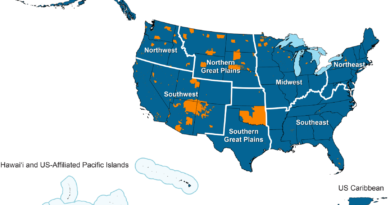
United States: A typical El Niño pattern would bring increased precipitation to the southern tier of the country, potentially providing drought relief to regions that have experienced persistent dryness during the multi-year La Niña episode . California and the southwestern states could see above-average rainfall during the winter of 2026-2027, while the Pacific Northwest and Ohio Valley tend to experience drier conditions. El Niño also typically suppresses Atlantic hurricane activity by increasing vertical wind shear, making it more difficult for tropical storms to organise and intensify .
Atlantic Hurricane Season: AccuWeather’s hurricane experts note that if El Niño strengthens during the peak of hurricane season, it could significantly reduce tropical storm formation. “The strength of El Niño late in the season could have a dramatic impact on late October/November activity,” said Alex DaSilva, AccuWeather’s lead hurricane expert. “The stronger the El Niño gets, the greater the chance for a quieter end to the season” .
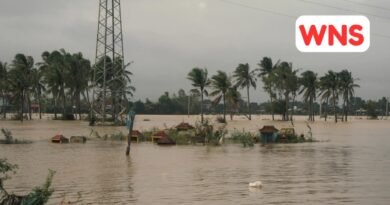
South America: El Niño typically brings heavy rainfall to coastal areas of Peru and Ecuador, sometimes triggering flooding and landslides, while the Amazon basin and northeastern Brazil often experience drier conditions . The phenomenon known as “coastal El Niño” — a localised warming off the South American coast — has already been detected in February 2026, according to New Zealand’s National Institute of Water and Atmospheric Research (NIWA) .
Asia and Australia: Indonesia, Malaysia, and Australia typically experience drier conditions during El Niño, increasing the risk of drought and wildfires. In India, El Niño is often associated with weaker monsoon rainfall, which can affect agricultural production .
China and East Asia: According to analysis from China’s National Climate Center, El Niño years tend to bring warmer winters to northern China. In the summer following an El Niño event, the Yangtze River basin and regions south of the Yangtze often experience increased flood risk — as occurred during the major flood events of 1998 and 2016, both of which followed strong El Niños . The following summer after an El Niño, the number of typhoons generated in the northwest Pacific tends to be below average .

Global Temperatures: El Niño events typically increase global average temperatures, as the release of heat from the tropical Pacific Ocean into the atmosphere adds to the underlying warming trend caused by human-induced climate change. The 2023-2024 El Niño, though moderate, contributed to making 2024 the hottest year on record . A strong or super El Niño in 2026 would likely push global temperatures to new record highs in 2027.
Scientific Caution: The Spring Predictability Barrier
Despite the growing consensus among forecast models, scientists caution that significant uncertainty remains. The northern hemisphere spring is historically the most difficult time of year to predict ENSO evolution — a phenomenon known as the “spring predictability barrier” .
“The spring time is when the sea surface patterns across the tropical Pacific Ocean are in their transition phase,” NOAA scientists explain. “From a forecast perspective, this creates a springtime predictability barrier. We should not be surprised if the forecasts change as we go into the summer months” .
The WMO echoes this caution, noting that “predictions issued at this time of year are typically less reliable due to the so-called boreal spring predictability barrier, a well-known limitation affecting ENSO outlook skill” .
WMO Secretary-General Celeste Saulo emphasised that her organisation’s team “will be carefully monitoring conditions in the coming months to inform decision-making” . She noted that accurate seasonal forecasts for El Niño and La Niña “help us avert millions of dollars in economic losses and are essential planning tools for climate-sensitive sectors like agriculture, health, energy and water management” .
Regional Outlooks and Preparations
Several regional meteorological services have already begun issuing guidance based on the evolving ENSO forecast.
NIWA’s seasonal climate outlook for March through May 2026 indicates that despite the overall transition to ENSO-neutral, some remnant La Niña-like circulations may linger over the coming months, potentially influencing rainfall patterns in the South Pacific . For New Zealand, NIWA forecasts above-average temperatures for much of the North Island and elevated risk of tropical-influenced weather systems bringing significant rainfall, particularly in March and April .
In Australia, the Bureau of Meteorology continues to monitor Pacific Ocean temperatures closely, with the official outlook expected to be updated in the coming weeks.
The Climate Change Context
Scientists emphasise that any El Niño event in 2026 will unfold against the backdrop of continued human-induced climate change, which amplifies many of the phenomenon’s effects .
“Naturally occurring large-scale climate events such as El Niño and La Niña are taking place in the broader context of human-induced climate change, which is increasing global temperatures in the long-term, exacerbating extreme weather and climate events, and impacting seasonal rainfall and temperature patterns,” the WMO stated in its latest update .
This interaction means that even a moderate El Niño could produce impacts more severe than historical comparisons might suggest, as baseline temperatures have risen and atmospheric moisture content has increased.
As the Northern Hemisphere moves into spring, all eyes remain on the tropical Pacific. The weak La Niña of 2024-2026 is rapidly fading, and the ocean is primed for a potential transition to El Niño in the coming months. While significant uncertainty remains due to the spring predictability barrier, the weight of evidence from multiple leading climate prediction centres suggests that El Niño will develop by late summer or autumn, with a non-negligible chance of becoming a strong or even “super” event.
For governments, humanitarian organisations, and climate-sensitive industries, the coming weeks will be critical for monitoring developments and preparing for the far-reaching consequences that El Niño typically brings — from altered hurricane seasons and drought patterns to shifts in global temperatures and regional flood risks.
As Saulo noted, “Seasonal forecasts for El Niño and La Niña are a key part of the climate intelligence provided by WMO to support humanitarian operations and disaster risk management, and thus save lives” . With the potential for a major climate event on the horizon, that intelligence has never been more valuable.
SOURCES / INPUTS
3 World Meteorological Organization: El Niño/La Niña Update (February 2026)
4 NIWA: Seasonal Climate Outlook March – May 2026
Climate Change Explained: Science, Global Policy, Economic Impact & Sustainability Strategy.
Kenya floods death toll rises to 45 as heavy rains continue to batter Nairobi, 41 U.S. States Are Getting Warmer — But Not All in the Same Way, New Study Finds.