Climate Change Explained: Science, Global Policy, Economic Impact & Sustainability Strategy
Climate change is not a distant environmental issue—it is a structural transformation of the global economy, governance systems, and ecological foundations upon which human civilization depends. Scientific evidence confirms that rising greenhouse gas concentrations are warming the planet, altering weather systems, accelerating sea-level rise, and increasing the frequency of extreme events. The consequences extend far beyond temperature shifts: food security, infrastructure resilience, financial markets, migration flows, geopolitical stability, and public health are all affected.
This analysis examines the scientific foundations of climate change, the architecture of global climate policy, economic costs and transition opportunities, sustainability frameworks, climate finance systems, technological innovation, adaptation strategies, and long-term global scenarios. It evaluates how governments, corporations, and financial institutions are responding—and where systemic gaps remain.
Climate change is fundamentally a governance challenge as much as a scientific one. The defining question of the twenty-first century is not whether warming is occurring. It is whether institutions can adapt quickly enough to prevent irreversible damage.
The Structural Challenge of Climate Change
Climate change represents a cumulative global externality: billions of individual economic activities—energy production, transportation, agriculture, manufacturing—emit greenhouse gases that accumulate in the atmosphere, trapping heat and altering planetary systems.
Global Markets Rebound as US-Iran Ceasefire Hopes Drive Oil Below $100, Gold Surges OnePlus India CEO Robin Liu Quits as Market Share Plummets, Fueling Exit Speculation.
Unlike localized pollution, climate change is:
- Global in cause and consequence — emissions anywhere affect the entire planet
- Long-term in atmospheric persistence — CO₂ remains for centuries
- Uneven in impact distribution — vulnerable regions face disproportionate harm
- Complex in feedback mechanisms — warming accelerates further warming
- Interconnected with economic growth models — industrial development has been carbon-intensive
It challenges fundamental assumptions about industrial development and resource extraction that have defined global prosperity for over two centuries.
The policy response therefore requires structural transformation, not marginal adjustment.
Part One: The Science of Climate Change
1.1 The Greenhouse Effect Explained
The Earth’s climate system is governed by energy balance. Solar radiation enters the atmosphere, warms the planet’s surface, and is re-emitted as infrared radiation. Greenhouse gases absorb and re-radiate some of this outgoing energy, preventing heat from escaping into space.
Key greenhouse gases include:
- Carbon dioxide (CO₂) — from fossil fuel combustion, deforestation, cement production
- Methane (CH₄) — from agriculture, fossil fuel extraction, landfills
- Nitrous oxide (N₂O) — from agriculture, industrial processes
- Fluorinated gases — from refrigerants, industrial applications
The greenhouse effect is natural and essential for life. Without it, Earth would be too cold to sustain liquid water, with an average temperature around -18°C rather than the current 15°C. The problem arises when human activity increases atmospheric concentrations beyond historical equilibrium.
Since the Industrial Revolution, atmospheric CO₂ concentrations have risen from approximately 280 parts per million to over 420 parts per million—a 50 percent increase. Fossil fuel combustion, deforestation, cement production, and agriculture are primary drivers.
The result is enhanced radiative forcing—additional heat retained in the climate system. The energy imbalance is equivalent to detonating multiple Hiroshima atomic bombs every second, continuously accumulated.
1.2 Observed Warming Trends
Instrumental temperature records indicate that global average surface temperatures have increased by approximately 1.1–1.2°C above pre-industrial levels. This warming is unprecedented in the context of human civilization.
Evidence includes:
- Rising global mean temperature — each decade since 1980 has been warmer than the previous
- Ocean heat content increase — oceans absorb over 90 percent of excess heat
- Melting glaciers and ice sheets — Greenland and Antarctica losing mass rapidly
- Arctic sea ice decline — summer ice extent reduced by approximately 40 percent since 1979
- Sea-level rise — approximately 20 centimeters since 1900, accelerating
- Shifts in precipitation patterns — wet regions getting wetter, dry regions drier
Climate models simulate these changes accurately only when anthropogenic greenhouse gas emissions are included. Natural variability alone—solar output changes, volcanic activity, orbital cycles—does not explain the observed warming.
The scientific consensus is robust. Multiple independent lines of evidence converge on the same conclusion: human activity is the dominant driver of current warming.
1.3 Extreme Weather and Climate Attribution
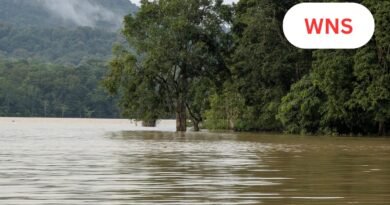
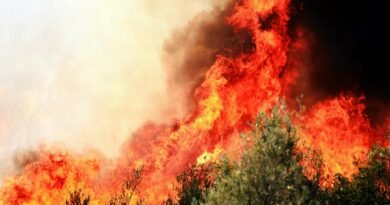
Extreme events—including heatwaves, floods, droughts, hurricanes, and wildfires—are influenced by climate change through altered atmospheric and oceanic dynamics. A warmer atmosphere holds more moisture, intensifying rainfall. Warmer oceans fuel stronger storms. Hotter temperatures dry vegetation, priming landscapes for wildfire.
Attribution science uses statistical modeling to determine whether specific events are more likely due to anthropogenic warming. Scientists compare the probability of events in today’s climate with counterfactual scenarios without human influence.
Findings indicate:
- Heatwaves have become significantly more frequent and intense — what were once once-in-century events now occur every few decades
- Heavy precipitation events have increased in many regions
- Drought risk has intensified in vulnerable climates through increased evaporation
- Tropical cyclones show increased rainfall intensity and slower movement
- Fire weather conditions have become more common in many regions
While no single event is solely caused by climate change, warming increases probability and severity. The signal is now detectable across many classes of extremes.
1.4 Tipping Points and Feedback Loops
Climate systems include feedback mechanisms that may accelerate change beyond linear projections:
- Arctic ice melt reduces albedo — darker ocean absorbs more heat, melting more ice
- Thawing permafrost releases methane — a potent greenhouse gas
- Forest dieback reduces carbon sequestration — releasing stored carbon
- Ocean warming decreases CO₂ absorption capacity — leaving more in atmosphere
Tipping points refer to thresholds beyond which changes become self-reinforcing and potentially irreversible on human timescales. They represent nonlinear shifts in system behavior.
Examples include:
- Greenland ice sheet destabilization — could contribute several meters to sea-level rise over centuries
- Amazon rainforest dieback — shifting from carbon sink to source
- Atlantic Meridional Overturning Circulation slowdown — disrupting regional climate patterns
- Coral reef collapse — eliminating ecosystems supporting millions
The risk of crossing such thresholds increases with higher temperature rise. Beyond 1.5–2°C, the probability of triggering tipping points escalates significantly.
Part Two: Global Climate Policy Architecture
Climate change governance operates through a multi-layered framework of international agreements, national policies, regional compacts, and private sector commitments.
2.1 The UN Framework Convention on Climate Change (UNFCCC)
The United Nations Framework Convention on Climate Change (UNFCCC), adopted in 1992 at the Rio Earth Summit, established a global platform for climate negotiations. It recognized that climate change requires international cooperation and that developed countries bear historical responsibility.
Core principles include:
- Common but differentiated responsibilities — all nations must act, but with different obligations
- Recognition of historical emissions — developed countries contributed most to accumulated concentrations
- Support for developing countries — financial and technological assistance
- Periodic conference of parties (COP meetings) — annual negotiations assessing progress
The UNFCCC provides structure but does not mandate specific emission reductions. It established the framework within which subsequent agreements would operate.
2.2 The Kyoto Protocol
Adopted in 1997, the Kyoto Protocol introduced binding emission reduction targets for developed countries (Annex I parties). It represented the first attempt to translate framework principles into enforceable commitments.
Key features:
- Legally binding commitments for 2008–2012, later extended
- Emissions trading mechanisms allowing countries to trade allowances
- Clean Development Mechanism (CDM) funding emission reductions in developing countries
- Joint Implementation projects between developed countries
Limitations included:
- Limited participation from major emerging economies (China, India no targets)
- Withdrawal or non-ratification by key emitters (United States)
- Insufficient global coverage — by 2010, only about 15 percent of global emissions covered
- Surplus allowances undermining environmental integrity
Kyoto marked the first attempt at binding climate governance but faced structural constraints. Its limited scope and participation highlighted the need for a more inclusive framework.
2.3 The Paris Agreement
The 2015 Paris Agreement represents the current global framework, adopted by 196 parties. It marked a fundamental shift from top-down targets to nationally determined contributions.
Core elements:
- Nationally Determined Contributions (NDCs) — each country sets its own targets
- Goal to limit warming to well below 2°C, ideally 1.5°C above pre-industrial levels
- Transparency framework for reporting progress
- Global stocktake every five years assessing collective progress
- Climate finance commitments — $100 billion annually from developed to developing countries
- Adaptation recognition alongside mitigation
Unlike Kyoto, Paris relies on nationally determined pledges rather than top-down targets. Countries submit increasingly ambitious NDCs over time through a “ratchet mechanism.”
Strengths:
- Universal participation — all major emitters included
- Flexible structure encouraging incremental ambition
- Clear long-term temperature target guiding collective effort
- Transparency requirements building accountability
Challenges:
- Current pledges insufficient to meet 1.5°C target — current policies project 2.5–2.9°C warming
- Enforcement mechanisms limited — no binding sanctions for non-compliance
- Financing gaps persist — $100 billion goal unmet
- NDC ambition varies widely across countries
- Implementation gaps between pledges and policies
2.4 Climate Finance and Loss & Damage
Developing nations face disproportionate impacts despite lower historical emissions. Climate finance mechanisms aim to address this imbalance.
Finance flows address:
- Mitigation projects — renewable energy, efficiency, forest protection
- Adaptation infrastructure — coastal defenses, drought-resistant agriculture
- Disaster recovery resources — post-extreme event support
- Energy transition assistance — fossil fuel phase-down support
The Green Climate Fund channels financial support, though funding levels have fallen short of pledged amounts. Total climate finance flows remain far below estimated needs, which run into trillions annually.
Loss and Damage discussions focus on compensating countries for irreversible harm caused by climate change—losses that cannot be adapted away. The establishment of a loss and damage fund at COP27 marked a breakthrough, though operational details remain contested.
Equity remains central to negotiations. Developing countries argue that historical emissions create moral obligations. Developed countries emphasize shared responsibility and economic constraints.
Part Three: Economic Impact of Climate Change
Climate change carries both direct and systemic economic consequences. These extend beyond environmental damage to affect productivity, asset values, and financial stability.
3.1 Physical Risk to Infrastructure
Rising temperatures and extreme weather damage critical infrastructure systems:
- Transportation networks — roads, rail, ports, airports vulnerable to flooding and heat
- Energy grids — transmission lines vulnerable to storms, thermal plants require cooling
- Water systems — treatment facilities at risk from flooding, supply stressed by drought
- Coastal infrastructure — ports, military bases, cities exposed to sea-level rise
- Agricultural land — soil degradation, water stress, yield variability
Sea-level rise threatens trillions in coastal assets. Major cities including Miami, Shanghai, Mumbai, and Jakarta face increasing flood risk. Without adaptation, cumulative global damages could reach quadrillions over centuries.
Insurance markets face escalating claims and withdrawal from high-risk regions. In some areas, insurance is becoming unaffordable or unavailable, transferring risk to households and governments.
3.2 Agricultural Productivity and Food Security
Climate shifts affect food production systems globally:
- Crop yields — maize, wheat, and other staples face decline in tropical regions
- Water availability — irrigation stressed by changing precipitation
- Soil fertility — erosion, salinization, organic matter loss
- Pest distribution — agricultural pests expanding into new regions
- Fisheries productivity — ocean warming and acidification affecting stocks
Food price volatility increases geopolitical risk. The 2007–2008 food price spikes, partly climate-influenced, contributed to social unrest in multiple countries. Climate-driven production shocks could become more frequent.
Regions already vulnerable to drought face heightened instability. The Sahel, Horn of Africa, Central America, and South Asia face acute risks.
3.3 Health and Labor Productivity
Heat stress reduces labor productivity, particularly in outdoor sectors such as construction, agriculture, and transportation. In tropical regions, rising temperatures could reduce effective working hours significantly.
Climate-related health impacts include:
- Heat-related illness — mortality spikes during extreme heat events
- Vector-borne disease expansion — malaria, dengue moving to new latitudes
- Air pollution-related mortality — wildfires and fossil fuel combustion
- Waterborne diseases — flooding contaminating water supplies
- Mental health impacts — trauma from disasters, displacement, uncertainty
Healthcare systems must adapt to new risk patterns. Preventive measures, surveillance systems, and response capacity require investment.
3.4 Macroeconomic Modeling
Economic models estimate that unchecked warming could reduce global GDP significantly by late century. Damage functions incorporate:
- Disaster recovery costs — rebuilding after extreme events
- Infrastructure depreciation — accelerated by climate stress
- Migration displacement — economic disruption from population movement
- Productivity loss — heat, health, ecosystem degradation
- Insurance instability — market withdrawal and premium spikes
- Financial market volatility — climate-driven uncertainty
Estimates vary widely depending on modeling assumptions, discount rates, and damage functions. Some models project 5–10 percent GDP loss by 2100 under high-emission scenarios. Others suggest larger impacts, particularly when tipping points and cascading failures are included.
However, modeling uncertainty remains high. The economy-climate system involves complex feedbacks, non-linear responses, and irreducible uncertainty about tail risks.
Transition policies also carry costs but may reduce long-term damage. The economic question is not whether to act, but how to balance mitigation costs against avoided damages.
Part Four: The Energy Transition
Decarbonization requires transformation of energy systems that power modern economies. This transition involves technological, economic, and political dimensions.
4.1 Fossil Fuel Dependence
Coal, oil, and natural gas currently dominate global energy supply, accounting for approximately 80 percent of primary energy. This dependence is embedded in infrastructure, employment, trade, and political systems.
Transition challenges include:
- Infrastructure lock-in — power plants, pipelines, refineries built for decades
- Employment dependence — millions of jobs in extraction, transport, and related industries
- Political lobbying — incumbent industries resist change
- Geopolitical dependencies — fossil fuel trade shapes alliances
- Energy security concerns — reliability during transition
Phasing down fossil fuels requires careful economic restructuring. Abrupt withdrawal could trigger economic disruption; delayed action increases climate risk.
4.2 Renewable Energy Expansion
Solar, wind, hydro, and geothermal energy are expanding rapidly. Costs have fallen dramatically—solar photovoltaic costs declined by approximately 90 percent since 2010.
Advantages include:
- Lower operational emissions — near-zero during generation
- Decreasing cost curves — renewables now cheapest in many markets
- Distributed generation models — reducing transmission losses
- Reduced fuel price volatility — no exposure to fossil fuel markets
However, intermittency and storage remain technical challenges. Solar generates only during daylight; wind varies with weather. Grid integration requires:
- Battery storage deployment — smoothing supply
- Grid expansion — connecting diverse generation sources
- Demand management — shifting consumption to match supply
- Backup capacity — ensuring reliability during low-renewable periods
4.3 Electrification and Grid Modernization
Electrification of transportation, heating, and industry reduces fossil fuel reliance by shifting energy demand to electricity, which can be decarbonized.
This requires:
- Grid expansion — higher capacity for increased demand
- Battery storage deployment — balancing intermittent renewables
- Smart grid integration — optimizing flows and managing demand
- Demand management systems — shifting consumption to low-carbon periods
- Electric vehicle charging infrastructure — widespread availability
Infrastructure investment is substantial but scalable. The International Energy Agency estimates that global grid investment must approximately double by 2030 to meet climate goals.
4.4 Carbon Pricing and Market Mechanisms
Carbon pricing internalizes environmental externalities by putting a price on emissions. This creates incentives for low-carbon investment and behavior change.
Mechanisms include:
- Carbon taxes — direct price per ton of CO₂
- Cap-and-trade systems — emissions allowances traded
- Border adjustment mechanisms — preventing carbon leakage
- Carbon crediting — offset projects generating tradable units
Effective pricing signals incentivize low-carbon investment. The European Union Emissions Trading System covers approximately 40 percent of EU emissions. Other jurisdictions including California, South Korea, and China have implemented pricing mechanisms.
Political feasibility remains challenging. Carbon pricing can face public opposition, particularly when not accompanied by visible benefits or compensation for affected households. Revenue recycling—using carbon revenues for dividends or tax cuts—can increase acceptability.
Part Five: Corporate Sustainability, ESG & Financial Markets
Climate change is not only an environmental issue — it is now embedded in financial regulation, capital allocation, and corporate governance. Markets increasingly price climate risk as a material factor affecting asset valuation, operational resilience, and long-term profitability.
5.1 The Rise of ESG Frameworks
Environmental, Social, and Governance (ESG) criteria have become central to institutional investing. Pension funds, sovereign wealth funds, insurance firms, and asset managers evaluate corporate exposure to:
- Carbon emissions intensity — direct and supply chain emissions
- Climate transition risk — exposure to policy change
- Physical climate risk — asset vulnerability to extreme weather
- Supply chain resilience — vulnerability to climate disruption
- Governance transparency — board oversight, disclosure quality
- Labor and environmental standards — operational integrity
Climate risk is increasingly framed as financial risk. Major asset managers now consider climate factors in investment decisions, engagement strategies, and proxy voting.
However, ESG frameworks remain contested:
- Metrics lack standardization — varying definitions and methodologies
- Greenwashing is widespread — inflated sustainability claims
- Ratings vary across agencies — low correlation between providers
- Disclosure may not equal performance — reporting versus actual emissions reduction
Regulatory harmonization is underway across major jurisdictions to standardize reporting requirements and reduce manipulation. The International Sustainability Standards Board (ISSB) aims to establish global baseline.
5.2 Climate Disclosure and Financial Regulation
Financial regulators increasingly require corporations to disclose climate-related risks. This reflects recognition that climate change affects financial stability.
Frameworks such as:
- Task Force on Climate-related Financial Disclosures (TCFD) — voluntary framework adopted globally
- International Sustainability Standards Board (ISSB) — consolidating reporting standards
- EU Corporate Sustainability Reporting Directive (CSRD) — mandatory EU requirements
- SEC climate disclosure rule — proposed US requirements
aim to improve transparency in how climate affects:
- Asset valuation — reserves, capital equipment, stranded assets
- Supply chains — vulnerability to disruption
- Insurance exposure — liability and insurability
- Capital expenditures — alignment with transition
- Debt sustainability — climate impacts on repayment capacity
Central banks also evaluate systemic climate risk through stress testing. The Network for Greening the Financial System (NGFS) coordinates central bank climate action.
The recognition that climate change may trigger financial instability has elevated sustainability from corporate branding issue to macroprudential concern.
Climate risk is now considered a potential driver of:
- Stranded assets — coal reserves, oil fields, gas infrastructure rendered unusable
- Insurance market collapse — in high-risk zones where premiums become unaffordable
- Banking sector exposure — loans to climate-sensitive sectors
- Sovereign debt vulnerability — in disaster-prone regions
5.3 Transition Risk vs. Physical Risk
Climate exposure can be categorized into two primary dimensions that affect investors differently.
Physical Risk
- Damage from extreme weather events
- Sea-level rise impacts on coastal assets
- Drought and water scarcity affecting operations
- Heat stress on outdoor labor productivity
- Infrastructure degradation accelerating
Transition Risk
- Regulatory shifts (carbon pricing, technology bans)
- Technological disruption (renewables displacing fossil fuels)
- Changing consumer behavior (preferences for sustainable products)
- Litigation exposure (climate liability claims)
- Fossil fuel asset devaluation (stranded assets)
Investors increasingly assess both. Companies exposed to high transition risk may lose market share as economies decarbonize. Companies exposed to high physical risk face operational disruption and capital expenditure requirements.
The capital markets are gradually reallocating toward lower-carbon industries — though unevenly and not yet at sufficient speed to align with 1.5°C targets. Divestment campaigns, shareholder resolutions, and policy pressure continue to push change.
Part Six: Adaptation & Resilience Strategies
Mitigation reduces emissions. Adaptation reduces harm. Even under aggressive mitigation, warming already locked into the system will produce continued climate disruption. Adaptation therefore becomes essential.
6.1 Infrastructure Resilience
Cities must adapt infrastructure to withstand climate impacts:
- Flooding — from sea-level rise, storm surge, intense rainfall
- Heatwaves — urban heat island effects intensifying
- Storm surges — coastal inundation during extreme weather
- Drought — water supply stress
- Wildfire — vegetation management and building codes
Strategies include:
- Elevated coastal defenses — sea walls, surge barriers
- Green infrastructure — wetlands, urban forests absorbing floodwater
- Cooling corridors — green space reducing urban temperatures
- Heat shelters — public facilities during extreme events
- Water recycling systems — reducing consumption
- Stormwater management redesign — accommodating intense rainfall
- Resilient building codes — upgraded standards for new construction
Adaptation costs are substantial, but early investment reduces long-term damage. The Global Commission on Adaptation estimates that $1.8 trillion in adaptation investment could generate over $7 trillion in avoided damages.
6.2 Water Security
Climate change disrupts hydrological cycles. Some regions face more intense rainfall; others prolonged drought. Both extremes stress water systems.
Water stress increases:
- Agricultural instability — irrigation uncertainty
- Urban conflict over allocation between users
- Hydropower reliability — challenges for electricity generation
- Cross-border tensions over shared river basins
Integrated water management strategies combine:
- Efficient irrigation systems — reducing agricultural consumption
- Desalination technologies — expanding supply where feasible
- Watershed restoration — improving natural water retention
- Cross-border governance agreements — managing shared resources
- Pricing reforms — encouraging conservation
6.3 Climate Migration
Rising sea levels, desertification, crop failure, and extreme heat may displace millions within and across borders. The World Bank estimates that over 200 million people could be internal climate migrants by 2050 in developing regions alone.
Climate migration introduces complex policy questions:
- Internal displacement management — supporting relocated populations
- Cross-border migration frameworks — legal pathways for climate refugees
- Urban integration capacity — housing, services, employment
- Employment absorption — labor market integration
- Social cohesion risks — potential tensions in receiving areas
While migration projections vary widely depending on emissions scenarios and adaptation investment, planning for mobility as adaptation strategy becomes increasingly urgent. Managed migration can reduce suffering compared to forced displacement.
6.4 Public Health Adaptation
Health systems must prepare for evolving climate-related threats:
- Heat-related mortality — early warning systems, cooling centers
- Disease vector expansion — surveillance, vector control
- Mental health impacts — trauma support, community resilience
- Air quality deterioration — wildfire smoke, pollution management
- Nutrition shifts — addressing food security impacts
Climate resilience must integrate health infrastructure planning, from hospitals to community health systems.
Part Seven: Biodiversity & Ecosystem Sustainability
Climate change interacts with biodiversity loss in reinforcing ways. Each exacerbates the other, creating compound risks.
7.1 Ecosystem Services
Healthy ecosystems provide essential services that support human well-being:
- Carbon sequestration — forests, wetlands, oceans absorbing CO₂
- Pollination services — insects supporting crop production
- Flood regulation — wetlands absorbing stormwater
- Water purification — natural filtration reducing treatment costs
- Soil fertility — organic matter supporting agriculture
- Fisheries productivity — marine ecosystems supporting food systems
Biodiversity degradation reduces natural resilience to climate shocks. Stressed ecosystems provide fewer services, creating cascading impacts.
7.2 Deforestation and Land Use
Forests act as carbon sinks, absorbing approximately 30 percent of anthropogenic emissions. However:
- Agricultural expansion clears forests for crops and pasture
- Logging reduces carbon storage capacity
- Mining disrupts ecosystems
- Infrastructure projects fragment habitats
These activities reduce forest cover, increasing emissions and reducing future sequestration capacity.
Land use reform is central to climate mitigation. Approaches include:
- Reducing deforestation through protected areas and enforcement
- Afforestation and reforestation — planting trees
- Regenerative agriculture — building soil carbon
- Agroforestry — integrating trees with crops
- Supply chain commitments — zero-deforestation sourcing
7.3 Ocean Systems
Oceans absorb significant atmospheric CO₂ and excess heat. Since the Industrial Revolution, oceans have absorbed approximately 25 percent of anthropogenic CO₂ and 90 percent of excess heat.
However:
- Ocean acidification harms marine life, particularly calcifying organisms
- Coral bleaching intensifies with marine heatwaves
- Fisheries shift geographically — species moving toward poles
- Coastal livelihoods face risk from ecosystem degradation
Marine conservation and sustainable fisheries management intersect with climate policy. Marine protected areas, sustainable fishing practices, and pollution reduction support ocean resilience.
Part Eight: Geopolitics of Climate Change
Climate change reshapes international power dynamics, creating both conflict risks and cooperation opportunities.
8.1 Energy Geopolitics
As fossil fuel demand declines over time:
- Oil-dependent economies face fiscal pressure and diversification challenges
- Renewable technology producers gain strategic leverage
- Critical mineral supply chains — lithium, cobalt, rare earths — become geopolitical assets
- Energy independence strategies shift toward domestic renewables
- Trade balances reorient around clean energy
The transition may reorder global trade balances and alliance structures. Countries that lag in transition risk stranded assets and diminished influence.
8.2 Climate Diplomacy
International negotiations increasingly integrate climate with other policy domains:
- Trade policy — border carbon adjustments, green tariffs
- Green industrial policy — subsidies, local content requirements
- Climate finance commitments — aid, investment, guarantees
- Technology transfer frameworks — intellectual property debates
- Debt-for-climate swaps — restructuring debt for conservation
Climate diplomacy intersects with development policy, global equity debates, and geopolitical rivalry. The relationship between major emitters shapes negotiation dynamics.
8.3 Security Risks
Climate stress may exacerbate existing vulnerabilities:
- Resource conflicts over water, food, land
- Political instability in climate-vulnerable states
- Food insecurity-driven unrest — price spikes triggering protest
- Water disputes across international boundaries
- Fragile state vulnerability — climate impacts overwhelming capacity
Security institutions increasingly incorporate climate risk assessment into strategic planning. Defense ministries evaluate infrastructure vulnerability, mission impacts, and conflict drivers.
Part Nine: Technological Innovation & Industrial Transformation
Technology is central to both mitigation and adaptation. Innovation pathways determine transition feasibility and cost.
9.1 Carbon Capture & Storage (CCS)
CCS aims to capture CO₂ from industrial processes and store it underground, preventing atmospheric release.
Advantages:
- Reduces industrial emissions from cement, steel, chemicals
- May enable continued use of existing infrastructure during transition
- Supports negative emissions when combined with bioenergy (BECCS)
Limitations:
- High cost — capturing, transporting, storing requires energy
- Energy-intensive — parasitic load on power plants
- Scalability challenges — geological storage constraints
- Long-term liability — monitoring requirements
9.2 Hydrogen Economy
Green hydrogen—produced from renewable electricity via electrolysis—offers potential for:
- Heavy industry decarbonization — steel, cement, chemicals
- Long-haul transport — shipping, aviation
- Energy storage — seasonal storage for renewable systems
- Heat generation — industrial and residential
Infrastructure requirements remain significant. Production, storage, transport, and end-use equipment must be developed at scale. Blue hydrogen—from fossil gas with CCS—offers transitional pathway but carries methane leakage concerns.
9.3 Nuclear Energy Debate
Nuclear power provides low-carbon baseload energy but raises:
- Waste disposal concerns — long-term storage requirements
- Safety risks — accident potential, though modern designs improve
- High capital costs — construction delays, cost overruns
- Political opposition — public acceptance challenges
Some countries are reinvesting in next-generation nuclear reactors, including small modular reactors (SMRs) designed for lower costs and improved safety. Others are phasing out nuclear in favor of renewables.
9.4 Circular Economy
Reducing material consumption lowers emissions throughout product lifecycles.
Circular economy strategies include:
- Recycling and reuse — recovering materials
- Design for longevity — durable, repairable products
- Resource efficiency — less material per unit output
- Waste reduction — avoiding unnecessary consumption
- Industrial symbiosis — waste from one process as input for another
Sustainability increasingly intersects with supply chain redesign. Embodied carbon—emissions from production—becomes focus alongside operational emissions.
Part Ten: Economic Transformation & Green Industrial Policy
Climate transition represents both cost and opportunity. Industrial strategy shapes who benefits from transformation.
10.1 Green Industrial Strategy
Governments deploy industrial policy to:
- Incentivize renewable manufacturing — solar, wind, battery production
- Support domestic clean energy supply chains — reducing import dependence
- Invest in battery production — gigafactories, research
- Develop electric vehicle ecosystems — vehicles, charging, recycling
- Build semiconductor resilience — chips for clean technology
Industrial policy may reshape trade patterns and competitiveness. Countries competing for clean energy leadership deploy subsidies, tax incentives, and local content requirements.
The Inflation Reduction Act in the United States, European Green Deal industrial plan, and China’s manufacturing dominance illustrate the strategic dimensions of climate policy.
10.2 Employment Transition
Fossil fuel sectors employ millions globally. Coal mining, oil and gas extraction, and related industries provide livelihoods in regions often with limited alternatives.
Transition requires:
- Workforce retraining — skills for new industries
- Regional economic diversification — attracting new employers
- Social safety nets — income support during transition
- Labor market mobility programs — relocation assistance
- Community investment — replacing lost tax base
A “just transition” ensures climate policy does not deepen inequality. Workers and communities should not bear disproportionate burden.
10.3 Financial Market Realignment
Sustainable finance instruments channel capital toward climate solutions:
- Green bonds — financing climate-friendly projects
- Climate-linked loans — interest rates tied to emissions performance
- Transition bonds — financing high-emitter transformation
- Carbon markets — trading emission reductions
- ESG investment funds — portfolios aligned with sustainability criteria
Capital markets influence transition pace. Asset owners increasingly demand climate alignment, pressuring portfolio companies to decarbonize.
Part Eleven: Global Inequality & Climate Justice
Climate change exposes and amplifies inequities within and between countries.
11.1 Historical Emissions Responsibility
Developed economies contributed the majority of historical emissions since industrialization. The United States and European Union together account for approximately half of cumulative CO₂ emissions.
Developing countries argue:
- Responsibility should reflect cumulative emissions — historical contribution
- Development rights must be preserved — poverty reduction requires energy access
- Climate finance commitments must be honored — $100 billion annual pledge
- Technology transfer should be supported — avoiding reinvention
Equity debates shape negotiations. The principle of common but differentiated responsibilities reflects this tension.
11.2 Adaptation Gaps
Vulnerable countries often lack:
- Infrastructure resilience — limited capacity to invest
- Insurance coverage — climate risk uninsured
- Disaster response capacity — emergency services constrained
- Fiscal space for recovery — debt limits post-disaster spending
The adaptation gap—between needed and actual investment—is largest in countries least responsible for emissions. Climate justice demands addressing disproportionate impact.
Part Twelve: Scenarios for 2050
Several trajectories are plausible depending on policy choices, technological development, and international cooperation.
Scenario 1: Coordinated Transition
- Rapid decarbonization across major economies
- Technological innovation accelerates cost reduction
- Stabilized warming near 1.5–2°C
- Strong adaptation investment in vulnerable regions
- Economic restructuring successful with managed transitions
- International cooperation sustained
Scenario 2: Fragmented Progress
- Uneven policy implementation across countries
- Some sectors decarbonize; others lag
- Continued fossil fuel reliance in parts of economy
- Warming exceeds 2.5°C
- Increased disaster frequency and severity
- Growing geopolitical tension over responsibility
- Adaptation gaps widen
Scenario 3: Delayed Action Crisis
- Insufficient mitigation through mid-century
- Severe climate tipping impacts triggered
- Economic shocks from extreme events
- Migration surges overwhelm capacity
- Financial instability from stranded assets
- Food system disruption
- Conflict risks escalate
Scenario 4: Technological Breakthrough
- Major carbon removal innovation at scale
- Rapid grid transformation through storage advances
- Sustainable growth model adoption widespread
- Biodiversity stabilization through restoration
- International cooperation strengthened
- Warming stabilized through combination of mitigation and removal
Conclusion: Sustainability as Structural Reform
Climate change is not an isolated environmental issue. It is a systemic stress test of global governance, economic architecture, and intergenerational responsibility.
It demands:
- Scientific literacy — understanding physical constraints
- Institutional reform — governance capable of long-term action
- Capital reallocation — investment aligned with sustainability
- Corporate accountability — transparency and performance
- International cooperation — collective action despite differences
- Civic engagement — public support for transformation
The defining question is whether adaptation and mitigation proceed through coordinated strategy or reactive crisis management. The former requires foresight, investment, and political will. The latter imposes higher costs and greater suffering.
The future remains contingent. Every fraction of a degree matters. Every year of delay locks in additional warming. Every investment shapes transition pathways.
The science is clear.
The economics are compelling.
The politics remain complex.
The timeline is narrowing.
Sustainability is not a niche concern. It is the framework within which twenty-first-century prosperity must be reimagined.
Frequently Asked Questions
What is the difference between climate mitigation and adaptation?
Mitigation reduces greenhouse gas emissions to limit future warming. Adaptation adjusts systems to cope with unavoidable climate impacts. Both are essential.
How much has the Earth warmed?
Global average surface temperature has increased by approximately 1.1–1.2°C above pre-industrial levels.
What are Nationally Determined Contributions (NDCs)?
NDCs are countries’ self-defined climate pledges under the Paris Agreement, outlining emission reduction targets and adaptation plans.
Is the 1.5°C target still achievable?
Achievable but extremely challenging. Current policies project 2.5–2.9°C warming. Holding 1.5°C requires rapid, unprecedented emission reductions.
What is climate finance?
Climate finance refers to funding supporting mitigation and adaptation activities, particularly in developing countries. Commitments include $100 billion annually from developed countries.
How does climate change affect the economy?
Through physical damages, productivity loss, infrastructure costs, health impacts, and transition risks. Unchecked warming could reduce global GDP significantly.
What is carbon pricing?
Carbon pricing puts a monetary cost on emissions, creating incentives for reduction. Mechanisms include carbon taxes and cap-and-trade systems.
Can technology solve climate change?
Technology is essential but insufficient alone. Deployment speed, policy support, behavior change, and institutional capacity all matter.
What are climate tipping points?
Thresholds beyond which changes become self-accelerating and potentially irreversible, such as ice sheet collapse or forest dieback.
How can individuals contribute?
Through consumption choices, political engagement, investment alignment, and supporting climate-focused organizations. Systemic change requires collective action.
References and Further Reading
Scientific Institutions
Intergovernmental Panel on Climate Change (IPCC)
https://www.ipcc.ch
NASA Goddard Institute for Space Studies
https://www.giss.nasa.gov
National Oceanic and Atmospheric Administration (NOAA) Climate
https://www.climate.gov
Met Office Hadley Centre
https://www.metoffice.gov.uk/research/climate
Policy and Governance
United Nations Framework Convention on Climate Change (UNFCCC)
https://unfccc.int
International Energy Agency (IEA)
https://www.iea.org
International Renewable Energy Agency (IRENA)
https://www.irena.org
World Resources Institute
https://www.wri.org
Climate Action Tracker
https://climateactiontracker.org
Economics and Finance
Network for Greening the Financial System (NGFS)
https://www.ngfs.net
Task Force on Climate-related Financial Disclosures (TCFD)
https://www.fsb-tcfd.org
Grantham Research Institute on Climate Change
https://www.lse.ac.uk/granthaminstitute
Carbon Pricing Leadership Coalition
https://www.carbonpricingleadership.org
Adaptation and Resilience
Global Center on Adaptation
https://gca.org
United Nations Environment Programme Adaptation Gap Report
https://www.unep.org/resources/adaptation-gap-report
Data and Tracking
Global Carbon Project
https://www.globalcarbonproject.org
Climate Watch
https://www.climatewatchdata.org
Our World in Data — CO₂ and Greenhouse Gas Emissions
https://ourworldindata.org/co2-and-other-greenhouse-gas-emissions
All scientific explanations reflect IPCC assessment reports and established climate research. Policy descriptions draw from UNFCCC documentation and international agreements.
Last Updated: February 2026
A Spectacle From Space: NASA Satellite Captures Pacific Herring Spawn Turning Coastal Waters Turquoise, Flash Floods and Severe Weather Kill 17 Across Afghanistan, Destroy Hundreds of Homes.