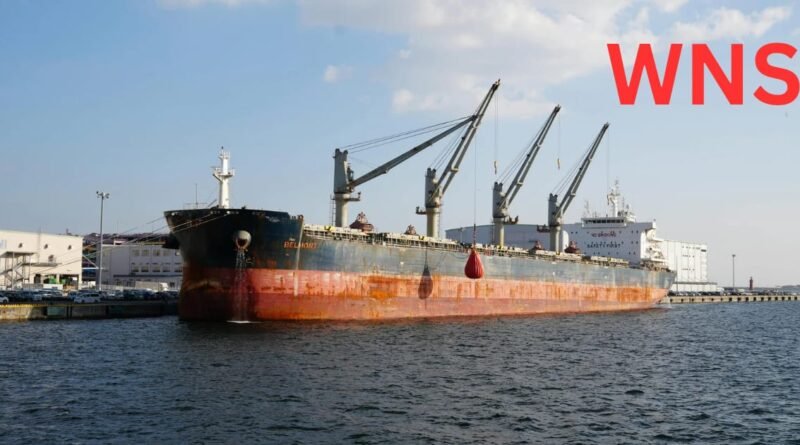
Strait of Hormuz Closure Triggers Global Fuel Price Surge as Iran Vows to ‘Burn’ Any Vessel
DUBAI/LONDON — Iran’s Islamic Revolutionary Guard Corps formally announced the closure of the Strait of Hormuz on March 2, 2026, warning that any vessel attempting to traverse the world’s most critical energy artery would be destroyed, sending global oil and gas prices soaring and threatening a prolonged energy crisis .
Brigadier General Ebrahim Jabbari, advisor to the IRGC commander, declared that “any ship attempting to pass through Hormuz will burn,” adding that Iran would prevent all oil exports from the region. “Not one drop of oil will be allowed to leave,” he warned, further threatening that regional oil pipelines could become targets and predicting prices could surge to $200 per barrel in the coming days if tensions continue to escalate .
The unprecedented move comes as the conflict between the US-led coalition and Iran enters its fourth day following strikes that killed Supreme Leader Ayatollah Ali Khamenei. With approximately one-fifth of global oil supply and one-quarter of liquefied natural gas trade transiting the narrow waterway, the closure represents the most significant disruption to global energy flows in decades .
Oil Prices Surge as Markets Price in Supply Shock
Global oil markets reacted violently to the closure announcement. Brent crude futures surged more than 10 percent to trade above $82 per barrel on March 2, the highest level since mid-2025, while West Texas Intermediate climbed approximately 9 percent to around $73 per barrel . Both contracts had risen over 7 percent on Monday, marking their largest single-day gains in years .
The price spike reflects the severity of the supply threat. Although Iran itself produces only about 3.3 million barrels per day—roughly 3 percent of global output—its strategic location adjacent to the strait gives it outsized influence over energy markets . The waterway handles approximately 15 million barrels of crude daily from Saudi Arabia, Iraq, the United Arab Emirates, Kuwait, and Qatar, representing about 20 percent of global seaborne oil trade .
Marine tracking sites indicate that tankers are beginning to pile up on either side of the strait, unable to secure insurance or passage. Maersk and other major shipping lines have announced the suspension of routes through the waterway, diverting vessels around Africa’s Cape of Good Hope, adding weeks to voyage times and dramatically increasing costs .
LNG Markets Hit Even Harder
The impact on natural gas markets has been even more pronounced. With Qatar—the world’s largest LNG exporter—suspending production at its Ras Laffan and Mesaieed facilities following Iranian drone strikes, Europe’s benchmark Dutch TTF front-month contract surged nearly 50 percent, rising above €46 ($54) per megawatt-hour .
The Strait of Hormuz is the only export route for Qatar’s massive gas reserves, which account for approximately 20-25 percent of global LNG trade . Unlike oil, which can sometimes be redirected through pipelines, LNG from Qatar has no alternative export pathway. “This is not a ‘time delay’ shock like the Red Sea crisis, but a ‘supply cutoff’ shock,” analysts at China Energy Network wrote, noting that the risk has fundamentally shifted from logistics costs to core supply elimination .
The disruption is forcing Asian buyers, particularly China, India, and Japan, to scramble for alternative cargoes from the Atlantic Basin, including the United States and Nigeria. This cross-regional competition is expected to keep global gas prices elevated for the duration of the crisis .
Analyst Forecasts: From $100 to $200
Financial institutions have rushed to revise their oil price forecasts upward, with scenarios ranging widely based on the conflict’s duration and intensity.
Morgan Stanley raised its second-quarter Brent forecast sharply from $62.50 to $80 per barrel, reflecting the immediate risk premium now embedded in prices . Citigroup analysts led by Max Layton expect Brent to trade in the $80-90 range over the coming week, with the outcome dependent on whether leadership transition in Iran or US military objectives lead to de-escalation within one to two weeks .
More alarming scenarios emerge if the closure persists. JPMorgan estimated that if the Strait of Hormuz remains blocked for 25 days, storage tanks at Gulf producing countries will fill to capacity, forcing them to shut in production. Under this scenario, Brent could reach $120 per barrel, according to Natasha Kaneva, the bank’s global head of commodity research .
Bank of America commodity strategist Francisco Blanch warned that if Iran attacks neighboring energy infrastructure, Brent could spike above $100 while European gas prices exceed €60 per megawatt-hour. He estimated that a prolonged closure could add $40-80 per barrel to crude prices .
Deutsche Bank offered the most dire projection. Research analyst Michael Hsueh told clients that if Iran successfully implements a full blockade using naval mines and anti-ship missiles, Brent crude could rocket to $200 per barrel . RBC Capital’s Helima Croft similarly warned that energy markets have now become “the bullseye” in the conflict, with prices likely to break through $100 in any extended scenario .
Insurance Markets and Physical Shipping
The closure has triggered an emergency reassessment in insurance markets. Marine underwriters have sharply increased war risk premiums for vessels in Gulf waters, with some canceling coverage altogether . This effectively halts commercial shipping regardless of Iran’s physical blockade, as no vessel owner will transit without insurance.
At least 150 cargo ships were reported stranded near the strait following reports of tanker attacks and damage . Iran’s Revolutionary Guards claimed responsibility for strikes on three “violating” US and British oil tankers in the Persian Gulf and Strait of Hormuz region on March 1, with one vessel reportedly sinking after attempting to pass through the strait “illegally” .
Broader Economic Implications
The energy price shock ripples far beyond fuel costs. US gasoline prices are expected to rise 10 to 30 cents per gallon in the coming week, according to GasBuddy analyst Patrick De Haan . Every dollar increase in oil prices adds approximately $1.3 billion annually to US consumer fuel costs.
More significantly, higher energy prices feed into inflation across all sectors. “It’s also all the transportation and shipping costs for every other good we purchase,” Brian Posler, executive director of Fuel True, told Kansas television station WIBW. “They all need fuel to get their goods to market” .
The inflation shock complicates central bank policy worldwide. The Federal Reserve and other major central banks face a dilemma between controlling prices and supporting growth, with the US already recording wholesale inflation of 2.9 percent in February, well above expectations .
Russian energy economist Yulia Davydova warned of “negative macroeconomic effects” for import-dependent nations. “Rising inflation and declining GDP in import-dependent countries, including the US, which will also be hit by shock energy prices,” she told TASS. A long-term closure of even two to four months could trigger “not just a spike in oil and gas prices, but a structural energy crisis, leading to a recession in developed countries” .
Divergent Regional Impacts
The crisis affects regions differently. China and India, as major importers of Gulf oil and gas, face immediate supply pressure, though both can potentially pivot to Russian supplies . Europe, already dealing with the aftermath of reduced Russian pipeline gas, faces renewed energy cost spikes just as it had stabilized following the 2022-23 crisis.
For the United States, the impact is somewhat muted by domestic production. The US is now a net exporter of oil and imports primarily from Canada. However, as Kansas State University professor Lance Bachmeier explained, “We’re all interconnected, so what we’ll see is crude oil will go up first in price, and then gasoline prices will follow after that” .
Gulf producers face the most direct threat. With export terminals closed and storage filling, countries like Saudi Arabia, Kuwait, and the UAE may be forced to reduce or halt production within weeks . This would compound economic damage across the region.
Political Responses and Uncertainty
US Secretary of State Marco Rubio announced on March 2 that a plan to mitigate energy cost volatility from the Iran conflict would begin implementation on March 3, though details were not immediately available . President Donald Trump predicted the conflict would last four to five weeks but acknowledged readiness for a longer campaign .
Iran has ruled out negotiations, with security officials rejecting diplomatic solutions as the military confrontation continues . The IRGC has threatened to target all oil and gas facilities in the region if Iranian infrastructure is attacked, raising the specter of even wider disruptions .
For global energy markets, the key variables remain the duration of the Strait’s closure and whether Iran expands attacks to other Gulf energy facilities. As ING analysts noted, while markets have priced in substantial risk premiums, “a greater risk to the market would be Iran targeting additional energy infrastructure in the region. This could lead to more prolonged outages” .
With tankers idling, storage tanks filling, and no diplomatic endgame in sight, the world now waits to see whether the Strait of Hormuz reopens before the global economy tips into a full-scale energy crisis.
With inputs from:
Investing.com: Oil surge Hormuz closure
BERNAMA: Hormuz closure tightens oil LNG supply
WIBW: Gas prices spike US Israel Iran strike
TASS: Iran disrupts China India Europe logistics
GTV News: Iran warns Hormuz ships will burn
For broader context, see our in-depth analysis on Global Business Systems: Corporations, Trade, Finance & Market Structures Explained.
Also in this section: UN Watchdog Confirms Damage to Natanz Nuclear Site Entrance, Says No Radiation Risk and Iran Death Toll Rises to 787 as US-Israeli Strikes Continue, Red Crescent Says 153 Cities Hit.