Global Markets Tumble as Iran Conflict Sparks Oil Surge, Safe-Haven Rush Reverses
Srinagar — Global financial markets were thrown into turmoil on March 3, 2026, as the escalating conflict between the US-led coalition and Iran entered its fourth day, triggering a dramatic surge in oil prices, a sharp sell-off in equities, and an unusual reversal in traditional safe-haven assets .
Brent crude futures soared more than 5 percent to trade above $81 per barrel, while West Texas Intermediate jumped 5 percent to $74.80, marking their highest levels since mid-2025 . The price spike follows Iran’s formal closure of the Strait of Hormuz and attacks on energy infrastructure across the Gulf, including strikes on Saudi Arabia’s Ras Tanura refinery and Qatar’s LNG facilities .
European natural gas prices surged approximately 40 percent as QatarEnergy suspended liquefied natural gas production indefinitely, removing one of the world’s top suppliers from the market . Iraq’s southern oil fields announced production halts due to the inability to load tankers, further tightening global supply .
Equities Plunge as Risk Appetite Evaporates
The geopolitical shock sent equity markets into sharp decline across the globe. Wall Street suffered heavy losses, with the Dow Jones Industrial Average falling 403.51 points or 0.83 percent to 48,501.27, the S&P 500 dropping 0.94 percent to 6,816.63, and the Nasdaq Composite sliding 1.02 percent to 22,516.69 . The Dow had plummeted by more than 1,200 points earlier in the session before paring losses .
European markets were hit even harder, reflecting the continent’s greater exposure to energy price shocks. Germany’s DAX index plunged 3.44 percent to 23,790.65, France’s CAC 40 tumbled 3.46 percent to 8,103.84, and the UK’s FTSE 100 fell 2.75 percent to 10,484.13 . Italy’s FTSE MIB dropped nearly 4 percent .
Asian markets followed suit on Wednesday, March 4. Japan’s Nikkei 225 tumbled 3.9 percent to below 54,100, while South Korea’s Kospi index plunged more than 8 percent in its worst session in years as markets reopened after a holiday . Australia’s S&P/ASX 200 fell 1.86 percent, and Hong Kong’s Hang Seng dropped approximately 2 percent .
“The market’s worst nightmare is unfolding,” one energy trader told Reuters. “This is about Hormuz risk, not retaliation. If shipping stays open, stocks can work through it. If it doesn’t, all bets are off” .
Dollar Strengthens, Euro Buckles Under Energy Pressure
The US dollar emerged as the primary beneficiary of the flight to safety, with the dollar index rising 0.5 percent to 99.06, its highest level since late November . The greenback’s strength reflects America’s relative energy independence and its status as a net exporter of oil and gas.
The euro bore the brunt of the selling pressure, falling 0.6 percent to $1.1616 after touching its weakest level since November . “The impact of the Iran war on EUR/USD boils down to one thing: energy,” said George Saravelos, global head of FX research at Deutsche Bank. “There is a negative supply shock under way which represents a direct tax on Europeans that has to be paid to foreign producers in dollars” .
Sterling dropped 0.3 percent to $1.3361, also hitting multi-month lows, while the yen weakened 0.2 percent to 157.61 against the dollar despite Japanese officials expressing “extremely strong sense of urgency” about market volatility .
Gold Plunges in ‘Dash for Cash’
In an unusual development, traditional safe-haven assets failed to benefit from the risk-off environment. Gold prices plummeted more than 4 percent, with COMEX gold futures falling 3.99 percent to $5,099.50 per ounce and spot gold dropping 4.39 percent to $5,088.65 . Silver suffered even steeper losses, plunging more than 7 percent .
The sharp declines reflect a “dash for cash” as investors abandoned non-yielding assets amid rising Treasury yields and heightened uncertainty. The 10-year US Treasury yield rose approximately 3 basis points to 4.06 percent .
“Gold climbed above $5,400 per ounce, reaching an over one-month high as safe-haven demand intensified following joint strikes by the US and Israel on Iran over the weekend,” said Jigar Trivedi, Senior Research Analyst at IndusInd Securities. He noted that gold logged its seventh straight monthly gain in February, the longest streak since 1973, before this week’s reversal .
Analysts at ING suggested that “a regional spillover or disruption to energy supplies would materially boost gold through higher oil prices, increased inflation expectations and contained real yields” — a scenario that has not yet materialized as investors prioritize liquidity .
Energy Infrastructure Under Attack
The market turmoil stems from direct attacks on critical energy infrastructure across the Gulf. Iran’s Islamic Revolutionary Guard Corps announced that it had struck three “violating” US and British oil tankers in the Persian Gulf and Strait of Hormuz region, with one vessel reportedly sinking . The Guard also issued a stark warning: if Iranian oil and gas facilities are attacked, “all oil and gas facilities of all countries in the region will be destroyed” .
Saudi Arabia’s Ras Tanura refinery, one of the largest in the Middle East processing approximately 550,000 barrels per day, was partially shut following drone strikes, though authorities reported no injuries . QatarEnergy suspended all LNG production after Iranian attacks on its facilities, with the country preparing to declare force majeure on shipments .
Iraq’s southern oil fields announced production halts due to the inability to load tankers, while Kurdish exports through Turkey’s Ceyhan port were also suspended .
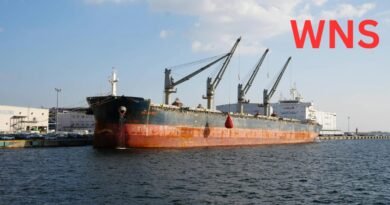
The Strait of Hormuz, through which approximately 15 million barrels of crude oil — about 20 percent of global supply — passes daily, remains effectively closed, with marine insurers canceling war risk coverage .
Inflation Fears Reshape Rate Expectations
The surge in energy prices has fundamentally altered expectations for central bank policy. Eurozone inflation data released Tuesday showed consumer prices rising 1.9 percent annually in February, with core inflation accelerating to 2.4 percent and services inflation hitting 3.4 percent — all before the full impact of the conflict was felt .
Federal Reserve rate cut expectations have been pushed back significantly. Markets now price in only a 50 percent chance of a second rate cut by year-end, with the first move fully priced only in September rather than July . Rate futures now factor in just 46 basis points of easing by year-end, down from 59 basis points late last week .
New York Fed President John Williams told reporters that the conflict’s impact on the economy “will depend on asset prices, especially how long oil prices are disrupted,” adding that financial market shocks so far have been “fairly moderate” . Minneapolis Fed President Neel Kashkari said the Fed can maintain its current policy stance and noted that one to two rate cuts later this year could be appropriate if inflation cools .
European Central Bank Chief Economist Philip Lane warned that if the war drags on and regional oil and gas supplies continue to decline, the eurozone could face “a sharp rise in inflation and a sharp drop in output” .
Trump Offers Tanker Escorts, Vows Continued Operations
President Donald Trump announced Tuesday that the US Navy “will begin escorting” oil tankers through the Strait of Hormuz if necessary, and that the US Development Finance Corporation would provide political risk insurance for maritime trade through the Gulf .
Trump told reporters that the conflict could last four to five weeks but acknowledged readiness for a longer campaign. “We have capability to go far longer than that,” he said . He denied being dragged into war by Israel, suggesting instead that “I may have pushed Israel’s hand” .
Israeli Prime Minister Benjamin Netanyahu sought to ease concerns about the timeline, telling Fox News the conflict would not be an “endless war” .
Regional Impacts and Corporate Vulnerability
The conflict has exposed varying degrees of vulnerability across regions and sectors. Europe and Japan, as major energy importers, face the most severe economic headwinds from rising prices, while the United States is relatively insulated by its energy independence .
Energy companies with significant Middle East exposure face particular risks. Jefferies analysts noted that roughly 29 percent of TotalEnergies’ output is tied to the region, while about 20 percent of production for both Exxon Mobil and Shell comes from the Middle East . LNG exposure is even more concentrated, with approximately 60 percent of Exxon’s LNG portfolio based in the region and all three companies partnering with QatarEnergy .
Technology stocks led the declines in US markets, with Nvidia falling more than 1 percent and Micron Technology dropping nearly 8 percent . The Nasdaq’s 1.02 percent decline outpaced the broader market as growth sectors proved particularly sensitive to rising energy costs and uncertainty.
Looking Ahead: Economic Data in Focus
Markets now turn to upcoming economic data for further direction. Wednesday’s releases include eurozone producer prices and unemployment figures, along with US ADP employment data and ISM services PMI . The Federal Reserve’s Beige Book, due early Thursday, will be scrutinized for insights into how the conflict is affecting regional economic conditions .
The trajectory of energy prices remains the critical variable. “The market is in a ‘haven-first, ask questions later’ strategy,” said John Briggs, head of US rates strategy at Natixis. “The scale of the attacks and Iranian retaliation is larger than what the market expected” .
As one analyst put it: “If it’s a matter of three days, it’s not serious. But if it’s over a longer period, then we’re looking at a completely different economic landscape” .
With inputs from:
NYT: Oil jumps Iran war economic risks
Guardian: Global stocks slump Iran war gas oil
CNBC: Markets Iran oil surges airlines sink
Reuters: Energy costs soar Iran crisis
Bloomberg: Iran war oil shock inflation
For broader context, see our in-depth analysis on Global Business Systems: Corporations, Trade, Finance & Market Structures Explained.
Also in this section: Strait of Hormuz Closure Triggers Global Fuel Price Surge as Iran Vows to ‘Burn’ Any Vessel and Major Gulf Energy Facilities Halt Production as Saudi Refinery and Qatar LNG Plants Hit by Iranian Strikes.