Sri Lanka Reintroduces QR Code Fuel Rationing System Amid Middle East Supply Disruption
Government implements weekly quotas to manage reserves and prevent hoarding as global oil supply chains face ‘largest disruption in history’
COLOMBO — March 16, 2026 — Sri Lanka has reintroduced a mandatory QR code-based fuel rationing system effective from March 15, as authorities move to manage dwindling reserves and prevent panic buying following severe disruptions to global oil supply chains caused by the escalating conflict in the Middle East .
The National Fuel Authorization System, which first proved effective during the country’s 2022 economic crisis, requires all vehicle owners to present a valid QR code at filling stations to purchase fuel. The system took effect at 6:00 a.m. on Sunday, with authorities declaring that fuel will not be issued by any operational filling station in the country without a valid code .
Global markets steady after oil price plunge as Middle East conflict fuels volatility.
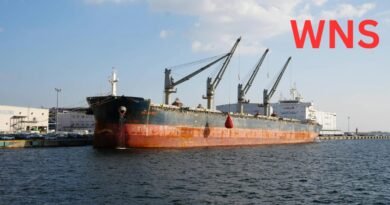
The decision comes as the ongoing US-Israeli military campaign against Iran, which began on February 28, has effectively blocked maritime traffic through the Strait of Hormuz, a strategic waterway through which approximately one-fifth of the world’s traded oil passes . The International Energy Agency (IEA) has warned that the conflict is creating “the largest supply disruption in the history of the global oil market,” surpassing the crises following the 1973 Yom Kippur war and the 2022 outbreak of war in Ukraine .
Weekly Quotas by Vehicle Category
Under the newly implemented system, the Ministry of Energy has established specific weekly fuel allowances for different vehicle categories :
- Buses: 60 litres
- Motorcycles: 5 litres
- Motor cars: 15 litres
- Three-wheelers: 15 litres
- Vans: 40 litres
- Motor lorries: 200 litres
- Land vehicles: 25 litres
- Special purpose vehicles: 40 litres
- Quadricycles: 5 litres
Compared to the quotas introduced during the 2022 crisis, motor cars now receive a reduced allocation of 15 litres (down from 20 litres), while other categories including motorcycles, three-wheelers, and buses have received increased allowances . Private passenger transport buses will receive fuel through the Sri Lanka Transport Board (SLTB) under a separate distribution mechanism .
A special fuel distribution system will also be implemented for vehicles supporting national production and essential services, including agriculture and supply chains .
Registration Process and Technical Glitches
Vehicle owners who previously registered for the fuel pass and whose vehicle ownership and mobile number remain unchanged can download their QR code from the official website fuelpass.gov.lk . Those with changed details, as well as users who have not previously registered or have newly registered vehicles through the Department of Motor Traffic, are required to register again through the same portal .
The reintroduction of the system was not without challenges. Long queues were witnessed outside fuel retailers on Sunday due to problems with QR code operations, with retailers reporting that some users encountered glitches during the initial rollout .
The Department of Government Information acknowledged the technical issues and stated that steps were being taken to address problems faced by individuals whose vehicle ownership or registered phone numbers had changed, as well as those who recently purchased new vehicles . Director General of Government Information Harsha Bandara assured the public that motorists who had previously obtained a QR code and continue using the same vehicle and registered mobile number should be able to update and obtain the new code without difficulty .
Authorities indicated that decisions regarding specific issues, including fuel supplies for essential services and agricultural activities, would be finalised, with solutions expected to be implemented from March 16 .
Supply Situation and Government Response
An official of the Ceylon Petroleum Corporation (CPC) told Daily Mirror that the QR code system would continue for an indefinite period, with the government planning to eventually link it to a digital payment mode . However, the official noted that the amount of fuel issued would change depending on unfolding circumstances.
Despite the rationing measures, authorities have sought to reassure the public that fuel supplies have been secured for two months without immediate problems . President Anura Kumara Dissanayake stated last week: “Continuous energy supply can now be assured. However, it is only possible to forecast and guarantee this reliably for a maximum period of two months. If the conflict persists beyond this two-month window, predictions based on current assessments will no longer hold” .
Russia Accuses Ukraine of ‘Reckless’ Drone Strikes on TurkStream Gas Pipeline Supplying Europe Pi Day 2026: Celebrating Mathematics’ Most Famous Constant with Pie, Puzzles, and Einstein’s Birthday.
The government has announced that India has agreed to provide fuel under a government-to-government arrangement, while China has promised assistance in case of an emergency . Additionally, Minister of Foreign Affairs Vijitha Herath has held discussions with Russian officials to explore the possibility of purchasing fuel from Russian ships currently in the region, with a formal request forwarded to Moscow for consideration .
Regional Context and Economic Impact
The fuel rationing system was introduced as the government raised fuel prices last week in an effort to contain hoarding, even as long queues formed at fuel pumps following the outbreak of war on February 28 . Authorities have appealed to citizens to cut down on non-essential travel to minimise fuel usage .
The Central Bank of Sri Lanka reported that between March 9 and 13, crude oil prices rose to their highest level since July 2022, driven by tighter Middle Eastern oil supplies amid the escalating conflict . By the end of the week, Brent and WTI crude oil prices had increased by $16 per barrel and $16.04 per barrel respectively compared to the previous week .
Iranian strikes in the Strait of Hormuz have affected maritime traffic crucial for global crude and oil supply chains . The disruption has raised concerns about the availability of vessels and the reliability of global fuel delivery schedules .
Sri Lanka is almost entirely dependent on imported fossil fuels for transport and power, with monthly consumption often exceeding 50,000 tonnes for key products. The country maintains roughly a month’s supply—approximately 33 days of diesel and 27 days of petrol—to manage supply stability .
Historical Context
The QR-based quota system was first introduced in August 2022 at the height of Sri Lanka’s economic crisis to manage severe fuel shortages resulting from foreign exchange shortages that made it difficult to pay for shipments . At that time, between March and July 2022, over 25 people died due to exhaustion after spending long hours in fuel queues .
An Indian credit line through the Lanka Indian Oil Corporation (LIOC) helped diffuse tensions during the previous crisis .
Calls for Policy Adjustments
Following the reintroduction of the system, ride-hailing platform PickMe has called for higher fuel quotas for app-based shared mobility services . In a statement, the company argued that “not all fuel consumption delivers the same value to the economy” and that ride-hailing vehicles should receive higher allocations during rationing periods .
“A single shared mobility vehicle can serve dozens of passengers in a day, replacing multiple private vehicle trips,” PickMe stated, adding that prioritising taxis and ride-hailing vehicles would ensure scarce fuel moves more people and sustains daily economic activity while protecting drivers’ livelihoods .
Current Situation
As of March 16, the QR code system remains in effect across all filling stations in Sri Lanka. Authorities are continuing to address technical issues and refine the distribution mechanism to ensure smooth operations. The government has emphasised that the system is essential to prevent illegal fuel hoarding and racketeering, which officials say had contributed significantly to the surge in demand .

The Ministry of Energy has urged vehicle owners to complete their registration or download their QR codes through the official portal to avoid disruptions when purchasing fuel. With the conflict in the Middle East showing no signs of immediate resolution, Sri Lanka’s fuel rationing system appears set to remain a feature of daily life for the foreseeable future.
SOURCES / INPUTS
The Official Government News Portal of Sri Lanka: QR code fuel system to be implemented from today
Deccan Herald: Sri Lanka Fuel Rationing 2026: QR System Returns Amid Iran-Israel War
Global Business Systems: Corporations, Trade, Finance & Market Structures Explained.
Global markets steady after oil price plunge as Middle East conflict fuels volatility, Global Markets Tumble as Iran Conflict Sparks Oil Surge, Safe-Haven Rush Reverses.