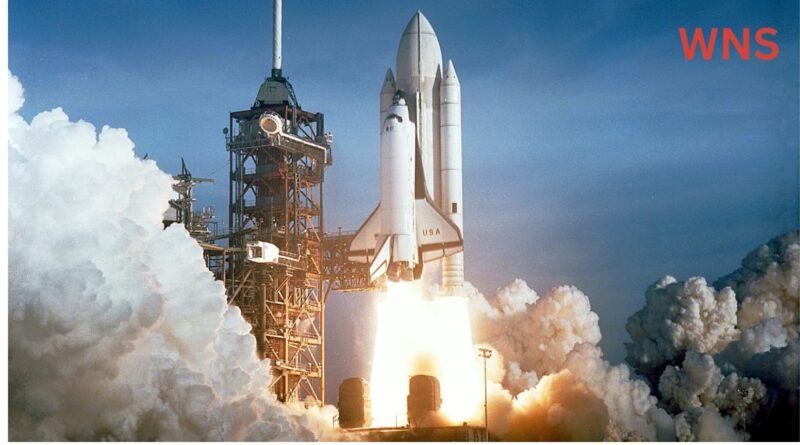
NASA Overhauls Artemis Moon Program with New Docking Mission, Targets 2028 Lunar Landing
CAPE CANAVERAL, Florida — NASA announced a sweeping overhaul of its Artemis moon program on February 27, 2026, adding a critical new spacecraft docking test in Earth’s orbit before attempting to land astronauts on the lunar surface for the first time in more than half a century .
Administrator Jared Isaacman unveiled the restructured plan during a news briefing at the Kennedy Space Center, revealing that Artemis III—originally slated to be the first crewed lunar landing since 1972—will now focus on testing rendezvous and docking capabilities in low-Earth orbit in 2027 . The first astronaut moon landing has been redesignated as Artemis IV, targeted for 2028, with the possibility of two landings that same year .
“Everybody agrees. This is the only way forward,” Isaacman told reporters .
The shakeup comes just two days after NASA’s new Space Launch System rocket was rolled back to the Vehicle Assembly Building for repairs following technical problems, and as an independent safety panel warned the agency to scale back its overly ambitious goals for returning humans to the moon .
New Mission: Testing Critical Systems in Earth Orbit
Under the revised architecture, Artemis III will launch in 2027 with a crew of astronauts flying the Orion capsule to low-Earth orbit, where they will attempt to rendezvous and dock with one or both commercial lunar landers being developed by SpaceX and Blue Origin . This mirrors the methodical approach of Apollo 9 in 1969, which tested rendezvous and docking in Earth orbit before Apollo 11 attempted the lunar landing four months later .
“We are essentially going to pull in Artemis III to launch in 2027 with a revised mission profile,” Isaacman said. “So instead of going directly to a lunar landing, we will endeavour to rendezvous in low-Earth orbit with one or both of our lunar landers” .
The testing objectives will include integrated checkout of life support, communications, and propulsion systems on the docked vehicles, as well as trials of the new extravehicular activity (xEVA) spacesuits that astronauts will eventually wear on the lunar surface . NASA said it will further define the test flight objectives after completing detailed reviews with its industry partners .
Isaacman emphasized the importance of this step: “I would certainly much rather have the astronauts testing out the integrated systems of the lander and Orion in low-Earth orbit than on the Moon. It’s also an opportunity for us, maybe, to get our suits up there before the astronauts actually have to wear them on the surface of the Moon . This is all going to help take down risk for a subsequent landing” .
Accelerating the Cadence: Ending Three-Year Gaps
A central driver of the overhaul is NASA’s determination to accelerate the pace of missions. Isaacman, a tech billionaire who took the helm at NASA in December after purchasing his own trips to orbit and performing the world’s first private spacewalk, was blunt in his assessment of the current trajectory .
“The current launch cadence—launching a rocket once every three years—is not a path to success,” Isaacman said. “Every three years is not a path to success. A component of that is when you are launching every three years, your skills atrophy, you lose muscle memory” .
He stressed that “it should be incredibly obvious” that three-year gaps between flights are unacceptable, and he aims to reduce the interval to one year or even less, drawing direct comparisons to the rapid succession of missions during the Apollo era .
During NASA’s storied Apollo program, astronauts’ first flight to the moon was followed by two more missions before Neil Armstrong and Buzz Aldrin landed. The Apollo moonshots followed one another in quick succession, just as the earlier Projects Mercury and Gemini had rapid flight rates, sometimes coming just a few months apart .
“No one at NASA forgot their history books. They knew how to do this,” Isaacman said. “Now we’re putting it in action. We should be getting back to basics and doing what we know works” .
Safety Panel Warnings and Technical Challenges
The decision follows a report from NASA’s independent Aerospace Safety Advisory Panel, which recommended this week that the agency revise its objectives for Artemis III “given the demanding mission goals.” The panel emphasized it was urgent for NASA to do so if the United States hopes to safely return astronauts to the moon .
Technical problems have also plagued the program. The Artemis II mission, which will send four astronauts on a fly-around of the moon, has been delayed until at least April after a helium flow issue was discovered in the rocket’s interim cryogenic propulsion stage following a wet dress rehearsal on February 19 . The SLS rocket and Orion spacecraft were rolled back to the Vehicle Assembly Building at Kennedy Space Center on February 25 to troubleshoot the problem and replace batteries in the flight termination system .
The hydrogen fuel leaks and helium flow problems that struck the rocket on the pad earlier this month had also plagued the first Artemis test flight without a crew in 2022 .
Standardizing Rockets, Canceling Upgrades
As part of the restructuring, NASA will standardize its Space Launch System rockets in the current Block 1 configuration for all subsequent missions, rather than introducing an upgraded variant . This decision impacts Boeing’s roughly $2 billion contract to build a more powerful SLS upper stage, current plans for which have been canceled .
“The entire sequence of Artemis flights needs to represent a step-by-step build-up of capability, with each step bringing us closer to our ability to perform the landing missions,” said NASA associate administrator Amit Kshatriya. “We want to fly the landing missions in as close to the same Earth ascent configuration as possible” .
Kshatriya added that NASA is “looking back to the wisdom of the folks that designed Apollo” as it implements these changes .
Commercial Partners: SpaceX and Blue Origin
The overhaul places greater emphasis on the work of commercial partners. Elon Musk’s SpaceX and Jeff Bezos’ Blue Origin are each developing astronaut lunar landers for the program, dueling to be the first to achieve a moon landing for NASA .
Isaacman said the Artemis III docking test in 2027 could take place with one or both of the landers—SpaceX’s Starship or Blue Origin’s Blue Moon . NASA has asked both companies to come up with accelerated plans for their lunar landers amid delays, particularly to SpaceX’s Starship rocket .
Boeing and Northrop Grumman build the SLS rocket, which carries the Lockheed Martin-built Orion astronaut capsule that will taxi astronauts to the lunar landers in space .
Competitive Pressure from China
The sense of urgency driving NASA’s overhaul is heightened by China’s rapid progress in its own lunar program. Beijing is aiming for a crewed moon landing by 2030 and has been making steady advances toward this goal .
Both nations are planning to land at the moon’s south pole, a region believed to contain water ice that could be converted into fuel and drinking water for future long-duration missions. They are competing for the most favorable spots to build their lunar bases .
“With credible competition from our greatest geopolitical adversary increasing by the day, we need to move faster, eliminate delays, and achieve our objectives,” Isaacman said in a video posted on X .
The Artemis program was originally established in 2019 during President Donald Trump’s first term, following his signing of Space Policy Directive-1 two years earlier .
Revised Mission Timeline
Under the new schedule, NASA is targeting an April 2026 launch for Artemis II, the first crewed mission to fly around the moon since Apollo 17 in 1972 . The exact date depends on how quickly technicians can resolve the helium flow issue and complete other technical work .
Artemis III will follow in 2027, conducting the low-Earth orbit docking test with commercial landers . The first crewed lunar landing—Artemis IV—is targeted for 2028, with the possibility of two landing missions that same year .
Isaacman said the revised flight plan is supported by industry and the Trump administration, and addresses the safety panel’s concerns while maintaining the goal of establishing a sustainable human presence on the moon .
“We’ve got a lot of really talented folks that have been working hard on the Artemis II campaign,” Isaacman said. “Whether they’re going to want to stick around for three more years after this mission is complete is a question mark. This is just not the right pathway forward” .
Twenty-four Apollo astronauts flew to the moon from 1968 through 1972, with 12 of them landing. NASA’s new generation of moonwalkers now have a clearer—if still demanding—path to follow in their footsteps .
with inputs from
Live Science: NASA Artemis overhaul 2028 landing
Spaceflight Now: NASA major Artemis overhaul
NBC: NASA Artemis course correction
The Hindu: NASA Artemis docking test
For broader context, see our in-depth analysis on The Future of Science & Technology: AI, Space, Biotechnology & Digital Transformation Explained.
Also in this section: Canada Tells OpenAI to Boost Safety Measures or Be Forced by Government After Mass Shooting Links and The Future of Science & Technology: AI, Space, Biotechnology & Digital Transformation Explained.